 Balakumar L
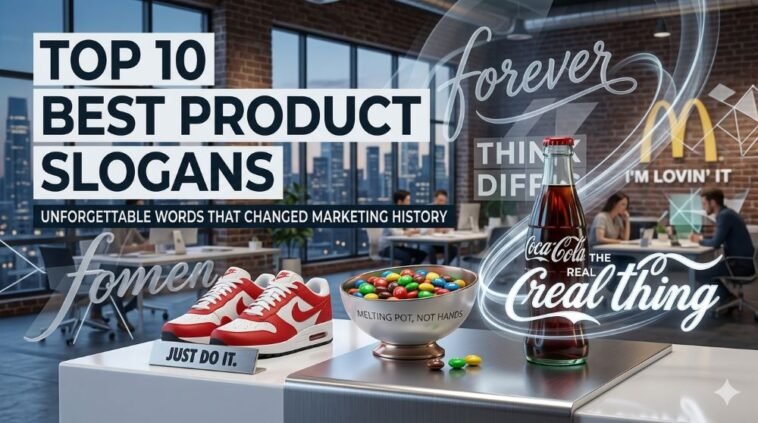
A great tagline does not just sell a item. It sticks in your mind for decades. Think about how easy it is to finish the phrase “Just Do It.” That is the power of elite marketing. The truth is, the top 10 best product slogans all share a specific secret: they trigger an emotional reaction. They make you feel confident, hungry, or safe in just a few short words.
Table of Contents
- Quick Facts About Iconic Slogans
- What Makes a Catchy Tagline Work?
- The Top 10 Best Product Slogans Listed
- Critical Slogan and Branding Statistics
- How to Create a Memorable Product Slogan
- Pros and Cons of Changing a Brand Slogan
- Slogan Comparison: Short vs. Long Taglines
- Marketing Trends and Fresh Branding News
- Frequently Asked Questions
- References and Sources
Quick Facts About Iconic Slogans
- The average length of a highly successful tagline is just three to six words.
- Nike paid only $35 to the student who initially helped inspire their brand imagery, though the slogan came later.
- De Beers created a phrase in 1947 that single-handedly established the modern diamond engagement ring tradition.
- Apple changed its core slogan in 1997 to fight back against IBM, shifting public perception completely.
- Research shows that simple language beats clever words every single time when it comes to memory retention.
- Dollar Shave Club built a billion-dollar brand off a single funny, aggressive launch tagline.
- A bad slogan rewrite can cost a company millions in lost loyalty and immediate sales declines.
The Psychological Secret Behind the Top 10 Best Product Slogans
Why do some taglines vanish from memory while others last for generations? It comes down to cognitive fluency. Your brain loves information that is easy to process. When a phrase rhymes, uses alliteration, or stirs a clear feeling, your brain stores it deeply.
The best corporate phrases do not focus on the product features. Instead, they focus on the consumer identity. They tell you who you will become if you buy what they are selling.
Why Emotion Beats Logic in Marketing
If a company tells you their shoes have durable rubber soles, you forget it by tomorrow. If they tell you to push past your physical limits, you connect with the message. Great taglines use psychological triggers like status, nostalgia, or belonging to build a permanent home in your head.
The Definitive Top 10 Best Product Slogans
1. Nike: “Just Do It”
- Year Introduced: 1988
- Key Detail: Designed to appeal to elite athletes and casual joggers alike.
Nike completely transformed its identity with these three simple words. Before this launch, the brand mostly served hardcore marathon runners. The phrase gave everyone permission to stop overthinking and start moving. It stripped away all excuses. It remains the absolute gold standard of motivational marketing across the globe.
2. Apple: “Think Different”
- Year Introduced: 1997
- Key Detail: Launched as a direct challenge to IBM’s traditional “Think” motto.
This phrase saved Apple during a time when the company was struggling to survive. It did not mention computers, software, or processing speeds. Instead, it celebrated artists, rebels, and innovators. By buying an Apple product, you instantly became part of that cool, counter-culture crowd.
3. De Beers: “A Diamond is Forever”
- Year Introduced: 1947
- Key Detail: Named the best slogan of the 20th century by Advertising Age.
Before this line existed, Americans rarely bought diamond rings for marriages. De Beers needed a way to stop people from ever reselling their jewelry. By tying diamonds to eternal love, they ensured the stones would stay in families forever. It is arguably the most financially successful marketing phrase ever written.
4. L’Oréal: “Because You’re Worth It”
- Year Introduced: 1971
- Key Detail: Written by a 23-year-old female copywriter named Ilon Specht.
This phrase was a major cultural shift. At the time, most women’s commercials featured male voiceovers telling women what to buy. L’Oréal put the power back in the consumer’s hands. It argued that spending money on yourself was not selfish, but a form of self-respect.
5. McDonald’s: “I’m Lovin’ It”
- Year Introduced: 2003
- Key Detail: Originally launched with a massive hip-hop jingle sung by Justin Timberlake.
In the early 2000s, McDonald’s was losing touch with younger crowds. They needed something casual, modern, and cross-cultural. This phrase fit perfectly because it sounds like something a person would say in a regular conversation. It made fast food feel like an upbeat lifestyle choice.
6. M&M’s: “Melts in Your Mouth, Not in Your Hand”
- Year Introduced: 1954
- Key Detail: Designed to highlight a unique patent that competitors could not match.
This tagline succeeded because it solved a real, annoying problem. Parents hated cleaning sticky chocolate off their children’s clothes. By focusing on the hard sugar shell, the company gave buyers a practical, logical reason to choose them over traditional chocolate bars.
7. BMW: “The Ultimate Driving Machine”
- Year Introduced: 1973
- Key Detail: Helped the German brand conquer the highly competitive American luxury market.
BMW wanted to attract professional workers who loved performance but needed a dependable vehicle. This phrase brilliantly bridges the gap between luxury and raw mechanical power. It makes the owner feel like a pilot rather than just a driver sitting in traffic.
8. FedEx: “When It Absolutely, Positively Has to Be There Overnight”
- Year Introduced: 1978
- Key Detail: Dropped later on, but built the company’s global reputation for trust.
This tagline is long, but it works because it offers total peace of mind. Businesses rely on shipping to avoid disasters. FedEx realized that their real product was not transportation; it was the total elimination of anxiety for their corporate clients.
9. Dollar Shave Club: “Shave Time. Shave Money.”
- Year Introduced: 2012
- Key Detail: Part of a viral video campaign that disrupted a multi-billion dollar monopoly.
Gillette had dominated the razor industry for decades with high-tech, expensive blades. Dollar Shave Club used this simple pun to point out how ridiculous the old model was. It told the consumer exactly what they would save: hours of their life and cash out of their wallet.
10. Rice Krispies: “Snap! Crackle! Pop!”
- Year Introduced: 1932
- Key Detail: Eventually turned into three cartoon mascots that still live on cereal boxes today.
Kellogg’s did not talk about vitamins or whole grains here. They focused entirely on the unique auditory experience of pouring milk over their food. It turned breakfast into an interactive, fun event for children, proving that sensory words make for incredibly sticky branding.
Critical Slogan and Branding Statistics
The data shows that simple, direct messaging wins the marketplace. Let us look at how consumers actually interact with brand taglines based on global market studies.
| Brand Metric | Impact Percentage | Source Study |
| Consumers preferring simple language | 81% | Siegel+Gale Index |
| Immediate recognition of “Just Do It” | 94% | Brand Finance Review |
| Buyers choosing brands with shared values | 64% | Harvard Business Data |
| Slogans containing under four words | 42% | Ad Age Annual Survey |
| Trust increase from consistent taglines | 23% | Forbes Marketing Group |
How to Create a Memorable Product Slogan
Building an elite tagline requires a clear process. You cannot just guess and hope something sticks. Here is the step-by-step method used by top global agencies to craft lines that resonate.
Step 1: Define Your Core Benefit
Identify the single most important thing your product does. Do not try to list five different features. Pick the main problem you solve and discard everything else.
Step 2: Focus on the Human Emotion
Turn that benefit into a feeling. If your software saves time, the emotion is relief. If your car is fast, the emotion is excitement. Speak to the feeling, not the machine.
Step 3: Strip Away the Clutter
Write out three full sentences describing your goal. Then, cut away words until you are left with less than six words total. Use strong verbs instead of passive adjectives.
Step 4: Test for Cognitive Fluency
Read the phrase out loud to people who know nothing about your business. If they hesitate, stumble, or ask you to explain it, throw it out and start over.
Pros and Cons of Changing a Brand Slogan
Changing a corporate motto is a massive risk. While it can refresh a tired image, it can also alienate your most loyal buyers.
| Pros of Refreshing a Slogan | Cons of Altering Your Message |
| Attracts younger generations of consumers | Risks losing decades of built-up brand equity |
| Reflects a shift into new modern technologies | Can confuse buyers about your core mission |
| Separates the company from past public scandals | Requires millions of dollars in global ad spend |
| Signals a fresh, energetic corporate direction | Often meets heavy resistance from long-time users |
Slogan Comparison: Short vs. Long Taglines
Is it better to be short and punchy, or long and descriptive? Both styles have succeeded, but they serve completely different business strategies.
| Feature | Short Taglines (3-4 Words) | Long Taglines (6+ Words) |
| Primary Goal | Emotional connection | Educational clarity |
| Best For | Massive global brands | New startups or complex services |
| Recall Speed | Instantaneous | Slower, but highly specific |
| Examples | Nike, Apple, McDonald’s | FedEx, Avis, Burger King |
| Adaptability | Works across all cultures | Harder to translate cleanly |
Marketing Trends and Fresh Branding News
The corporate landscape is shifting rapidly. According to a comprehensive marketing report by Statista, consumers are rejecting overly corporate language in favor of hyper-realistic, transparent messaging. Brands are moving away from grand, sweeping statements.
The rise of short-form video on mobile platforms means taglines now have to work in less than two seconds. If a phrase does not make sense instantly on a smartphone screen, it fails. Experts note that current corporate strategies favor ultra-authentic phrases that acknowledge everyday realities rather than perfection.
Frequently Asked Questions
What is the difference between a slogan and a tagline?
A tagline is a permanent representation of your entire brand, like Nike’s “Just Do It.” A slogan is temporary and used for specific product lines or short-term marketing campaigns.
How long should a good product slogan be?
The sweet spot is between three and six words. Anything longer becomes difficult for the human brain to memorize quickly during a standard commercial broadcast.
Can a business trademark a slogan?
Yes. Companies register their phrases with government offices like the USPTO to prevent competitors from using similar language in the same industry.
Why do some great slogans get retired?
Societies change, and phrases that worked forty years ago can sometimes sound outdated, out of touch, or culturally insensitive to younger buyers.
Do rhyming slogans work better?
Rhymes significantly increase memory retention, but they can sometimes make a high-end luxury product sound cheap or childish if not handled delicately.
How much do agencies charge to write a slogan?
Top-tier global branding firms can charge anywhere from $50,000 to over $250,000 for research, testing, and final creation of a major corporate tagline.
What is the oldest slogan still used today?
Lyle’s Golden Syrup has used the phrase “Out of the strong came forth sweetness” alongside a lion illustration since 1885, earning a Guinness World Record.
References and Sources
- Advertising Age Landmark Branding Retrospective (adage.com)
- Harvard Business Review on Consumer Psychology (hbr.org)
- Statista Global Marketing and Brand Consistency Report (statista.com)
- Forbes Media Top Corporate Identifies Analysis (forbes.com)
- United States Patent and Trademark Office Database (uspto.gov)
- BBC Business History of Advertising Series (bbc.co.uk)
- Siegel+Gale Global Simplicity Index (siegelgale.com)
- Brand Finance Global 500 Most Valuable Brands (brandfinance.com)
- Stanford Graduate School of Business Cognitive Fluency Study (gsb.stanford.edu)
- Reuters Corporate Strategy and Rebranding Reports (reuters.com)

GIPHY App Key not set. Please check settings