 Sakthi Varna
Introduction {#about}
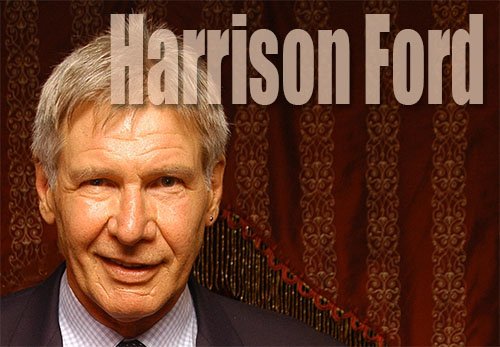
Harrison Ford doesn’t chase trends. Over six decades in Hollywood, the man who became Han Solo and Indiana Jones has shared thoughts that are as genuine and unpretentious as his on-screen characters. Unlike many celebrities who craft carefully polished soundbites for public consumption, Ford’s quotes feel honest, sometimes brutally so. In March 2026, at age 83, Ford accepted the SAG-AFTRA Life Achievement Award and said something that perfectly revealed his character: he joked that receiving a lifetime honor felt premature because he considers himself at the “half-point” of his career, still very much a working actor.
What makes Ford unique among his Hollywood peers is his willingness to speak plainly about the entertainment industry while remaining deeply committed to his craft. He doesn’t pretend acting is more profound than it is, yet he refuses to diminish its importance either. This balanced perspective, earned through genuine struggle and decades of consistent work, gives his quotes staying power and authenticity that resonates with audiences far beyond the film industry.
The Interactive Quote Explorer {#explorer}
How to Use This Collection
This collection presents ten essential Harrison Ford quotes organized by theme. You can explore them in several ways. First, you can read straight through from #10 to #1 to see how Ford’s thinking progresses from practical acting observations to deeper life philosophy. Second, you can search for specific keywords—if you’re interested in his views on authenticity, search for terms like “pretend,” “genuine,” or “work.” Third, you can filter by theme to explore quotes about a particular aspect of his life and career. The themes used here are acting craft (his technical approach to the profession), career and success (how he built his path), industry critique (his observations about Hollywood), life philosophy (his broader wisdom about living), and authenticity (his commitment to being genuine).
Quote Theme Categories
Acting Craft: These quotes reveal how Ford approaches the technical and artistic aspects of performing. They show his philosophy about what acting fundamentally is and how actors can develop their skills.
Career & Success: These quotes address Ford’s journey from rejection to stardom and what he’s learned about building a sustainable career over decades. They touch on persistence, timing, and the reality of struggling before success.
Industry Critique: These quotes contain Ford’s observations and sometimes criticisms of how the entertainment industry has evolved, particularly regarding filmmaking technology, storytelling approaches, and the business side of cinema.
Life Philosophy: These are Ford’s broader observations about living, commitment, mortality, and what makes life meaningful. They transcend the entertainment industry and apply to anyone navigating work and purpose.
Authenticity: These quotes capture Ford’s emphasis on being genuine, not playing a role off-camera, and maintaining integrity even when social convention might encourage otherwise.
The 10 Most Inspiring Harrison Ford Quotes {#article}
Quote #10: The Simple Method
Quote: “I don’t use any particular method. I’m from the let’s pretend school of acting.”
Theme: Acting Craft
Context and Meaning:
This quote perfectly captures Ford’s approach to his craft without pretension. Many actors study the Stanislavski Method, the Meisner Technique, or other complex acting systems that come with thick theoretical frameworks and years of study. Ford’s comment suggests that his technique is fundamentally simple: pretend. The genius of this quote is how it both legitimizes acting as valid, serious work while simultaneously mocking the overcomplicated theories that actors sometimes hide behind.
What Ford is really saying is that the foundation of acting is imagination and the willingness to fully commit to a fictional scenario. You don’t need a fancy system or theoretical framework. You need to be able to play make-believe at an expert level, which requires imagination, observation, commitment, and skill. This quote has resonated with acting students for decades because it’s both humbling (suggesting acting isn’t as mysterious as some make it) and liberating (suggesting you don’t need expensive classes or a complex method to succeed).
When you watch Ford perform in films, you see this philosophy in action. He’s not overthinking his emotional responses or referencing some elaborate technique. He’s fully present in the scene, committed to the circumstances, and responding authentically to what’s happening around him. That’s the “let’s pretend school of acting” in practice.
Quote #9: The Practical Life Choice
Quote: “When you’re starting out to be an actor, who wants to go where it’s cold and miserable and be poor there? Los Angeles is where you have to be if you want to be an actor. You have no choice. You go there or New York. I flipped a coin about it. It came up New York, so I flipped again.”
Theme: Career & Success
Context and Meaning:
This longer quote reveals Ford’s decision-making process as a young, struggling actor facing a major life choice. The story is funny because of the casual coin-flipping (suggesting his choice wasn’t based on deep artistic conviction but practical concerns), yet it also contains genuine wisdom about career building. Ford is saying that if you want to be an actor, you must be in one of two places—Los Angeles or New York. Both cities are expensive and challenging for struggling artists. However, Ford chose to flip coins to decide which city’s cold and misery he’d endure, revealing his pragmatic attitude. He wasn’t chasing a romantic notion of starving for his art. He was making a practical calculation about where he could feasibly pursue his goals.
This quote is valuable for anyone starting a career in a competitive field. Sometimes the most important decisions aren’t made through deep spiritual meditation or careful analysis but through pragmatic assessment of your options and willingness to make a choice and commit to it. Ford’s self-deprecating humor about the coin flip doesn’t hide the real insight: he made a choice and lived with the consequences.
Quote #8: The Physical Tool
Quote: “I’m addicted to Altoids. I call them ‘acting pills.'”
Theme: Acting Craft
Context and Meaning:
This brief quote is pure Ford. While other actors might discuss meditation, emotional memory work, or acting exercises they use to prepare for roles, Ford mentions mints. Altoids are breath mints—a practical solution to a small, physical problem. They refresh your mouth and create a slight tingle that makes you more aware of your face and mouth, which can help with physical presence in performance.
The genius of this quote is how it reveals Ford’s approach to acting. He doesn’t overthink the process. He doesn’t look for profound psychological tools. Instead, he uses practical, physical solutions. This connects to a larger truth about Ford as an actor: he focuses on practical concerns and the physical reality of performing rather than getting lost in psychological complexity or emotional preparation methods.
When you think about Ford’s performances, this makes sense. He’s always grounded, present, and aware of his body in space. He doesn’t disappear into a character through some elaborate emotional journey. Instead, he inhabits the character through physical presence, clear eyes, and authentic reactions to what’s happening around him. The Altoids joke is his way of saying he focuses on the practical, physical aspects of the job.
Quote #7: The Timeless Approach
Quote: “I’m like old shoes. I’ve never been hip. I think the reason I’m still here is that I was never enough in fashion that I had to be replaced by something new.”
Theme: Life Philosophy
Context and Meaning:
This might be Ford’s most penetrating observation about his own career and longevity in an industry obsessed with novelty. The film industry constantly cycles through trends, discovering fresh talent, and declaring the next big thing. Ford is suggesting that his longevity comes not from riding trends but from never being trendy in the first place. Old shoes are comfortable. They wear well. They don’t go out of style because they were never meant to be fashionable. They were built to be worn, and they endure.
Ford is identifying himself with utility and reliability rather than glamour or fashion-forward appeal. In an industry built on the cult of youth and novelty, this perspective is radically different. He’s saying his staying power comes from being fundamentally unconcerned with being cool. He’s a tool that works, and tools don’t wear out if they’re well-made and consistently used.
This quote has aged beautifully because it proved prophetic. Ford remained relevant through Star Wars sequels, Indiana Jones revivals, prestige television appearances, and blockbuster films. Not by chasing trends but by remaining a consistent, professional presence. Even when facing criticism about specific choices or projects, he hasn’t retreated or become defensive. He’s simply continued working. The quote captures something essential about his strategy for longevity: be good at your job, show up reliably, and don’t worry about whether you’re fashionable.
Quote #6: The Heart of Action Filmmaking
Quote: “I think what a lot of action movies lose these days, especially the ones that deal with fantasy, is you stop caring at some point because you’ve lost human scale.”
Theme: Industry Critique
Context and Meaning:
Here, Ford transitions from personal philosophy to professional critique of the film industry itself. This quote reveals his thinking about storytelling and why certain films work emotionally while others, despite massive budgets, feel empty. The concept of “human scale” is crucial to understanding Ford’s perspective. It means the stakes remain understandable to audiences because they’re rooted in human concerns and recognizable proportions.
Ford has spent his entire career in action films, particularly the Star Wars and Indiana Jones franchises, which feature spectacular action sequences and fantastical elements. Yet he’s clearly thought deeply about what makes these films effective. He’s not saying action movies are bad. He’s saying that endless spectacle without human consequence fails emotionally. You can blow up a thousand spaceships, but if the audience doesn’t care about the person piloting one of them, you’ve lost the emotional battle.
This quote demonstrates Ford’s understanding that even in massive blockbuster filmmaking, the actor’s job remains constant: ground the story in human emotion and recognizable stakes. It explains why his performances in Star Wars and Indiana Jones work so well. Despite fighting aliens and facing world-ending threats, you always understand what these characters care about. They have families, fears, desires, and limitations. They’re human in scale.
Quote #5: The Problem With Modern Action Cinema
Quote: “With the CGI, suddenly there’s a thousand enemies instead of six—the army goes off into the horizon. You don’t need that. The audience loses its relationship with the threat on the screen. That’s something that’s consistently happening and it makes these movies like video games and that’s a soulless enterprise. It’s all kinetics without emotion.”
Theme: Industry Critique
Context and Meaning:
Ford takes his earlier observation about human scale and applies it directly to how digital technology has transformed action filmmaking. This is a bold critique coming from a major star who has benefited from cutting-edge effects technology throughout his career and continues to work in major films with extensive CGI. He’s not being a Luddite rejecting new technology. He’s being analytical about how the technology is employed.
When you generate a thousand identical computer-generated enemies rather than carefully choreographing action with a smaller number of real opponents, something essential is lost. The audience can’t develop a relationship with the threat because the threat is infinite, identical, and impersonal. Watching a hero fight an army of clones or generated creatures feels different than watching a hero fight a smaller number of opponents where each encounter matters and has weight.
The phrase “soulless enterprise” is particularly strong. Ford is suggesting that the problem isn’t necessarily the existence of CGI, but how it’s used in modern filmmaking. When scale becomes the primary goal rather than a tool for telling a human story, the filmmaking loses its emotional impact. The audience can see the technical achievement without feeling moved by the story. This resonates with viewers who’ve noticed that many modern action sequences feel monotonous despite costing hundreds of millions of dollars.
Quote #4: Drawing Boundaries
Quote: “I don’t mind doing interviews. I don’t mind answering thoughtful questions. But I’m not thrilled about answering questions like, ‘If you were being mugged, and you had a lightsaber in one pocket and a whip in the other, which would you use?'”
Theme: Authenticity
Context and Meaning:
This is Ford at his most characteristically irritated and funny. He’s drawing a clear line between genuine inquiry and fan-service nonsense. The question itself is absurd enough to be funny, but what makes the quote brilliant is that Ford isn’t being rude. He’s being honest about the difference between legitimate discussion and playing trivia about his fictional characters.
What this really reveals is Ford’s view of his own significance. He’s willing to discuss his craft, his career, his films, and his thinking. But he won’t pretend that his job playing a space smuggler means he should spend interview time playing pretend scenarios. It’s another example of his practical honesty. His time and energy should go to substantive conversations, not fan fiction. He respects the interviewer enough to engage authentically if they engage authentically.
The quote also demonstrates Ford’s relationship with his iconic characters. He respects them. He’s not dismissive. But he also won’t be reduced to them. He’s Harrison Ford, an actor who has played many characters across a long career. He’s not Han Solo or Indiana Jones. He’s the performer who inhabited those roles. This distinction might seem subtle, but it’s important to Ford’s sense of self and dignity.
Quote #3: Honest Critique of the Iconic
Quote: “Whoever had the bright idea of putting Indiana Jones in a leather jacket and a fedora in the jungle ought to be dragged into the street and shot.”
Theme: Craft & Authenticity
Context and Meaning:
Here’s Ford being genuinely critical of something at the absolute core of one of his most famous characters. The Indiana Jones costume—the leather jacket, fedora, and whip—is so iconic that most people can’t imagine Indy looking any other way. Yet Ford is pointing out the fundamental absurdity: why would an archaeologist wear impractical leather in a jungle? The outfit makes no functional sense for the character or environment.
The violence of the language (“dragged into the street and shot”) is deliberately hyperbolic, which makes the critique funny while also making it clear Ford is serious. This is Ford’s way of saying: I know this costume is ridiculous, you know it’s ridiculous, we all know it’s ridiculous, and yet it became one of the most iconic looks in cinema history.
What’s fascinating is that this quote doesn’t diminish Indiana Jones. Instead, it shows that Ford understood exactly how absurd the character could be and played him with full commitment anyway. He was never confused about what he was doing. He was fully present to the inherent silliness while still making it compelling and believable. This ability to be fully committed to something while maintaining complete awareness of its potential absurdity is a mark of mature artistry.
Quote #2: The Rejection Story
Quote: “The studio guy told me, ‘Kid, you have no future in this business.’ I said, ‘Why?’ He said, ‘When Tony Curtis first walked onscreen carrying a bag of groceries—a bag of groceries!—you took one look at him and said, THAT’S a movie star!’ I said, ‘Weren’t you supposed to say, That’s a grocery delivery boy?'”
Theme: Career & Success
Context and Meaning:
This story captures Ford’s early rejection and also his wit in the face of it. The studio executive is basically saying Ford lacks star quality—he can’t manufacture the immediate magnetism that makes someone a movie star just by appearing on screen. Ford’s response exposes the absurdity of the studio’s criticism by taking their own logic to its extreme. If you immediately recognize someone as a movie star just by their appearance, then your judgment system is completely arbitrary and meaningless.
What makes this quote powerful is that it comes from a place of genuine failure. Ford didn’t become a major star until age 31 when American Graffiti was released. Before that, he was a struggling actor working as a carpenter. He lived through the rejection this quote describes. The fact that he can laugh about it years later while remaining completely clear-eyed about what happened shows remarkable perspective.
The quote also reveals something important about Ford’s self-awareness. He never thought he was obviously going to become a huge star. He wasn’t delusional. He was a working actor who built cabinets and took whatever jobs came his way. The success, when it came, was genuinely unexpected by him and by Hollywood’s gatekeepers. This grounds him in reality and prevents the kind of inflated ego that derails many celebrities.
Quote #1: The Ultimate Commitment
Quote: “You may get real tired watching me, but I’m not going to quit.”
Theme: Life Philosophy
Context and Meaning:
This might be Ford’s most revealing quote because it’s not about acting technique, industry critique, or clever self-awareness. It’s pure commitment to the job. Ford is essentially saying: I’m going to keep working, I’m going to keep trying to improve, and I’m going to remain present and invested even if audiences get tired of seeing my face on screen.
The beauty of this quote is how it acknowledges both his potential limitations and his determination. He’s not claiming to be the greatest or to have unlimited appeal. He’s accepting that at some point, people might lose interest in watching him perform. But that won’t be what stops him. He will stop when he decides to stop, not when the world demands he stop.
This quote perfectly encapsulates what Ford has actually done throughout his career. He’s worked consistently, accepted diverse roles, returned for sequels and revivals, and kept showing up to sets in his 70s, 80s, and beyond. Even when facing criticism about specific choices or projects, he hasn’t retreated or become defensive. He’s simply continued working.
At the 2026 Actor Awards, when accepting his Life Achievement Award at age 83, Ford reiterated this same commitment, joking that he’s only at the “half-point” of his career. This quote, wherever and whenever it was originally said, has become the governing principle of his professional life.
Why These Quotes Matter Today
In 2026, Harrison Ford’s quotes have taken on new significance as younger generations discover them through social media and meme culture. What’s remarkable is how these quotes, some dating back decades, remain relevant because they address fundamental truths about work, authenticity, and commitment rather than commenting on temporary trends or dated concerns.
Ford’s emphasis on practical work over theoretical complexity, on human connection over spectacle, and on authentic commitment over image management has proven to be the most sustainable approach to a long career. While countless actors who chased trends and sought the “next big thing” have faded from relevance, Ford remains. His 2026 SAG-AFTRA Life Achievement Award recognition at age 83 while he continues actively working proves that his philosophy wasn’t just words. It was a way of living that delivered lasting relevance and respect.
The universal appeal of these quotes extends beyond the entertainment industry. Anyone managing a career, building a business, or trying to maintain integrity in a competitive field can find wisdom in Ford’s words. His commitment to being “like old shoes” rather than chasing fashion applies to professional writers, engineers, teachers, or craftspeople of any kind. His emphasis on human scale and emotional connection applies to anyone creating work for audiences. His refusal to be reduced to his most famous accomplishments speaks to the challenge of maintaining identity and growth after initial success.
Key Statistics About Ford’s Career
Harrison Ford’s career trajectory demonstrates that his philosophy works. His breakthrough came at age 31 with American Graffiti in 1973 after 15 years of struggling and building cabinets. He went on to star in two of the most successful film franchises ever created (Star Wars beginning in 1977, Indiana Jones beginning in 1981). His filmography spans over 60 years and includes more than 120 films and television appearances. He’s received one Oscar nomination (Witness, 1985), won two Golden Globes, received the Golden Globe Cecil B. DeMille Award in 2002, received the AFI Life Achievement Award in 2000, and most recently received the 2026 SAG-AFTRA Life Achievement Award as the 61st recipient of that honor.
Perhaps most significantly, Ford didn’t retire after achieving massive success. He continued working steadily through the 1990s, 2000s, and 2010s, took on television roles in the 2020s (earning an Emmy nomination for Shrinking in 2025), and continues accepting major film roles (Captain America: Brave New World, 2025). At 83 years old in 2026, he remains a working actor, which perfectly validates the philosophy expressed in his quote about not quitting.
FAQ Section {#faq}
Q: What is Harrison Ford’s most famous quote?
Several of Ford’s quotes have achieved iconic status, but the most widely cited is probably “You may get real tired watching me, but I’m not going to quit.” This quote captures his philosophy of commitment and determination. However, “I’m like old shoes. I’ve never been hip” is also extremely popular because it encapsulates his perspective on staying relevant without chasing trends. Different audiences gravitate toward different quotes depending on their own interests and concerns.
Q: Has Harrison Ford written a book with his quotes or memoirs?
Harrison Ford has not written a comprehensive memoir or official collection of quotes. However, he has been interviewed extensively over his career spanning more than six decades. Various quote databases and fan-compiled collections have documented his statements across decades of interviews with magazines, newspapers, television shows, and podcasts. The most reliable sources for authentic Ford quotes are interviews with The Hollywood Reporter, Variety, and major talk show appearances where he’s discussed his craft and career thoughtfully.
Q: How has Harrison Ford’s philosophy about acting changed over time?
Remarkably, Ford’s core philosophy about acting has remained consistent throughout his career. He has always emphasized practical work over theoretical approach, commitment over trends, and human scale over spectacle. However, his perspective on CGI and modern filmmaking has become more articulated and critical as he’s aged and seen the industry transform with digital technology. His willingness to return to television later in his career (particularly Shrinking) shows evolution in his thinking about where meaningful acting work happens, but his fundamental approach—show up, do the work, don’t worry about being hip—has remained constant.
Q: What impact have Harrison Ford’s quotes had on young actors?
Ford’s quotes have influenced multiple generations of actors precisely because they demystify acting and ground it in work ethic rather than mystery or natural talent. For acting students and young professionals, quotes like “I don’t use any particular method. I’m from the let’s pretend school of acting” are liberating because they suggest you don’t need an expensive acting class or a complex method. Instead, you need imagination and commitment. His emphasis on struggling for 15 years before success also provides realistic perspective for people entering the industry, countering the myth of overnight success.
Q: Did Harrison Ford receive any major awards in 2026?
Yes, in March 2026, Harrison Ford received the SAG-AFTRA Life Achievement Award as the 61st recipient of this prestigious honor. Ford accepted the award tearfully during the 32nd Annual Actor Awards on March 1, 2026, delivered live on Netflix. In his acceptance speech, he emphasized that he was not an overnight success, that he struggled for 15 years, and that he remains committed to working. He joked that receiving a lifetime achievement award at age 83 while he still considers himself at the “half-point” of his career shows his determination to continue acting.
Q: Is Harrison Ford still giving interviews and making public statements?
Yes, Harrison Ford continues to be interviewed and make public statements, particularly when promoting new films or television projects. His 2026 SAG-AFTRA Life Achievement Award acceptance speech demonstrates that he remains thoughtful and articulate about his career and craft. However, Ford is known for being selective about interviews and for maintaining boundaries around what he will discuss. He’s willing to engage in substantive conversations about his work but less interested in playing trivia games about his characters.
References {#references}
- SAG-AFTRA Official Announcement (2025). “Harrison Ford to Be Honored with the 2025 SAG-AFTRA Life Achievement Award.”
- Variety (2025). “Harrison Ford to Receive 2026 SAG-AFTRA Life Achievement Award.”
- US Weekly (2026). “Harrison Ford Tearfully Accepts SAG-AFTRA Life Achievement Award at ‘Half-Point’ of Career.”
- The Australian Women’s Weekly (2026). “Inside Harrison Ford’s Impressive Career.”
- Yahoo Entertainment (2026). “Harrison Ford Says He’s at ‘Half Point’ of Career After Actor Award Win.”
- Parade Magazine (2025). “27 Best Harrison Ford Movie Quotes of All Time.”
- QuoteFancy (2026). “Top 140 Harrison Ford Quotes (2026 Update).”
- BrainyQuote (2026). “Harrison Ford Quotes.”
- IMDb (2026). “Harrison Ford Quotes.”
- Gracious Quotes (2023). “32 Best Harrison Ford Quotes (INSPIRATIONAL).”
Summary
Harrison Ford’s ten most important quotes represent six decades of wisdom earned through genuine struggle, consistent work, and unwavering commitment to authenticity. Rather than offering theoretical frameworks or motivational platitudes, Ford speaks from experience about what actually works in building a sustainable career and meaningful life. His emphasis on practical work over complex theory, on human connection over spectacle, and on genuine commitment over image management has proven remarkably durable as the entertainment industry has transformed around him. These quotes matter not just to actors but to anyone navigating a competitive field, trying to maintain integrity under pressure, or seeking to build something that lasts. Ford’s 2026 recognition with the SAG-AFTRA Life Achievement Award at age 83, while he continues actively working, validates that his philosophy wasn’t just inspiring words but a genuine way of living that delivered lasting relevance, respect, and personal fulfillment.



GIPHY App Key not set. Please check settings