 kiruthika
Hook Introduction
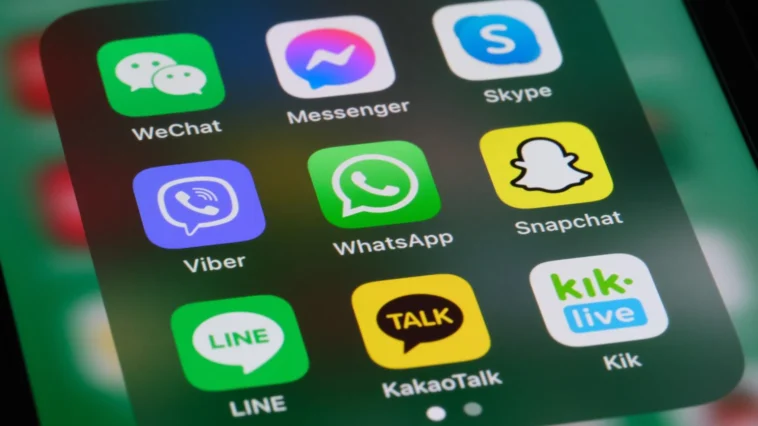
More than 3 billion people use WhatsApp, making it the world’s largest messaging platform by disclosed user base. But the global messaging market is far from a one-app race: WeChat dominates China, LINE is deeply embedded in Japan and Thailand, KakaoTalk is practically ubiquitous in South Korea, and Telegram has crossed the 1 billion monthly-user milestone.
We reviewed the latest company-reported figures and current 2026 industry data to rank the world’s most used messaging apps. Because companies do not all publish user numbers using the same methodology, this ranking uses the latest reliable reported or widely cited user figures, while clearly separating global figures from country-specific data.
Key Highlights
- WhatsApp remains the world’s largest messaging app, with more than 3 billion users globally. Meta confirmed the milestone in 2025 and again referenced more than 3 billion users in 2026.
- More than 2 billion people use WhatsApp every day, according to Meta, demonstrating the platform’s unusually high level of habitual usage.
- WeChat/Weixin has approximately 1.41 billion monthly active users, making it one of the world’s largest messaging ecosystems and the dominant communications platform in China.
- Telegram passed 1 billion monthly active users in 2025, according to Telegram’s own press information.
- Snapchat reached 956 million monthly active users in Q1 2026, up 5% year over year.
- Discord has more than 200 million monthly active users, with particularly strong adoption among gaming and online communities.
- LINE has 99 million monthly active users in Japan alone, equivalent to 80.5% of Japan’s total population.
- KakaoTalk has 49.1 million monthly active users in South Korea, equivalent to 95.1% of the country’s total population and 97.1% of its internet users.
- Regional dominance can look very different from global rankings. WhatsApp leads across many countries, while LINE, KakaoTalk and WeChat dominate their core Asian markets. Similarweb’s country-level analysis also identifies Signal as a leading messaging app in the Netherlands and Sweden.
A Note on How These Rankings Work
There is an important limitation when comparing messaging apps in 2026: not every company reports the same user metric.
WhatsApp reports a global user milestone, Telegram reports monthly active users, Snapchat reports MAU directly, while Messenger’s widely cited figures can come from advertising reach rather than an official MAU disclosure. LINE and KakaoTalk also publish particularly useful country-level figures for their strongest markets.
For that reason, this should not be treated as a perfectly precise league table. Instead, it is a ranking based on the latest publicly available user figures and credible industry estimates, with regional data included where global figures are unavailable.
For example, Statista’s October 2025 compilation listed WhatsApp at 3 billion, WeChat at 1.41 billion, Telegram at 1 billion, Messenger at 942 million, Snapchat at 932 million and QQ at 532 million. It specifically notes that the Messenger figure represents potential advertising reach rather than a clean MAU measurement.
The Top 10 Most Used Messaging Apps in the World
1. WhatsApp — 3+ Billion Users
WhatsApp remains the world’s largest messaging platform by disclosed global user base.
Meta confirmed that more than 3 billion people in over 180 countries use WhatsApp in 2025, and the company was still describing the platform as having more than 3 billion users in June 2026.
Its importance is particularly obvious in markets such as India, Brazil and much of Europe and Latin America. Meta also said in 2025 that more than 2 billion people use WhatsApp every day, underlining the difference between simply having an account and actively using the platform.
WhatsApp has also continued expanding beyond basic person-to-person messaging. In India, for example, Meta introduced prepaid mobile recharges directly inside WhatsApp in 2026, allowing users to recharge Jio, Airtel and Vi connections without leaving the app.
Users: 3+ billion globally
Owner: Meta
Standout strength: The broadest global reach of any major messaging platform
2. WeChat / Weixin — 1.41 Billion MAU
WeChat and Weixin form one of the world’s largest messaging ecosystems, with approximately 1.41 billion monthly active users in the latest widely reported company data.
The platform’s significance goes far beyond messaging. In China, WeChat functions as a super-app combining private conversations, group chats, payments, social content, mini-programs and other digital services.
This makes WeChat particularly difficult to compare directly with Western messaging apps. It is not simply a WhatsApp competitor; in its core market, it occupies a much broader role in everyday digital life.
Users: Approximately 1.41 billion MAU
Owner: Tencent
Standout strength: Messaging, payments and services integrated into one super-app
3. Telegram — 1+ Billion MAU
Telegram officially crossed the 1 billion monthly active user milestone in 2025, according to the company’s own press information.
The milestone marked a major change in Telegram’s position within the global messaging market. What was once considered an alternative messaging platform has become a genuine mass-market service.
Telegram differentiates itself through large groups and channels, extensive file-sharing capabilities, bots, mini-apps and an ecosystem that increasingly extends beyond conventional one-to-one messaging.
Users: 1+ billion MAU
Owner: Telegram
Standout strength: Large communities, channels and powerful platform features
4. Facebook Messenger — Around 1 Billion Reach
Facebook Messenger remains one of the world’s largest messaging services, although its current user figure needs to be treated carefully.
A widely cited October 2025 compilation put Messenger at 942 million, but Statista notes that this represents potential advertising reach rather than a directly reported MAU figure. Other 2026 industry trackers have placed its audience around the billion-user level.
Messenger continues to be particularly important in markets where Facebook has historically maintained a strong presence, including parts of Latin America and Southeast Asia.
The key distinction is that Messenger’s current position is better described as approximately billion-scale reach, rather than claiming a precisely verified 1.01 billion MAU.
Users: Around 942 million in the latest widely cited measurement; some estimates approach 1 billion
Owner: Meta
Standout strength: Strong integration with Facebook and major regional markets
5. Snapchat — 956 Million MAU
Snapchat is now much larger than the traditional image of it as a small, youth-focused messaging app suggests.
Snap reported 956 million global monthly active users in Q1 2026, an increase of 43 million, or 5%, year over year. Its daily active users reached 483 million during the same quarter.
The platform combines direct messaging with Stories, Spotlight, augmented reality lenses and other social features. That combination has helped Snapchat maintain substantial engagement while expanding beyond its original disappearing-photo identity.
Users: 956 million MAU in Q1 2026
Owner: Snap Inc.
Standout strength: Strong engagement among younger users combined with messaging and AR
6. QQ — 532 Million MAU
QQ remains one of China’s largest messaging platforms despite receiving far less international attention than WeChat.
The latest widely cited figures place QQ at approximately 532 million monthly active users.
QQ has historically been particularly important among younger Chinese internet users and continues to operate as a major standalone communications and social platform within Tencent’s wider ecosystem.
Its inclusion also demonstrates how different China’s messaging market is from many other countries: multiple Tencent platforms can maintain enormous audiences simultaneously.
Users: Approximately 532 million MAU
Owner: Tencent
Standout strength: Large established user base within China
7. Discord — 200+ Million MAU
Discord has more than 200 million monthly active users, according to Discord’s own company information.
Unlike WhatsApp or Messenger, Discord was designed around communities rather than primarily around personal contacts. Users communicate through servers containing dedicated text, voice and video channels.
Gaming remains central to Discord’s identity, but its communities now cover everything from hobbies and entertainment to education and professional interests.
Discord’s 200-million-plus audience is smaller than the giants above it, but its community model gives it an unusually strong position within its target audience.
Users: 200+ million MAU
Owner: Discord Inc.
Standout strength: Community-based text, voice and video communication
8. LINE — 99 Million MAU in Japan
LINE is another example of why global user counts can be misleading.
DataReportal reports 99 million monthly active LINE users in Japan, based on company figures from late 2025. That represented approximately 80.5% of Japan’s total population and 92.6% of the country’s internet users.
LINE is also highly important in Thailand and maintains a strong presence in Taiwan.
Rather than competing globally with WhatsApp on raw user numbers, LINE has built exceptional penetration in a relatively small number of Asian markets.
Users: 99 million MAU in Japan alone
Owner: LY Corporation / LINE ecosystem
Standout strength: Exceptional national penetration in Japan and strong regional presence
9. KakaoTalk — 49.1 Million MAU in South Korea
KakaoTalk is perhaps the clearest example of regional messaging dominance.
KakaoTalk had 49.1 million monthly active users in South Korea, according to figures compiled by DataReportal from Kakao’s earnings presentations. That equals 95.1% of South Korea’s total population and 97.1% of its internet users.
That means KakaoTalk’s global user count should not be compared directly with WhatsApp without considering geography. In South Korea, KakaoTalk has achieved a level of penetration that is extremely unusual for any messaging platform.
The app also extends beyond messaging through payments, social functions, commerce and other services.
Users: 49.1 million MAU in South Korea
Owner: Kakao Corp.
Standout strength: Near-universal penetration in South Korea
10. Signal — Privacy-Focused Global Alternative
Signal is the most difficult app on this list to rank using raw MAU because the Signal Foundation does not regularly publish a comparable global monthly-active-user figure.
That means it should not be assigned an invented global MAU number.
Signal’s importance instead comes from its privacy-focused design and strong adoption in certain markets. Similarweb’s messaging-app analysis identified Signal as the leading messaging app in the Netherlands and Sweden in its country-level research.
Signal is particularly attractive to users who prioritize private communications and open-source security technology over the enormous network effects of platforms such as WhatsApp and Messenger.
Users: No consistently reported global MAU figure
Owner: Signal Foundation
Standout strength: Privacy-focused messaging and strong adoption in selected markets
Important Statistics Table
| Rank | App | Latest Available User Figure | Owner | Key Strength |
| 1 | 3+ billion | Meta | Global reach | |
| 2 | WeChat / Weixin | 1.41 billion MAU | Tencent | China’s super-app ecosystem |
| 3 | Telegram | 1+ billion MAU | Telegram | Channels, groups and platform features |
| 4 | Facebook Messenger | ~942M+ reach/estimates | Meta | Facebook integration and regional strength |
| 5 | Snapchat | 956 million MAU | Snap Inc. | Youth engagement, messaging and AR |
| 6 | 532 million MAU | Tencent | Large Chinese user base | |
| 7 | Discord | 200+ million MAU | Discord Inc. | Gaming and communities |
| 8 | LINE | 99 million MAU in Japan | LY Corporation | Japan and Thailand |
| 9 | KakaoTalk | 49.1 million MAU in South Korea | Kakao Corp. | South Korea |
| 10 | Signal | No comparable public global MAU | Signal Foundation | Privacy |
*Note: These figures are not perfectly comparable. Some are company-reported MAU, some are broader user counts or advertising-reach estimates, and LINE and KakaoTalk figures above are country-specific. Statista’s October 2025 compilation lists WhatsApp at 3 billion, WeChat at 1.41 billion, Telegram at 1 billion, Messenger at 942 million, Snapchat at 932 million and QQ at 532 million. *
Global Scale vs. Regional Dominance
The most important lesson from this ranking is that the biggest global messaging apps are not necessarily the most dominant apps in every country.
WhatsApp has the broadest international footprint and leads the global rankings by disclosed user scale. Similarweb’s country-level research has repeatedly shown its strength across a large number of markets.
But several countries have developed their own messaging ecosystems.
China is dominated by WeChat and also has a huge standalone QQ audience. Japan has exceptionally high LINE penetration, while South Korea is overwhelmingly centered around KakaoTalk. These platforms may have much smaller global audiences than WhatsApp, but they can be more important to everyday communication within their home markets.
This is why a global MAU ranking should always be read alongside country-level adoption.
How to Read Messaging-App User Statistics
1. Check what the number actually measures
A user figure can represent MAU, daily active users, advertising reach or a broader registered-user count. These metrics should not be treated as interchangeable.
Messenger is a good example. The commonly cited 942 million figure is an advertising-reach measurement rather than a directly reported MAU figure.
2. Separate global and country-level data
LINE’s 99 million figure refers to Japan, while KakaoTalk’s 49.1 million figure refers to South Korea.
Using either number as a global MAU would produce a misleading ranking.
3. Look at engagement as well as audience size
A huge MAU figure does not automatically mean that every user is highly active.
For example, Meta says more than 2 billion people use WhatsApp every day, providing useful context alongside its 3-billion-plus global user figure.
4. Consider regional network effects
Messaging apps become more valuable when friends, family, businesses and communities are already using them.
That explains why LINE can be so important in Japan and KakaoTalk can be so dominant in South Korea even though neither has WhatsApp-level global scale.
5. Don’t invent numbers where companies don’t disclose them
Signal is a good example. Its importance is clear, but there is no consistently reported global MAU figure comparable with Snapchat’s quarterly disclosures or Telegram’s 1-billion milestone.
For SEO content, it is better to say “no comparable public global MAU figure” than to publish an unsupported estimate.
Pros and Cons
| App | Pros | Cons |
| Largest global reach; widely used internationally | Less dominant in some markets such as the US | |
| Messaging, payments and services in one platform | User base heavily concentrated in China | |
| Telegram | Large groups, channels and broad feature set | Smaller geographic reach than WhatsApp |
| Facebook Messenger | Strong Facebook integration and regional adoption | Current user figure is harder to compare directly |
| Snapchat | Strong youth engagement and AR features | More socially focused than traditional messaging apps |
| Huge established Chinese audience | Limited relevance outside China | |
| Discord | Excellent for communities and gaming | Less suited to simple personal messaging |
| LINE | Extremely strong in Japan and Thailand | Limited global reach |
| KakaoTalk | Near-universal South Korean penetration | Limited international presence |
| Signal | Strong privacy focus | Smaller publicly documented user scale |
Best Messaging App by What You Need
| Need | Best Pick | Why |
| Broadest global reach | More than 3 billion users worldwide | |
| Chinese market | WeChat / Weixin | Dominant super-app ecosystem |
| Large communities | Telegram | Powerful groups and channels |
| Gaming communities | Discord | Purpose-built community structure |
| Japan | LINE | 99 million MAU in Japan |
| South Korea | KakaoTalk | 49.1 million MAU in South Korea |
| Privacy-focused messaging | Signal | Privacy-first design |
| Youth-focused social messaging | Snapchat | 956 million MAU and strong engagement |
2026 Messaging-App Trends
WhatsApp continues to expand beyond messaging
WhatsApp’s scale remains its biggest advantage, but Meta is also turning the platform into a broader everyday-services ecosystem.
In India, WhatsApp introduced mobile recharges for Jio, Airtel and Vi users directly inside the app in 2026.
Meta has also continued expanding WhatsApp’s business and discovery capabilities. Its Updates tab was already being used by 1.5 billion people per day globally in 2025.
Telegram has entered the billion-user tier
Telegram’s passage of 1 billion monthly active users is one of the biggest changes in the messaging market.
The platform now operates at a scale comparable with the world’s largest established messaging services, while continuing to differentiate itself through channels, communities, bots and mini-apps.
Snapchat is approaching the billion-user mark
Snapchat reached 956 million MAU in Q1 2026, putting it within striking distance of the billion-user threshold. Daily active users reached 483 million during the same quarter.
That growth reinforces Snapchat’s transition from a niche youth messaging service into one of the world’s largest social communication platforms.
Regional messaging ecosystems remain powerful
Globalization has not eliminated local messaging preferences.
LINE continues to command extraordinary penetration in Japan, while KakaoTalk reaches more than 95% of South Korea’s population.
This regional fragmentation is likely to remain one of the defining characteristics of the messaging market.
Privacy remains an important differentiator
Signal demonstrates that a messaging app does not need billions of users to have a meaningful competitive position.
Its appeal is concentrated among users who prioritize privacy and security, while Similarweb has identified it as a leading messaging app in markets such as the Netherlands and Sweden.
Frequently Asked Questions
What is the most used messaging app in the world in 2026?
WhatsApp is the world’s largest messaging app by disclosed global user base, with more than 3 billion users. Meta confirmed the milestone in 2025 and continued referring to a 3-billion-plus user base in 2026.
Is WeChat bigger than WhatsApp?
No. WeChat/Weixin has approximately 1.41 billion monthly active users, compared with more than 3 billion WhatsApp users globally.
Has Telegram reached 1 billion users?
Yes. Telegram says it passed 1 billion monthly active users in 2025.
How many people use Snapchat in 2026?
Snapchat reported 956 million monthly active users in Q1 2026, up 5% year over year.
Is LINE popular outside Japan?
LINE has particularly strong adoption in Japan, Thailand and Taiwan. In Japan alone, it had 99 million monthly active users, equal to 80.5% of the country’s total population.
Why is KakaoTalk so important if it has fewer users than WhatsApp?
KakaoTalk’s importance comes from its extremely high penetration in South Korea. Its 49.1 million MAU in the country represent 95.1% of the total population and 97.1% of internet users.
Does Signal have fewer users than the other apps on this list?
Signal does not publish a directly comparable global MAU figure, so it is better not to assign it a precise global ranking by user count. Its significance is instead reflected in its privacy-focused user base and strong adoption in selected countries. Similarweb has identified Signal as a leading messaging app in the Netherlands and Sweden.
Why do messaging-app user figures differ between sources?
Companies and research firms measure different things. Some figures represent monthly active users, while others represent advertising reach, registered users or country-specific active users. Messenger is a particularly clear example because the widely cited 942-million figure is an advertising-reach estimate rather than a directly reported MAU figure.
Conclusion
The global messaging market in 2026 is dominated by a handful of enormous platforms, but there is no single formula for success.
WhatsApp leads the world with more than 3 billion users, while WeChat operates at enormous scale inside China’s super-app ecosystem and Telegram has now crossed the 1 billion monthly-user milestone. Snapchat is approaching the billion-user level, and Discord has established itself as a major community communication platform.
At the same time, regional champions remain incredibly powerful. LINE reaches 99 million monthly active users in Japan, while KakaoTalk reaches 49.1 million users in South Korea. Those numbers may look small beside WhatsApp, but their national penetration is extraordinary.
The biggest takeaway is therefore simple: WhatsApp wins on global scale, but messaging remains a highly regional market. The most important app depends not only on how many people use it worldwide, but also on where those people live, what their communities use and which digital services the platform provides.
References
- Meta – WhatsApp reaches more than 3 billion users
- Meta – WhatsApp usernames and 3-billion-plus user milestone
- Telegram Press Information
- Snap Inc. – Q1 2026 Financial Results
- Discord – 200+ million monthly active users
- DataReportal – Digital 2026: Japan
- DataReportal – Digital 2026: South Korea
- Statista – Most popular global mobile messenger apps
- Similarweb – Most Popular Messaging Apps Worldwide
FAQs
WhatsApp is the world’s most used messaging app by disclosed global user base, with more than 3 billion users worldwide. Its scale and widespread adoption across multiple regions keep it firmly in first place.
No. WeChat/Weixin has approximately 1.41 billion monthly active users, while WhatsApp has more than 3 billion users globally. WeChat’s user base is also heavily concentrated in China.
Yes. Telegram passed the 1 billion monthly active user milestone in 2025, making it one of the world’s largest messaging platforms alongside WhatsApp and WeChat.
LINE is the dominant messaging app in Japan, with 99 million monthly active users, while KakaoTalk is dominant in South Korea, with 49.1 million monthly active users. Both platforms demonstrate how regional apps can achieve extremely high national penetration.
Signal is one of the leading privacy-focused messaging apps in 2026. Although it does not publish a directly comparable global MAU figure, its privacy and security features have helped it build a strong following in privacy-conscious markets.



GIPHY App Key not set. Please check settings