 kiruthika
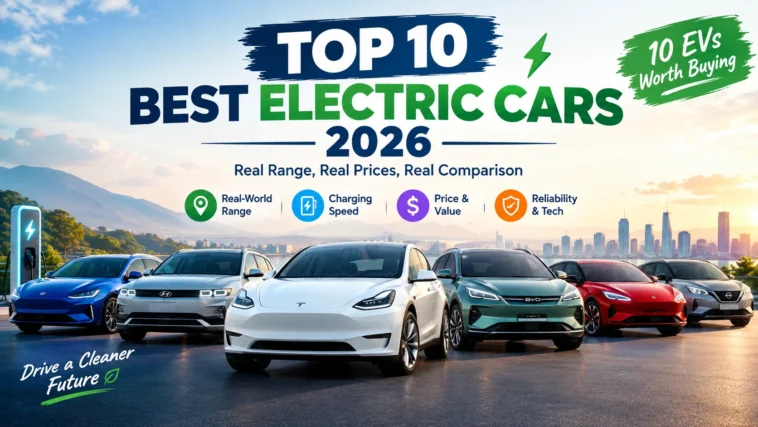
Hook Introduction
Buying an electric car in 2026 is confusing. Every brand claims the “best range” or the “smartest tech,” and half the numbers you see online are outdated by the time you read them.
So we cut through the noise. Below are the 10 best electric cars in 2026, based on real sales data, verified range figures, and actual price tags, not marketing slides.
Key Highlights (Quick Facts)
- Global EV sales are projected to hit 23 million units in 2026, about 28% of all new car sales worldwide, according to the IEA’s Global EV Outlook 2026.
- The IEA reports the electric car market reached new highs in 2025, growing 20% from 2024 to exceed 20 million sales, pushing the sales share to 25%.
- China alone accounted for roughly 58% of all EV sales in 2026, close to 14.4 million units, while Europe added 5.8 million and the United States around 3.1 million.
- BYD sold over 2.25 million battery electric vehicles globally in 2025, edging past Tesla in annual volume for the first time.
- The Tesla Model Y remains the world’s best-selling EV in most global markets, prized for its Supercharger network and software.
- The Nissan Leaf is now in its third generation with a claimed WLTP range near 530 km, roughly double the old model.
- Norway closed 2025 with a 95.9% battery-electric share of new passenger cars — the highest in the world.
- Home charging is still cheaper than gas: EV owners typically pay far less per mile for electricity than petrol drivers pay at the pump.
Caption: The Tesla Model Y remains the best-selling electric car worldwide in 2026.
What Makes an Electric Car “Best” in 2026
There’s no single “best” EV. It depends on your budget, your commute, and whether you even have home charging.
But there are five things every serious buyer should weigh:
- Real-world range — not the inflated lab number, the one you’ll actually get in winter traffic.
- Charging speed — how long you’re stuck at a rest stop on a road trip.
- Total cost after incentives — sticker price minus any tax credit or rebate you qualify for.
- Software and reliability — over-the-air updates, service network, and resale value.
- Practicality — cargo space, seating, and towing if you need it.
We ranked this list using those five factors together, not just top speed or flashy screens.
The Top 10 Best Electric Cars in 2026
Here’s the list, built from real specs, real prices, and actual market performance — not press releases.
1. Tesla Model Y
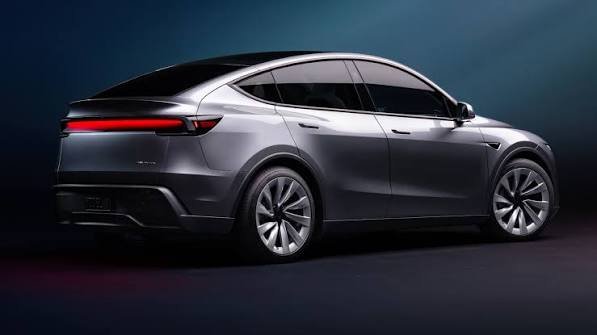
The Model Y is still the car every other EV gets compared against, and for good reason. It’s the world’s best-selling EV thanks to excellent range, the strongest charging network around, and software that keeps improving after purchase.
- Range: Around 320–380 miles EPA depending on trim
- Starting price: Roughly $45,000–$60,000 depending on market and trim
- Best for: Buyers who want the most hassle-free charging experience anywhere
- Official website: tesla.com/modely
2. BYD Seal
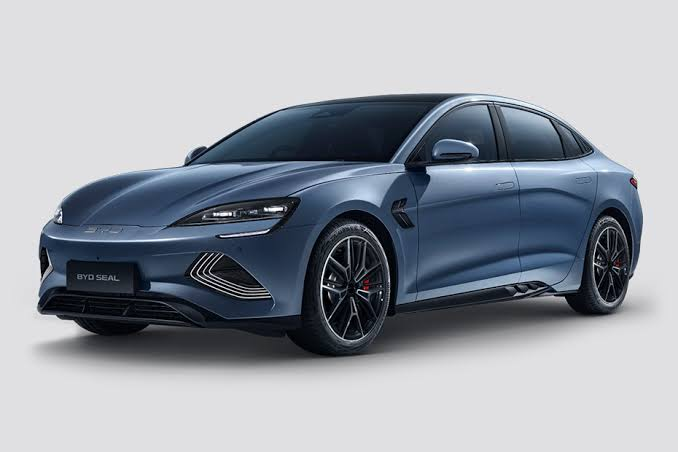
BYD’s answer to the Tesla Model 3 has become a genuine rival worldwide. In India, the BYD Seal starts around Rs 41.50 lakh compared with the Tesla Model Y’s roughly Rs 50.89 lakh, undercutting Tesla while still offering strong tech.
- Range: Roughly 400–500 km real-world depending on the variant
- Starting price: Lower than most Tesla equivalents in almost every market
- Best for: Buyers who want Tesla-rival performance for noticeably less money
- Official website: byd.com/eu/electric-cars/seal
3. Hyundai Ioniq 5
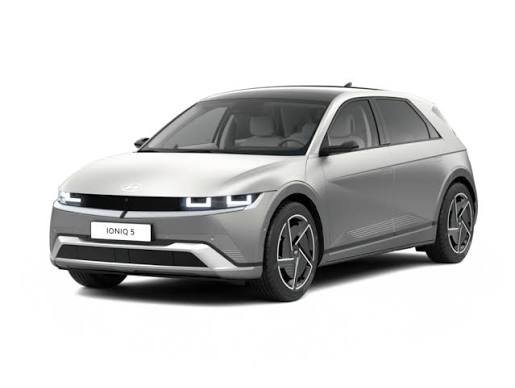
The Ioniq 5 mixes retro design with genuinely fast charging. In direct comparisons, the Hyundai IONIQ 6 sedan version reaches about 361 miles of range and charges 10–80% in roughly 18 minutes — among the fastest in its class, and the Ioniq 5 SUV shares much of that same charging architecture.
- Range: Roughly 260–320 miles depending on trim
- Starting price: Around $40,000–$50,000
- Best for: Families who do frequent long road trips and hate waiting at chargers
- Official website: hyundaiusa.com/us/en/vehicles/ioniq-5
4. Nissan Leaf (Third Generation)
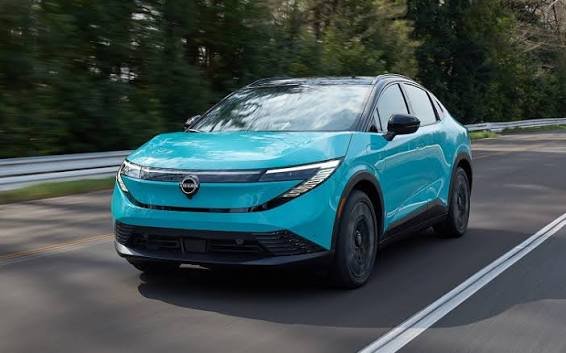
The car that started the mainstream EV era just had its biggest update yet. The new third-generation Leaf abandons its old platform for the modern CMF-EV architecture shared with the Ariya, nearly doubling range to around 530 km WLTP.
In the US, the 2026 Leaf offers 303 miles of range at a price just over $31,000, making it one of the cheapest ways into a genuinely modern EV.
- Range: Up to 303 miles EPA (US) / ~530 km WLTP claimed (Europe)
- Starting price: Around $31,000–$36,000
- Best for: First-time EV buyers on a tight budget
- Official website: nissanusa.com/vehicles/electric-cars/leaf
Caption: The BYD Seal undercuts Tesla pricing while matching it on range and features.
Below is a look at how these mid-range contenders actually compare in daily use.
5. Chevrolet Equinox EV
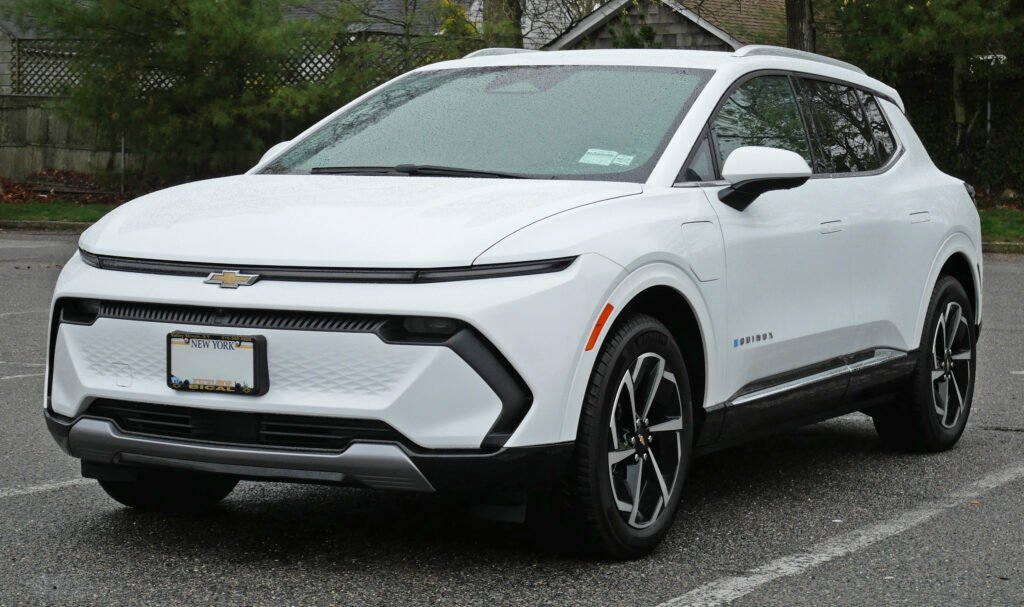
If you want an affordable EV that doesn’t feel like a compromise, this is it. The Equinox EV qualifies for the full federal tax credit, bringing its effective price under $28,000, with 319 miles of range and a practical SUV body — making it one of the most accessible quality EVs on sale.
- Range: 319 miles EPA (FWD)
- Starting price: $34,995 before incentives
- Best for: Budget-conscious families who still want SUV space
- Official website: chevrolet.com/electric/equinox-ev
6. Kia EV9
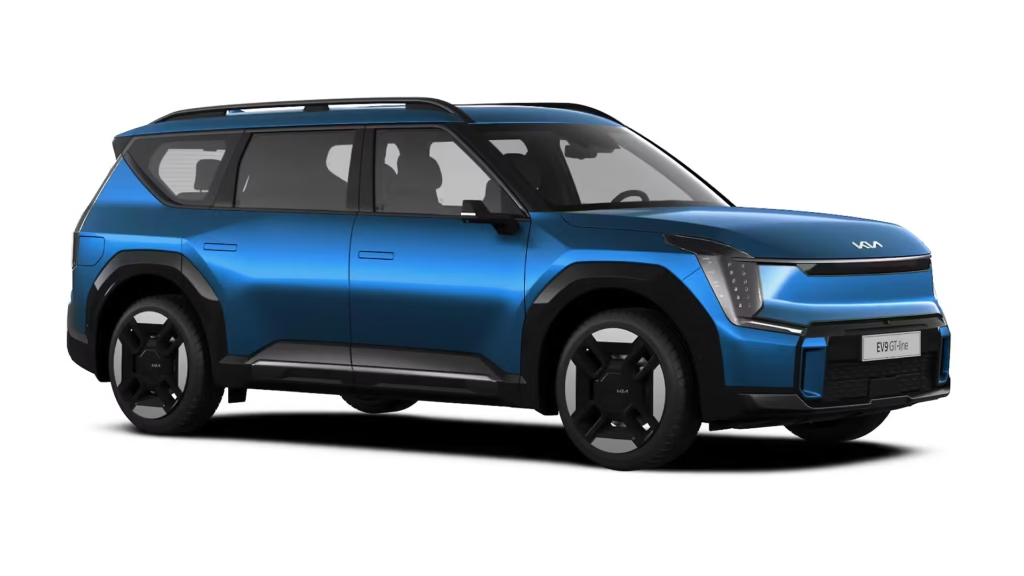
Kia’s three-row electric SUV is aimed squarely at families who need real seating for seven. The Long Range RWD version delivers around 305 miles per charge, while pricing sits in the $50,000–$60,000 band depending on trim.
- Range: 230–305 miles depending on trim
- Starting price: Around $50,000–$80,000
- Best for: Large families needing three rows in a fully electric package
- Official website: kia.com/us/en/ev9
7. Hyundai Ioniq 9
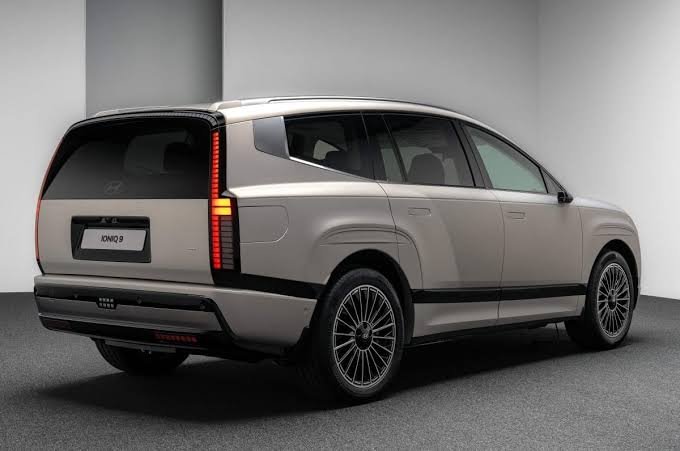
Hyundai’s flagship three-row EV steps up where the Ioniq 5 leaves off. It feels every bit as good as the Kia EV9, with greater interior roominess, more range, and a bit more power — though it costs somewhat more.
- Range: Around 335 miles (RWD) down to 311 miles (AWD Performance)
- Starting price: Roughly $59,000–$66,000
- Best for: Buyers who want three-row comfort without stepping up to Rivian-level pricing
- Official website: hyundaiusa.com/us/en/vehicles/ioniq-9
8. Rivian R1S
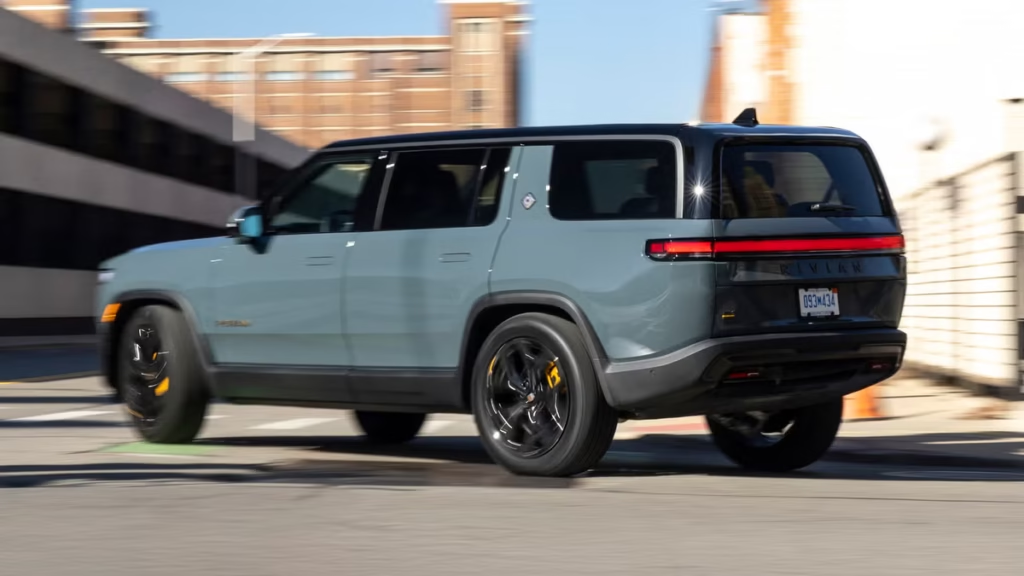
For buyers who want genuine off-road capability with zero emissions, the Rivian R1S remains the benchmark. It offers extraordinary off-road capability, massive range, and a stunning interior, built by a company that clearly loves what it makes.
- Range: Roughly 260–410 miles depending on battery pack
- Starting price: Around $78,885 MSRP
- Best for: Adventure-focused buyers who need real off-road ability
- Official website: rivian.com/r1s
9. Ford F-150 Lightning
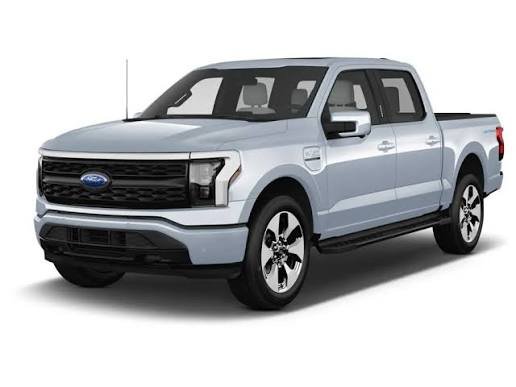
America’s best-selling truck, now in electric form. It brings real towing capability, a massive frunk for storage, and a name that working truck owners already trust.
- Range: Roughly 230–320 miles depending on battery and trim
- Starting price: Around $50,000–$70,000
- Best for: Truck owners who tow, haul, or just want a familiar badge on an EV
- Official website: ford.com/trucks/f150/f150-lightning
10. Lucid Air
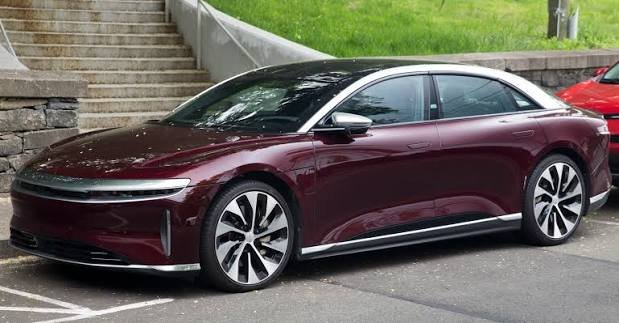
If range and luxury matter more than price, the Lucid Air still leads the pack. It posts one of the longest ranges of any production EV, in the 420–480 mile EPA range depending on the Grand Touring configuration — enough to beat nearly everything else on this list on a single charge.
- Range: Up to 420–480 miles EPA (Grand Touring)
- Starting price: Roughly $70,000 and up
- Best for: Buyers who want maximum range with a genuinely premium interior
- Official website: lucidmotors.com/air
Important Statistics Table
| Metric | Figure | Source & Year |
| Global EV sales (projected) | 23 million units, 28% of all car sales | IEA Global EV Outlook, 2026 |
| Global EV sales (2025 actual) | Over 20 million, 25% market share | IEA, 2026 |
| China’s EV share of new car sales | Nearly 55% | IEA Global EV Outlook, 2026 |
| BYD global BEV sales (2025) | Over 2.25 million units | Vehiclers/company data, 2025 |
| Norway BEV share of new cars | 95.9% | SQ Magazine EV Statistics, Jan 2026 |
| India EV sales (2025) | 2.3 million units, up 75%+ | IEA Global Energy Review, 2026 |
| Typical new EV range (US) | 200–350 miles, growing above 300 | Coltura EV Range Guide, 2026 |
| Longest-range production EV | Up to ~500 miles WLTP (BMW iX3 claim) | EV Hub, 2026 |
How to Choose the Right EV for You (Step-by-Step)
Picking an EV doesn’t have to be overwhelming. Follow this order and you’ll avoid buyer’s remorse.
Step 1: Work out your real daily driving distance. Most people drive under 40 miles a day. Even a budget EV with 250 miles of range covers that with room to spare.
Step 2: Check if you can charge at home. If you have a driveway or garage, almost any EV works. If you rely only on public charging, prioritize fast-charging speed over raw range.
Step 3: Set your real budget, including incentives. Federal, state, or national EV tax credits can cut thousands off the sticker price — factor that in before comparing models.
Step 4: Test drive at least two body styles. A sedan like the BYD Seal feels completely different from an SUV like the Ioniq 5. Don’t buy on spec sheets alone.
Step 5: Check charging network compatibility in your region. Tesla’s Supercharger network is now open to many non-Tesla EVs in several markets — confirm this before you decide.
Step 6: Compare total cost of ownership, not just price. Electricity is typically far cheaper per mile than gasoline, and EVs need far less routine maintenance — no oil changes, less brake wear thanks to regenerative braking.
Pros and Cons Table
| Pros | Cons |
| Lower running costs than gas cars over time | Higher upfront price than comparable gas models |
| No oil changes, less brake wear | Charging infrastructure still uneven outside cities |
| Instant torque and quiet, smooth driving | Cold weather can meaningfully cut real-world range |
| Growing model choice at every price point | Public fast-charging still costs more than home charging |
| Access to tax credits in many countries | Resale values vary a lot by brand and battery health |
| Over-the-air software updates improve the car over time | Long road trips still need more planning than a gas car |
Best Electric Cars Compared Side-by-Side
| Model | Starting Price (approx.) | Range (approx.) | Best For |
| Tesla Model Y | $45,000–$60,000 | 320–380 miles | All-round charging & software |
| BYD Seal | Lower than Model Y in most markets | 400–500 km | Value vs. Tesla |
| Hyundai Ioniq 5 | $40,000–$50,000 | 260–320 miles | Fast charging |
| Nissan Leaf | $31,000–$36,000 | Up to 303 miles / 530 km WLTP | Budget first EV |
| Chevrolet Equinox EV | $34,995 (pre-incentive) | 319 miles | Affordable SUV |
| Kia EV9 | $50,000–$80,000 | 230–305 miles | Three-row families |
| Hyundai Ioniq 9 | $59,000–$66,000 | 311–335 miles | Roomier three-row |
| Rivian R1S | ~$78,885 | 260–410 miles | Off-road capability |
| Ford F-150 Lightning | $50,000–$70,000 | 230–320 miles | Towing & hauling |
| Lucid Air | $70,000+ | 420–480 miles | Maximum range & luxury |
2026 Trends and News in the EV World
The EV market didn’t grow in a straight line this year, and that’s worth understanding before you buy.
Global electric car sales fell around 8% year-on-year in the first quarter of 2026, mainly due to weaker demand in China and the United States, even though the IEA still projects 23 million units for the full year. So the long-term trend is still up — it’s just bumpier month to month than headlines suggest.
Charging technology is also moving fast. The first 1,000-volt EV platforms arrived in 2025, and announcements of sub-10-minute charging times have continued into 2026, though cars able to actually use those ultra-fast chargers are still a small slice of the overall fleet.
Regionally, growth is shifting outside the traditional big three markets. Electric car sales in Southeast Asia more than doubled in 2025, and Latin America saw around 70% annual growth, with sales in Mexico more than tripling. If you’re shopping in an emerging EV market, expect more model choice arriving through 2026 and 2027 than you had even a year ago.
On the value side, competition between Tesla and Chinese brands like BYD keeps pushing prices down. BYD typically undercuts Tesla across equivalent vehicle classes — compact sedans, midsize SUVs, and entry-level EVs — by a meaningful margin, which is good news if you’re shopping on a budget in a market where both brands compete.
Caption: Fast-charging speed is one of the biggest factors separating the best EVs of 2026.
References
- International Energy Agency — Global EV Outlook 2026, Executive Summary (iea.org)
- International Energy Agency — Trends in Electric Cars, Global EV Outlook 2026 (iea.org)
- International Energy Agency — Global Energy Review 2026: Electric Vehicles (iea.org)
- Down To Earth — “Global EV Sales to Hit 23 Million by 2026” (downtoearth.org.in)
- Coltura — Electric Car Range and Price Comparison 2026 (coltura.org)
- EV Charging Stations — Top 10 Most Affordable Electric Cars for 2026 (evchargingstations.com)
- U.S. News & World Report — Best Electric Vehicles of 2026 (cars.usnews.com)
- EV Hub — Best Electric Cars 2026: Top EVs for Range, Price, Performance & Value (ev.brightcoding.dev)
- ElectricCarsBlog.com — Electric Car Ratings 2026 (electriccarsblog.com)
- Kelley Blue Book — 2026 Nissan Leaf vs 2026 Hyundai Ioniq 5 Comparison (kbb.com)
- CarDekho — BYD Seal vs Tesla Model Y Comparison (cardekho.com)
- Vehiclers — Tesla vs BYD: Which EV Is Better in 2026? (vehiclers.com)
- Cars.com — 2026 Hyundai Ioniq 9 Specs, Prices, Range (cars.com)
- SQ Magazine — Electric Vehicle Statistics 2026 (sqmagazine.co.uk)
- CarCostBreakdown — Global Report of Electric Vehicle Statistics 2026 (carcostbreakdown.com)
Official Model Websites (Manufacturer Sources)
- Tesla — Model Y official page (tesla.com/modely)
- BYD — Seal official page, Europe (byd.com/eu/electric-cars/seal)
- Hyundai — Ioniq 5 official page (hyundaiusa.com/us/en/vehicles/ioniq-5)
- Nissan — Leaf official page (nissanusa.com/vehicles/electric-cars/leaf.html)
- Chevrolet — Equinox EV official page (chevrolet.com/electric/equinox-ev)
- Kia — EV9 official page (kia.com/us/en/ev9)
- Hyundai — Ioniq 9 official page (hyundaiusa.com/us/en/vehicles/ioniq-9)
- Rivian — R1S official page (rivian.com/r1s)
- Ford — F-150 Lightning official page (ford.com/trucks/f150/f150-lightning)
- Lucid Motors — Air official page (lucidmotors.com/air)
FAQs
It depends on your budget. For all-round value and charging convenience, the Tesla Model Y is the safest pick. For a tighter budget, the Nissan Leaf or Chevrolet Equinox EV offer excellent range for the price.
The Nissan LEAF S+ starts around $29,990 with 303 miles of EPA range, while the Chevrolet Equinox EV FWD is the cheapest SUV option at $34,995 with 319 miles of range.
The BMW iX3 50 xDrive claims a 500-mile WLTP range, followed by the Mercedes CLA Electric at 492 miles and the Lucid Air Grand Touring at 420–480 miles EPA.
Yes. Electricity typically costs around 60% less per mile than gasoline, EVs need no oil changes, and regenerative braking means minimal brake wear — plus many buyers still qualify for tax credits up to $7,500.
In 2025, BYD sold over 2.25 million battery electric vehicles globally, edging past Tesla in annual volume for the first time. Tesla still leads in the US, but BYD dominates in China and much of the developing world.
Battery technology is improving steadily, not dramatically, year to year. If your current car works fine, it’s reasonable to wait — but tax credits and current pricing may not last forever, so weigh that against holding out for a marginally better range figure.



GIPHY App Key not set. Please check settings