 Sakthi Varna
Introduction
The tablet market looks deceptively simple from the outside, just Apple versus everyone else, but the real picture is more interesting than that. Apple controls roughly 40% of global shipments, yet Android tablets collectively outsell the iPad, and no single Android vendor comes anywhere close to Apple’s individual share.
We pulled verified shipment data from IDC and Omdia, alongside real specs, current pricing, and hands-on review data from Tom’s Guide, TechRadar, and Consumer Reports, to rank the ten best tablets worldwide right now, backed by an actual statistical report on the global market.
Table of Contents
- Key Highlights
- Global Tablet Market: The Statistical Report
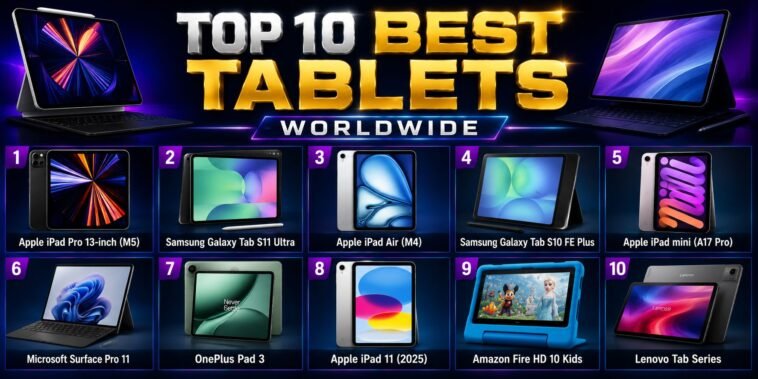
- The Top 10 Best Tablets Worldwide
- Important Statistics Table
- How to Choose the Right Tablet for You (Step-by-Step)
- Pros and Cons Table
- Comparison Table: Top 10 Tablets at a Glance
- Current Trends in the Tablet Market
- FAQs
- References
Key Highlights (Quick Facts)
- Apple held approximately 40% of the global tablet market in Q1 2026, more than double second-placed Samsung at roughly 17%, based on combined IDC and Omdia shipment data.
- The top five tablet vendors globally, Apple, Samsung, Lenovo, Huawei, and Xiaomi, together control more than 80% of the entire global tablet market.
- Apple shipped 19.6 million iPads in Q4 2025 alone, a 16.5% year-over-year increase, driven largely by the iPad 11th Generation and the M5-powered iPad Pro lineup.
- Lenovo posted the fastest growth among major vendors in Q1 2026, with shipments up approximately 25% year over year, driven by aggressive expansion in consumer and education tablets.
- IDC forecasts full-year global tablet shipments of approximately 139 million units in 2026, a decline of roughly 9% due in part to an anticipated memory-component shortage expected to raise prices industry-wide.
- Entry-level iPads accounted for nearly 52% of Apple’s total quarterly tablet sales in Q4 2025, showing that budget-tier devices, not just premium models, drive the bulk of Apple’s tablet volume.
- Apple’s dominance is even more pronounced in North America specifically, where the company holds more than 55% of the regional tablet market.
- The global tablet market’s value estimates vary by research firm, ranging from roughly $59.9 billion to $121.61 billion for 2026, reflecting differences in how each firm defines and measures the category.
The truth is, most people don’t need the most powerful tablet on the market. Matching the device to your actual use case, note-taking, entertainment, creative work, or kids’ education, matters far more than chasing the highest spec sheet.
Global Tablet Market: The Statistical Report
Before ranking individual tablets, here’s the real numbers behind the industry as a whole, based on the most recent IDC and Omdia tracking data.
Market Share by Vendor (Q1 2026)
Apple led with approximately 40% of global shipments (14.8 million iPads), up from roughly 37% a year earlier. Samsung held second place at approximately 17%, followed by Lenovo, Huawei, and Xiaomi rounding out the top five.
Growth and Decline by Vendor (Q1 2026, Year-Over-Year)
Lenovo grew fastest among major vendors at approximately 25%, followed by Huawei at approximately 11% and Apple at approximately 8%. Samsung and Xiaomi both declined, by roughly 13% and 14% respectively, in an overall flat quarter.
Full-Year 2026 Shipment Forecast
IDC forecasts total global tablet shipments of approximately 139 million units for the full year, a decline of roughly 9% compared to the prior year, driven partly by an anticipated memory-component shortage expected to push prices higher across the industry.
Regional Market Dynamics
North America remains Apple’s strongest region, with the company holding more than 55% of the regional tablet market, reflecting strong ecosystem lock-in with the iPhone, Mac, and Apple Watch. Meanwhile, price-sensitive emerging markets, including the Middle East, Africa, and parts of Asia excluding Japan and China, are expected to see the sharpest shipment declines as sub-$200 tablets face the most pricing pressure.
Market Value Estimates
Global tablet market value estimates vary meaningfully by research firm. One analysis puts the 2026 market at approximately $59.9 billion, growing to $79.3 billion by 2033. Another projects a considerably larger $121.61 billion for 2026, reaching $158.37 billion by 2030 at a 6.8% compound annual growth rate. These figures differ due to varying methodology in how each firm defines the tablet category and which regions and price tiers are included.
The Top 10 Best Tablets Worldwide
Here is our researched, detailed ranking of the best tablets available globally right now.
1. Apple iPad Pro 13-inch (M5)
Price: Approximately $1,200 (11-inch model starts around $900)
Specifications: Apple M5 chip, 13-inch Ultra Retina XDR tandem OLED display, Apple Pencil Pro and Magic Keyboard support, ProMotion high refresh rate.
Features: The tandem OLED display delivers exceptional color accuracy and brightness, making it a genuine choice for professional creative work including 4K video editing and 3D rendering, alongside seamless support for demanding apps like Procreate, LumaFusion, and Adobe Photoshop.
Why it stands out: The Tech Showdown crowned this the best overall tablet in its full catalog comparison, citing its balance of performance, features, and price relative to what buyers actually get for the money, backed by a 4.8 out of 5 rating across 900 verified reviews.
2. Samsung Galaxy Tab S11 Ultra
Price: Premium tier, among Samsung’s most expensive tablets
Specifications: 14.6-inch AMOLED display, Snapdragon processor, S Pen included, Samsung DeX support.
Features: This is the closest thing to a full laptop replacement in tablet form, with a genuinely massive AMOLED display and a well-tuned version of One UI optimized specifically for large-screen productivity and multitasking.
Why it stands out: Tom’s Guide specifically recommends this over the more compact OnePlus Pad 3 for anyone who needs a true Android laptop alternative, though its 14.6-inch size makes it larger than some actual mid-size laptops.
Image: A large tablet with a stylus resting beside it on a desk — premium tablets increasingly compete directly with laptops for productivity-focused users.
3. Apple iPad Air (M4)
Price: $559 (11-inch) or $749 (13-inch)
Specifications: Apple M4 chip, Liquid Retina display, Apple Pencil Pro support, available in both 11-inch and 13-inch sizes.
Features: The M4 chip delivers genuinely desktop-level performance for its price tier, making it capable of handling demanding creative and productivity tasks that used to require a full iPad Pro.
Why it stands out: Tom’s Guide specifically calls the iPad Air M4 the best performance-to-price offering in Apple’s entire tablet lineup, positioning it as the smart middle-ground choice between the budget iPad and the significantly pricier iPad Pro.
4. Samsung Galaxy Tab S10 FE Plus
Price: Approximately $500
Specifications: 11-inch AMOLED display with 1,600 nits peak brightness, aluminum frame, S Pen included, seven years of promised software updates extending to 2031.
Features: Despite sitting below Samsung’s flagship tier, this tablet delivers a genuinely premium feel, with a display sharp and vivid enough for both productivity work and binge-watching, plus enough processing power for light gaming and video editing.
Why it stands out: Tom’s Guide names this their overall best Samsung tablet pick, specifically highlighting its unusually long seven-year software support window as a standout value proposition rarely matched at this price point.
5. Apple iPad mini (A17 Pro)
Price: Approximately $489
Specifications: A17 Pro chip (the same processor used in the iPhone 15 Pro), 8.3-inch Liquid Retina display, Apple Pencil Pro support.
Features: Despite its compact size, the iPad mini runs the same chip found in Apple’s flagship phone from the same generation, giving it genuine power for Apple Intelligence features and modern gaming despite its smaller form factor.
Why it stands out: With Samsung and Google having largely abandoned the small-tablet category, TechRadar notes the iPad mini remains the best compact tablet available essentially by default, though it’s a genuinely capable one regardless of the lack of direct competition.
Image: A compact tablet held comfortably in one hand while reading — smaller tablets remain a genuine niche for readers and note-takers who prioritize portability over screen size.
6. Microsoft Surface Pro 11
Price: Approximately $1,150
Specifications: Windows 11 operating system, detachable folio keyboard support, Copilot AI features.
Features: Unlike the iPad or Galaxy Tab, the Surface Pro delivers a genuine full desktop operating system in tablet form, making it the strongest choice for anyone who specifically needs Windows-native software rather than a mobile operating system adapted for larger screens.
Why it stands out: Tom’s Guide is careful to note that Microsoft’s marketed “Copilot ready” AI features remain underbaked and shouldn’t be a primary purchase reason, but the Surface Pro still earns its recommendation purely on the strength of its genuine desktop-class Windows experience in a portable form factor.
7. OnePlus Pad 3
Price: Mid-range Android tablet tier
Specifications: Large-format Android tablet, optimized for daily use and light productivity tasks.
Features: This tablet delivers a smooth, well-rounded Android tablet experience without the extreme size or price of Samsung’s Ultra-tier devices, making it a genuinely practical daily driver for most Android tablet buyers.
Why it stands out: Tom’s Guide specifically positions the OnePlus Pad 3 as excellent for daily use and light productivity, reserving the larger, pricier Galaxy Tab S11 Ultra recommendation only for buyers who specifically need a full Android laptop alternative.
8. Apple iPad 11 (2025)
Price: $349
Specifications: Entry-level Apple silicon chip, standard Liquid Retina display, compatible with base-model Apple Pencil.
Features: As Apple’s cheapest current-generation iPad, this model still runs the full iPadOS experience with access to the entire App Store and Apple’s ecosystem features, just without the premium display and processing power of the Air or Pro tiers.
Why it stands out: Entry-level iPads accounted for nearly 52% of Apple’s entire quarterly tablet sales volume in Q4 2025, making this exact tier of device the actual volume driver behind Apple’s overall market dominance, not the flashier Pro models.
9. Amazon Fire HD 10 Kids
Price: Approximately $110 to $140
Specifications: 10.1-inch Full HD display, USB-C connectivity, Wi-Fi 6E, kid-proof case included, one year of Amazon Kids+ subscription included.
Features: Built specifically for durability and parental control, this tablet includes a rugged case designed to survive drops, alongside Amazon’s dedicated kids’ content ecosystem and screen-time management tools.
Why it stands out: The Tech Showdown’s comparison specifically names this the best budget pick in their entire 34-tablet catalog, balancing genuine performance, kid-focused features, and price in a way that makes sense for family buyers specifically, backed by over 22,000 verified reviews.
Image: A child using a tablet with a colorful protective case in a home setting — durability and parental controls remain the deciding factors for the kids’ tablet category specifically.
10. Lenovo Tab Series (XiaoxinPad / Tab Plus / Y700)
Price: Budget to mid-range tier, varies by specific model
Specifications: Varies by model, generally featuring competitive displays and processors positioned below flagship Apple and Samsung pricing.
Features: Lenovo’s tablet lineup spans budget consumer models through education-focused devices, with the Y700 and XiaoxinPad Pro models specifically noted as strong sellers within Chinese subsidy programs and broader emerging-market education initiatives.
Why it stands out: Lenovo posted the fastest shipment growth among all major global vendors, up approximately 25% year over year in Q1 2026 and as much as 36% in Q4 2025, driven by aggressive expansion in both consumer and education-focused tablet segments worldwide.
Important Statistics Table
| Tablet | Price (approx.) | Display | Best For |
|---|---|---|---|
| Apple iPad Pro 13-inch (M5) | $1,200 | 13″ Ultra Retina XDR OLED | Professional creative work |
| Samsung Galaxy Tab S11 Ultra | Premium tier | 14.6″ AMOLED | Full laptop replacement |
| Apple iPad Air (M4) | $559-$749 | 11″/13″ Liquid Retina | Best price-to-performance |
| Samsung Galaxy Tab S10 FE Plus | ~$500 | 11″ AMOLED, 1,600 nits | Best value with long software support |
| Apple iPad mini (A17 Pro) | ~$489 | 8.3″ Liquid Retina | Best compact tablet |
| Microsoft Surface Pro 11 | ~$1,150 | Varies | Full Windows desktop experience |
| OnePlus Pad 3 | Mid-range | Large-format | Daily use and light productivity |
| Apple iPad 11 (2025) | $349 | Standard Liquid Retina | Best budget entry point |
| Amazon Fire HD 10 Kids | $110-$140 | 10.1″ Full HD | Best kids’ tablet |
| Lenovo Tab Series | Budget-mid range | Varies by model | Fastest-growing vendor globally |
How to Choose the Right Tablet for You (Step-by-Step)
- Identify your primary use case first, since a tablet optimized for creative professional work and one optimized for kids’ durability have almost nothing in common.
- Check your existing ecosystem, since heavy iPhone or Mac users benefit from iPad’s tight integration, while Android phone users may prefer Samsung or OnePlus for consistency.
- Match your budget to realistic needs, since entry-level iPads accounted for over half of Apple’s total tablet sales, proving most buyers don’t actually need flagship-tier specs.
- Consider software support length, since Samsung’s seven-year update commitment on the Tab S10 FE Plus is a genuinely rare value signal worth factoring into a purchase decision.
- Decide if you need a full desktop OS, since only the Surface Pro lineup delivers genuine Windows software compatibility rather than a mobile operating system adapted for tablets.
- Check stylus and keyboard accessory costs separately, since these are frequently sold apart from the tablet itself and can add substantially to the real total cost.
- Verify current pricing and promotions, since tablet pricing shifts frequently around product refresh cycles and seasonal sales events.
Pros and Cons Table
| Tablet | Pros | Cons |
|---|---|---|
| Apple iPad Pro 13-inch (M5) | Best-in-class display and performance | Very high price, especially with accessories |
| Samsung Galaxy Tab S11 Ultra | Massive display, true laptop-alternative feel | Large size may be unwieldy for casual use |
| Apple iPad Air (M4) | Excellent price-to-performance balance | Lacks Pro-tier display technology |
| Samsung Galaxy Tab S10 FE Plus | Exceptional value, seven years of updates | Display not as colorful as pricier Samsung models |
| Apple iPad mini (A17 Pro) | Powerful chip in a compact size | Limited direct competition means slower innovation |
| Microsoft Surface Pro 11 | Genuine full Windows experience | Marketed AI features remain underdeveloped |
| OnePlus Pad 3 | Smooth daily use, solid value | Not a full laptop replacement like the Tab S11 Ultra |
| Apple iPad 11 (2025) | Affordable entry into the Apple ecosystem | Lacks premium display and chip performance |
| Amazon Fire HD 10 Kids | Rugged, parent-friendly, strong value | Limited to Amazon’s app ecosystem |
| Lenovo Tab Series | Strong value, fastest-growing global vendor | Brand recognition lower than Apple or Samsung in some markets |
Comparison Table: Top 10 Tablets at a Glance
| Tablet | Operating System | Best Use Case | Stylus Support |
|---|---|---|---|
| Apple iPad Pro 13-inch (M5) | iPadOS | Professional creative work | Apple Pencil Pro |
| Samsung Galaxy Tab S11 Ultra | Android (One UI) | Laptop replacement | S Pen included |
| Apple iPad Air (M4) | iPadOS | General productivity | Apple Pencil Pro |
| Samsung Galaxy Tab S10 FE Plus | Android (One UI) | Note-taking, media | S Pen included |
| Apple iPad mini (A17 Pro) | iPadOS | Portability, reading | Apple Pencil Pro |
| Microsoft Surface Pro 11 | Windows 11 | Desktop-class software use | Optional Surface Pen |
| OnePlus Pad 3 | Android (OxygenOS) | Daily use, light productivity | Optional stylus |
| Apple iPad 11 (2025) | iPadOS | Budget-friendly entry point | Base Apple Pencil |
| Amazon Fire HD 10 Kids | Fire OS | Kids’ education and entertainment | Not supported |
| Lenovo Tab Series | Android | Budget and education use | Varies by model |
Image: Multiple tablets of different sizes arranged side by side on a table — the tablet market now spans an unusually wide range of sizes, prices, and specialized use cases compared to just a few years ago.
Current Trends in the Tablet Market
The global tablet market keeps shifting, and a few clear patterns stand out in the most recent data.
Apple’s Lead Keeps Growing, Not Shrinking
Apple’s market share climbed from approximately 37% to 40% year over year in Q1 2026, showing that despite a maturing overall market, Apple continues gaining relative ground rather than losing it to Android competitors.
Entry-Level Devices Drive the Real Volume
With entry-level iPads representing nearly 52% of Apple’s quarterly sales, and budget Android tablets from Lenovo and Xiaomi posting the fastest unit growth, the real story of tablet market volume is happening at the affordable end, not the premium flagship tier most coverage focuses on.
A Memory Shortage Is Reshaping 2026 Forecasts
IDC’s forecast of a 9% shipment decline for full-year 2026 is directly tied to an anticipated memory-component shortage expected to raise prices industry-wide, a supply chain issue extending beyond tablets into the broader consumer electronics market.
Education and Government Subsidies Remain a Major Growth Driver
China’s subsidy programs and broader government-backed education initiatives globally continue meaningfully boosting tablet demand, particularly benefiting Lenovo and other vendors with strong education-focused product lines.
Premiumization Is Accelerating in Mature Markets
Even as overall unit shipments face pressure, premium tablet models are contributing a growing share of total industry revenue as consumers in developed markets like North America increasingly upgrade to higher-performance devices rather than buying new tablets more frequently.
FAQs About the Best Tablets Worldwide
Which tablet brand has the largest global market share? Apple leads with approximately 40% of global tablet shipments as of Q1 2026, more than double second-placed Samsung at roughly 17%.
What is the best overall tablet right now? The Apple iPad Pro 13-inch (M5) is widely considered the best overall tablet, combining a top-tier Ultra Retina XDR OLED display with Apple’s most powerful tablet chip, though the Samsung Galaxy Tab S11 Ultra is the strongest choice for buyers who specifically want a laptop-alternative Android device.
Is Samsung or Apple better for tablets? It depends on your ecosystem and needs. Apple offers tighter integration with iPhone and Mac along with stronger creative app support, while Samsung offers more flexible file management, an included S Pen on many models, and DeX mode for a more laptop-like experience.
What is driving most of Apple’s tablet sales volume? Entry-level iPads, not the premium Pro models, account for nearly 52% of Apple’s total quarterly tablet sales, showing that affordable devices drive the bulk of Apple’s overall market dominance.
Why is the tablet market expected to decline in 2026? IDC forecasts a roughly 9% shipment decline for 2026, driven partly by an anticipated memory-component shortage expected to raise manufacturing costs and retail prices across the entire industry.
Which vendor is growing fastest in the tablet market? Lenovo posted the fastest growth among major global vendors, with shipments up approximately 25% year over year in Q1 2026 and as much as 36% in the previous quarter, driven by strong consumer and education tablet demand.
Is a budget tablet good enough for most people? Often, yes. With entry-level devices driving the majority of total industry volume and strong reviews for budget picks like the Apple iPad 11 and Amazon Fire HD 10, most casual users don’t need flagship-tier specs to get a genuinely satisfying tablet experience.
Conclusion
The best tablet worldwide depends heavily on your ecosystem, budget, and specific use case, but the statistical picture is clear: Apple’s iPad lineup continues dominating global shipments, driven primarily by affordable entry-level models rather than just its premium Pro tier. Samsung remains the strongest Android alternative, especially for laptop-replacement use cases, while Lenovo’s rapid growth signals real momentum in the budget and education segments worldwide. Whichever tablet you choose, match the device to your actual daily use rather than chasing the highest spec sheet or market share statistic.
References
- IDC — Global Tablet Shipments Rise 1.9% in 4Q25 as Seasonal Demand Offsets Cooling Replacement Cycle
- IDC — Product Refreshes and Inventory Pull-In Ahead of Tariffs Led to Growth in Tablet Market by 13.1% in Q2
- BusinessStats.com — Tablet Market Share by Vendor 2026: Apple Leads at 40%
- MacDailyNews — Apple’s iPad Dominates Global Tablet Market with 45 Percent Market Share
- XtendedView — Tablet Statistics 2026: Top Trends Driving Growth
- Statista — Tablet Market Share by Vendor 2026 and Tablet Shipments Worldwide Quarterly
- Coherent Market Insights — Tablet Market Trends, Size, Share and Forecast, 2026-2033
- TechRadar — The Best Tablet 2026: iPad and Android Tablets from Apple, Samsung, OnePlus and More
- Tom’s Guide — We’ve Tested the Best Tablets in 2026 for All Budgets and Uses
- Tom’s Guide — Best Samsung Tablets in 2026, Expert Tested and Rated
- Consumer Reports — 10 Best Tablets of 2026, Tested by Our Experts
- The Tech Showdown — Tablets in 2026: Full Catalog Comparison and Reviews



GIPHY App Key not set. Please check settings