 kiruthika
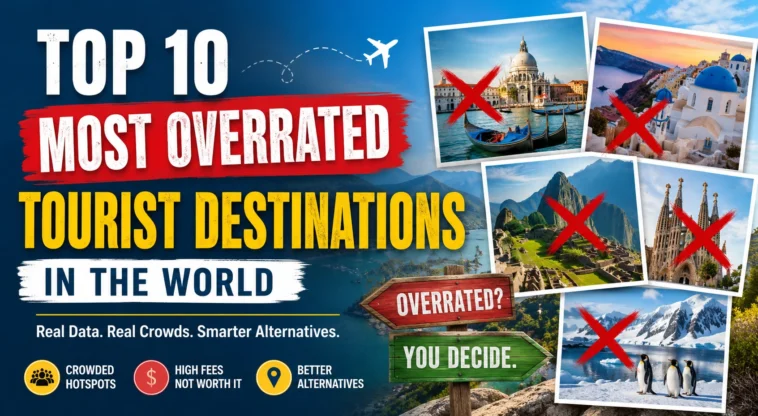
Hook Introduction
You saved for two years to see it. You stood in a line for three hours. And then you looked around and thought, “Wait, this is it?”
That moment happens to millions of travelers every single year, and it’s happening more often as social media sells a fantasy that reality can’t match. This guide breaks down the most overrated tourist destinations in the world using real 2026 visitor numbers, entry fees, and on-the-ground reports, so you know exactly what you’re walking into before you book that flight.
Key Highlights / Quick Facts
- Venice logged almost 6 million official tourist arrivals in 2024, and city officials say the real number, including day-trippers, is closer to 25–30 million a year, according to Statista and TopVeniceHotels.com.
- Venice’s day-tripper entry fee ran on 60 chargeable dates in 2026 and pulled in more than €5 million from over 650,000 paid vouchers, per Wanted in Milan.
- Santorini now caps cruise arrivals at 8,000 passengers a day, and 2026 rules tightened the math so fewer ships can dock at once, according to Greek City Times.
- Machu Picchu limits entry to 4,500 visitors a day in low season and 5,600 in high season, based on Peru’s Ministry of Culture rules confirmed by PeruRail.
- Bali welcomed a record 6.95 million foreign visitors in 2025, up nearly 10% from 2024, according to Indonesia’s official statistics agency (BPS Bali).
- Barcelona residents have staged repeated anti-tourism protests, including water-gun demonstrations, over rents that rose 68% in a decade, according to CBS News and Al Jazeera.
- Antarctica topped Fodor’s 2026 “No List” after tourist numbers rose tenfold in thirty years, straining a fragile ecosystem.
- “Overrated” doesn’t mean “not worth visiting.” It means the experience rarely matches the hype, the price, or the wait.
<br>
A note on how I built this list: “overrated” is partly subjective, but every entry below is backed by real crowd data, official visitor caps, or documented local pushback — not just vibes.
What Makes a Destination “Overrated”
Here’s the thing — a place isn’t overrated just because it’s busy. Busy can mean “genuinely worth it.”
A destination earns a spot on this list when the actual experience — the waiting, the cost, the crowding, the strain on the place itself — outweighs what you get in return. I looked at four things for each entry: daily visitor volume, entry costs, local resident pushback, and independent traveler reviews from 2025 and 2026.
The Overtourism Problem, in Plain English
Overtourism happens when a location gets more visitors than its streets, water systems, or housing markets can handle. Fodor’s annual “No List” for 2026 specifically calls out places with fragile ecosystems and communities struggling to stay afloat under tourist pressure. That’s not marketing talk — it’s a documented pattern showing up in city council votes, entry fees, and street protests across Europe and Asia.
The Top 10 Most Overrated Tourist Destinations
1. Venice, Italy
Venice is beautiful. Nobody disputes that. But the math doesn’t work anymore — a city built for around 50,000 residents now absorbs tens of millions of visitor days a year.
Official 2024 data put tourist arrivals at nearly 6 million, with international visitors making up close to 90% of that number. When you factor in same-day visitors who never book a hotel, city officials and media put the real annual footfall closer to 25–30 million. Venice now charges day-trippers an entry fee on the busiest dates — €5 if booked early, €10 otherwise — and in 2026 that scheme ran across 60 dates and pulled in over €5 million. Critics say the fee hasn’t actually reduced crowding much; it’s mostly a data-collection and revenue tool.
Walk through St. Mark’s Square in July at noon and you’ll spend more time dodging selfie sticks than admiring the basilica.
Better move: Visit in November or January, or base yourself in nearby Padua or Verona and day-trip in early morning before the cruise crowds arrive.
2. Santorini, Greece
That famous blue-and-white photo? Take it early, or you’ll be sharing the frame with 200 other people doing the exact same pose.
Greece introduced a hard cap of 8,000 cruise passengers a day for Santorini, tightened further in 2026 so ships now count at full capacity instead of the old 80% estimate. That change alone cut scheduled cruise arrivals by over 18% compared to 2025. Land and ferry arrivals, though, remain uncapped — so Oia at sunset still gets genuinely packed during peak months. Peak-season cruise passengers now also pay a €20 landing fee.
Better move: Skip Oia at golden hour and watch sunset from Imerovigli or Pyrgos instead — same caldera, a fraction of the people.
3. Machu Picchu, Peru
Machu Picchu earns its reputation as a wonder of the world. What doesn’t earn great reviews is the logistics circus around actually getting there.
Peru’s Ministry of Culture caps daily entry at 4,500 visitors in low season and 5,600 on high-demand dates in 2026, split across mandatory circuits with fixed entry times and a strict four-hour visit window. Tickets often sell out weeks in advance, prices range from roughly $42 to $75 USD depending on the circuit, and you’ll also need a guide, a bus ticket up the mountain, and a train from Cusco. Add altitude sickness risk into the mix, and a lot of travelers report the trip feels more like an operations project than a vacation.
Better move: Book 3–4 months ahead, pick the 6 a.m. slot, and spend a night acclimatizing in the Sacred Valley first.
Fira and Oia sunset crowds in Santorini, Greece.
4. Bali, Indonesia — Canggu and Seminyak
Bali the island is genuinely stunning. Bali’s most Instagrammed neighborhoods are a different story.
Indonesia’s official statistics agency recorded 6.95 million foreign arrivals in Bali in 2025, up almost 10% year-over-year, with the island targeting 6.63 million more in 2026 as it shifts toward “quality tourism” rather than raw volume. Canggu and Seminyak specifically have become dense with co-working cafés, identical smoothie bowls, and traffic that can turn a two-mile drive into a 45-minute crawl. Plastic waste remains a real issue too — Fodor’s No List has flagged Bali for recycling only around 7% of its 303,000 tonnes of annual plastic waste.
Better move: Head to Sidemen, Munduk, or Lombok for the scenery without the influencer traffic jam.
5. Barcelona, Spain — Park Güell and Las Ramblas
Barcelona is one of Europe’s great cities. Las Ramblas and Park Güell in peak season are where that greatness gets buried under souvenir stalls and shoulder-to-shoulder foot traffic.
Local residents have staged repeated demonstrations, including squirting tourists with water guns, over rent that rose 68% in the past decade and home prices up 38%, according to CBS News. The city collects roughly €95 million a year in tourist tax, but officials say tourism-related costs run closer to €142 million. Barcelona is now phasing out over 10,000 short-term rental licenses by 2028 to free up housing for residents.
Better move: Explore Gràcia or Poblenou for real neighborhood life, and pre-book Park Güell for the first entry slot of the day.
6. Times Square, New York City, USA
Ask any New Yorker and they’ll tell you the same thing: nobody who lives here actually goes to Times Square on purpose.
It’s loud, it’s saturated with costumed characters asking for tips, food is overpriced, and the “only in NYC” magic gets lost under a wall of digital billboards you could see in a photo just as well. It’s worth a five-minute walk-through at night for the lights — not a whole evening.
Better move: Grab dinner in the West Village or Lower East Side, where the city actually feels lived-in.
7. The Eiffel Tower Summit, Paris, France
The Eiffel Tower itself is a legitimate icon. Paying a premium to stand at the very top, in a scrum of tourists, staring at a hazy horizon through a caged viewing deck, is where the experience underdelivers.
Fodor’s 2026 No List flags Montmartre specifically for overtourism pressure, and the wider Eiffel Tower area sees some of the longest queues in Paris, often two-plus hours without a pre-booked slot.
Better move: Skip the summit ticket and view the tower from Trocadéro or the rooftop bar at Printemps Haussmann — better photos, zero queue.
8. Mount Everest Base Camp, Nepal
This one surprises people. Base Camp trekking has exploded in popularity, but the mountain is now dealing with a genuinely serious byproduct: waste.
Reporting from Forbes notes that unchecked climate permits and tourism at Everest generate close to 2,000 pounds of human waste and rubbish daily. Trekkers also report crowded trails and long queues at high-altitude camps that undercut the “remote wilderness” appeal the trip is sold on.
Better move: Consider the Annapurna Circuit or Gokyo Lakes trek for comparable Himalayan views with a fraction of the foot traffic.
9. Antarctica (Cruise Tourism)
Antarctica actually tops Fodor’s 2026 No List this year. That’s a notable shift — a destination once considered too remote to overcrowd is now facing real strain.
Tourist numbers to Antarctica have risen tenfold over the past thirty years, according to Travel Tomorrow’s reporting on the Fodor’s list, bringing a heavy carbon footprint and disturbing wildlife that has no natural defense against human presence. Ships now compete for limited landing windows, and the “untouched wilderness” pitch increasingly comes with a queue of other ships doing the exact same landing.
Better move: If the goal is remote, wildlife-heavy scenery, look at Svalbard or Patagonia’s Torres del Paine instead — genuinely quieter and far more accessible on cost.
10. Canary Islands (Peak Season), Spain
The Canaries sell an easy, year-round sun escape — and that’s exactly the problem in high season.
Locals have chanted “Canarias tiene un límite” (“The Canaries have a limit”) in organized protests, arguing overtourism strains housing, ecosystems, and daily life on the islands, according to Travel Tomorrow’s 2026 coverage. One local expert put it plainly: tourism brought money, but it also concentrated wealth in a way many residents never benefited from.
Better move: Visit in shoulder season (April–May or October) or explore quieter islands like La Palma or El Hierro over Tenerife and Gran Canaria’s busiest coastal strips.
Important Statistics Table
| Destination | 2025/2026 Visitor Data | Entry Fee / Cap | Source |
| Venice, Italy | ~5.9M official arrivals (2024); 25–30M incl. day-trippers | €5–€10 day-tripper fee, 60 chargeable dates in 2026 | Statista, TopVeniceHotels |
| Santorini, Greece | 8,000 cruise passengers/day cap (2026) | €20 peak-season cruise levy | Greek City Times |
| Machu Picchu, Peru | 4,500/day (low season), 5,600/day (high season) | $42–$75 USD per ticket | PeruRail, Ministry of Culture |
| Bali, Indonesia | 6.95M foreign arrivals in 2025 (+9.7% YoY) | No cap; targeting “quality tourism” in 2026 | BPS Bali (ANTARA) |
| Barcelona, Spain | ~26M overnight visitors (2023) | €4/night tourist tax (2026) | Time, CBS News |
| Antarctica | 10x rise in visitors over 30 years | No hard visitor cap yet | Fodor’s No List 2026 |
How to Decide If a Destination Is Worth It (Step-by-Step)
Step 1: Check the Real Crowd Data, Not the Instagram Feed
Search for official tourism board or government statistics, not travel blog guesses. Numbers from sources like Statista, national statistics bureaus, or ministries of tourism are far more reliable than influencer captions.
Step 2: Look Up Entry Fees and Caps
If a destination has introduced a visitor cap or entry fee in 2025 or 2026, that’s a strong signal locals and officials consider it strained. Treat that as useful planning information, not a red flag to avoid entirely.
Step 3: Read Recent, Dated Reviews
Filter TripAdvisor, Google Reviews, and Reddit threads to the last 6–12 months. Overtourism situations change fast — a spot that was fine in 2022 may be very different in 2026.
Step 4: Compare Shoulder-Season Options
Most “overrated” places are only overwhelming during 8–10 peak weeks a year. Shifting your trip by even three or four weeks can completely change the experience.
Step 5: Have a Backup Destination Ready
Every overrated spot on this list has a quieter, comparable alternative nearby. Build that into your itinerary from the start instead of deciding on the ground.
Pros and Cons Table
| Factor | Pros of Visiting Anyway | Cons to Know Before You Go |
| Iconic status | Bragging rights, bucket-list completion | Crowds rarely match the marketing photos |
| Infrastructure | Well-developed tourism systems, easy booking | Prices inflated for tourist volume |
| Photo opportunities | Genuinely stunning locations exist | You’ll share the frame with hundreds of others |
| Cultural access | Real historical and cultural significance | Local resentment and protests in several cities |
| Timing flexibility | Off-peak visits can be excellent | Peak season is brutal in all 10 destinations |
Overrated vs Underrated Alternatives Comparison
| Overrated Pick | Why It Disappoints | Underrated Alternative |
| Venice | 25–30M annual visits into narrow streets | Bologna or Verona, Italy |
| Santorini | 8,000 cruise passengers/day at peak | Milos or Naxos, Greece |
| Bali (Canggu/Seminyak) | Traffic, sameness, plastic waste | Lombok or Sidemen, Bali |
| Barcelona (Las Ramblas) | Overpriced, protest tension | Gràcia neighborhood, Barcelona |
| Eiffel Tower summit | 2+ hour queues, hazy views | Trocadéro viewpoint, Paris |
Current 2026 Trends and News
Overtourism management has moved from talk to policy fast in 2026. A few developments worth knowing:
- Venice ran its third consecutive year of the day-tripper fee, and early city council analysis suggests overcrowding on the busiest days “softened” slightly, though a full report is still pending.
- Santorini’s stricter 2026 occupancy math cut scheduled cruise ship calls by more than 18% compared to 2025, and hotel rates reportedly dropped 14% as a result — genuinely good news for travelers who held off before.
- Fodor’s No List 2026 dropped Venice and Barcelona from its “avoid” list, not because the problem is solved, but because the editorial spotlight shifted to newer pressure points like Antarctica and the Canary Islands.
- Bali is pivoting hard toward “quality tourism,” including a new 24-hour immigration complaint hotline and stricter enforcement against visa violations, aiming for higher-spending, lower-impact visitors.
- Barcelona confirmed it will phase out over 10,000 short-term rental licenses entirely by 2028, a major structural shift for how the city manages tourist accommodation.
Wave crowds at Kuta Beach, Bali, Indonesia during peak season.
References
- Statista — Tourism in Venice: Statistics & Facts (2026)
- Wanted in Milan — Venice Tourist Entry Fee Tops €5 Million Over 60 Days (2026)
- TopVeniceHotels.com — Venice Tourism Statistics
- Greek City Times — Greece Clamps Down on Santorini Crowds (2026)
- Greek Trip Planner — The Santorini Effect: How Cruise Caps Are Reshaping Greek Island Tourism
- PeruRail — Tickets to Machu Picchu and New Visit Circuits 2026
- Voyagers.travel — Machu Picchu 2026: Daily Cap, Circuits & Ticket Rules
- ANTARA News — Bali’s Foreign Tourist Arrivals Rise Nearly 10 Pct in 2025 (BPS Bali)
- The Bali Times — Bali Targets 6.63M Tourists in 2026, Tightens Rules on Foreign Visitors
- CBS News — Protesters in Spain Shoot Water Guns at Tourists (2025)
- Time — Why Protesters Are Squirting Water at Tourists in Barcelona
- Al Jazeera — Why Are Barcelona Residents Protesting Against Tourists?
- Forbes (Alex Ledsom) — Overtourism: Where Tourists Should Rethink 2026 Travel Plans (Fodor’s No List)
- Travel Tomorrow — Eight Destinations to Avoid in 2026 Due to Overtourism
- Forbes.com.au — Underrated Travel Destinations for 2026: Where to Avoid Overtourism
FAQs
It means the real experience — crowding, cost, wait times, or environmental strain — doesn’t match the hype the place gets on social media or in traditional travel marketing. It doesn’t mean the destination has zero value.
Yes, especially outside peak summer months. Early morning or November-to-February visits sidestep most of the day-tripper crush described in official 2026 entry-fee data.
Machu Picchu has one of the clearest hard caps — 4,500 visitors daily in low season and 5,600 in high season, enforced through timed circuit tickets by Peru’s Ministry of Culture.
Results are mixed. Santorini’s combined cap-and-levy approach shows a real drop in cruise arrivals for 2026. Venice’s fee, by contrast, has been criticized as more of a data and revenue tool than an effective deterrent.
Shoulder seasons — generally April to May and September to October in the Northern Hemisphere — offer the best balance of good weather and lower visitor volume across almost every destination on this list.
Primarily housing costs. Barcelona residents cite rent increases of roughly 68% over a decade, driven partly by short-term rental conversions, which is why the city is phasing out over 10,000 rental licenses by 2028.



GIPHY App Key not set. Please check settings