 kiruthika
Hook Introduction
Walk into any grocery store right now and you will notice something has changed. Beef tallow is back on shelves, kimchi is showing up in sauces that have nothing to do with Korean food, and protein counts are printed on everything from chips to sparkling water. These are not random shifts — they are the global food trends shaping what the world eats in 2026, and the data behind them is genuinely interesting.
Key Highlights (Quick Facts)
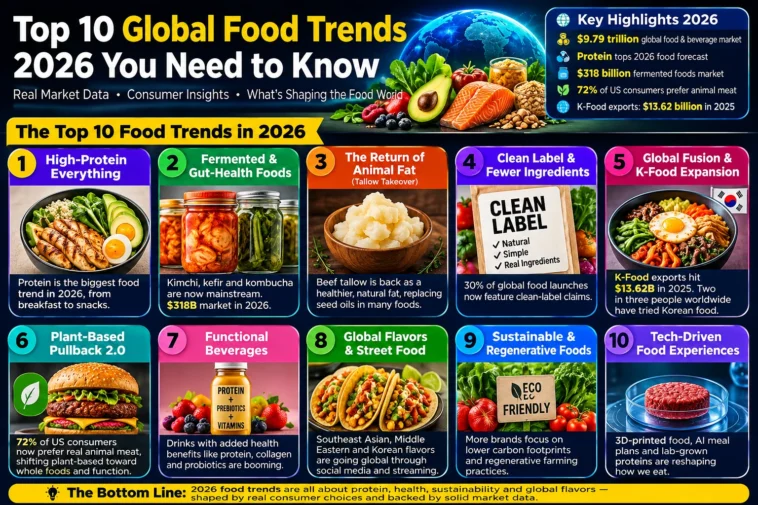
- The global food and beverage market is valued at approximately $9.79 trillion in 2026, projected to reach $11.78 trillion by 2031, according to KAIZEN’s industry analysis.
- Protein has topped the National Restaurant Association’s “What’s Hot” forecast for 2026, showing up in snacks, breakfast items, and build-your-own meal formats.
- The global fermented foods and beverages market is set to hit roughly $318 billion in 2026, growing toward $434.6 billion by 2031, per Mordor Intelligence.
- 72% of US consumers now say animal meat is more satisfying than plant-based alternatives, a notable reversal from the plant-based boom years, according to Datassential’s 2026 Trends report.
- Korean food exports (K-Food+) hit a record $13.62 billion in 2025, up 5.1% year-on-year, per South Korea’s Ministry of Agriculture.
- Roughly two in three people worldwide have now tried Korean food, based on a 2025 survey of 11,000 consumers across 22 countries by the Korea Food Promotion Institute.
- Clean label claims appeared on about 30% of global food and beverage launches in the past year, according to Innova Market Insights.
- Beef tallow is making a comeback as a “nostalgic fat,” according to Whole Foods Market’s 2026 Trends Council report.
Here’s why this matters: food trends today move faster than menus can keep up, driven by social media, health data, and genuine shifts in how people cook at home. This list breaks down the ten trends actually backed by real numbers, not just hype.
Why Food Trends Are Shifting So Fast in 2026
A few forces are colliding at once. Health-conscious eating is no longer a niche — protein and fiber are now mainstream label claims, not just gym-culture buzzwords.
At the same time, budgets are tighter. Consumers want indulgence and function in the same product, but they also want a fair price, which is why value-driven reformulations are everywhere.
Then there’s culture. Korean, Southeast Asian, and Middle Eastern flavors are spreading through streaming shows, short-form video, and diaspora communities faster than traditional food media ever could. So a dish can go from regional specialty to global grocery-shelf staple in under two years.
The Top 10 Most Popular Global Food Trends
1. High-Protein Everything
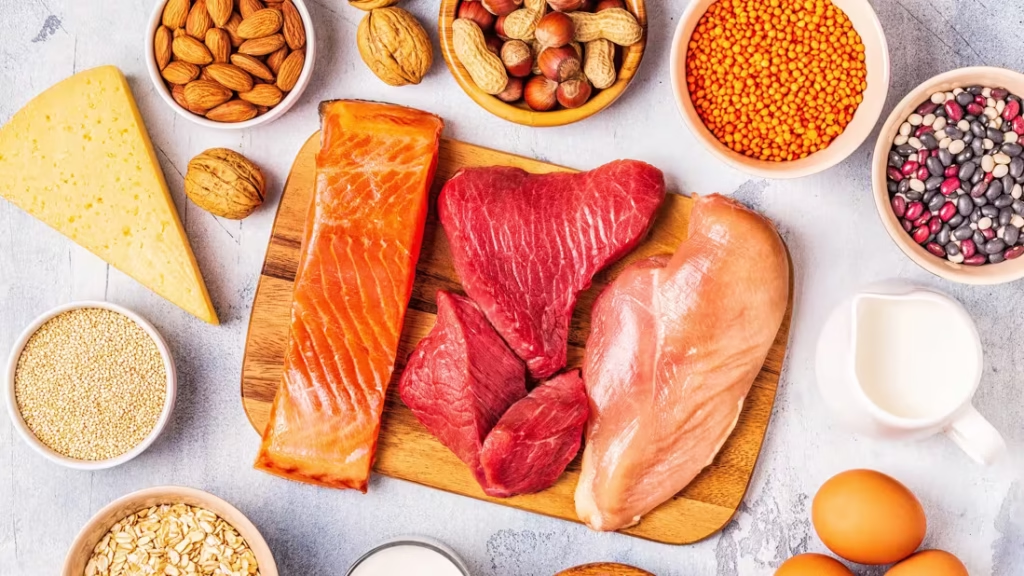
Protein is the single biggest theme in food right now. It has topped the NRA’s “What’s Hot” chef survey for 2026, and it’s no longer confined to dinner — brands are pushing high-protein breakfasts, snacks, and build-your-own formats at lunch to meet demand throughout the day.
2. Fermented and Gut-Health Foods
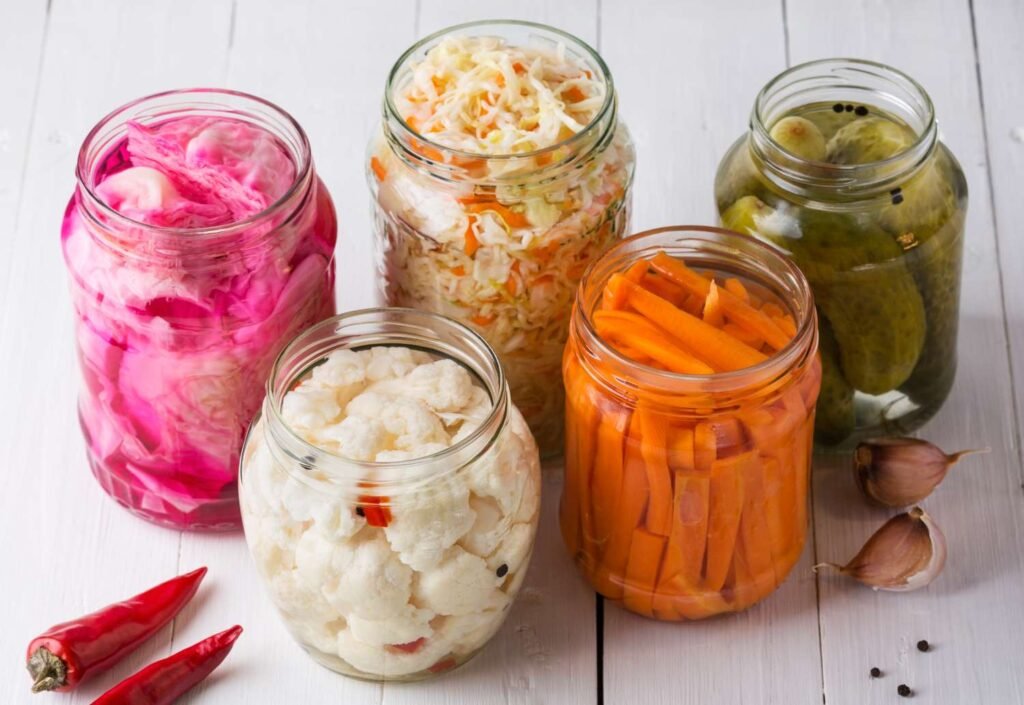
Kimchi, kefir, kombucha, and miso have moved from niche health-store items to mainstream flavor ingredients. The global fermented foods and beverages market is projected to reach around $318 billion in 2026, and Asia-Pacific alone is expected to hold close to 40% of that market.
3. The Return of Animal Fat (Tallow Takeover)

After years of seed-oil skepticism, beef tallow is having a real moment. Whole Foods Market’s Trends Council flagged it as a top 2026 trend, with restaurants swapping traditional frying oils for tallow in everything from fries to pastries.
[Image: Fermented vegetables in glass jars, a staple of the gut-health food trend] Caption: Fermented foods like kimchi and kraut are driving one of the biggest global food trends of 2026.
4. Clean Label and Fewer-Ingredient Products

Shoppers are reading ingredient lists more than ever. Innova Market Insights found that clean-label claims appeared on about 30% of global food and drink launches recently, pushing even indulgent snack brands like Doritos and Cheetos to drop artificial dyes and flavors.
5. Global Fusion and K-Food Expansion
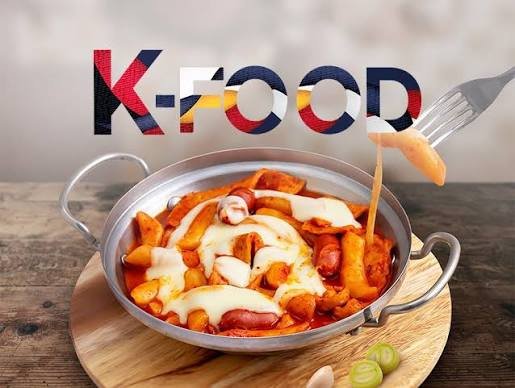
Korean cuisine is arguably the biggest cultural food export of the decade. K-Food+ exports hit $13.62 billion in 2025, led by instant ramen, frozen gimbap, and seasoned seaweed, and roughly two-thirds of people surveyed globally say they’ve already tried Korean food at least once.
6. The Plant-Based Pullback (Authentic Plant-Based 2.0)

Highly processed meat substitutes are losing ground. Datassential’s 2026 research found 72% of US consumers now say real animal meat is more satisfying, pushing the plant-based category to shift toward whole-food ingredients and standalone nutrition claims rather than meat mimicry, as Innova Market Insights also notes.
7. Functional Beverages
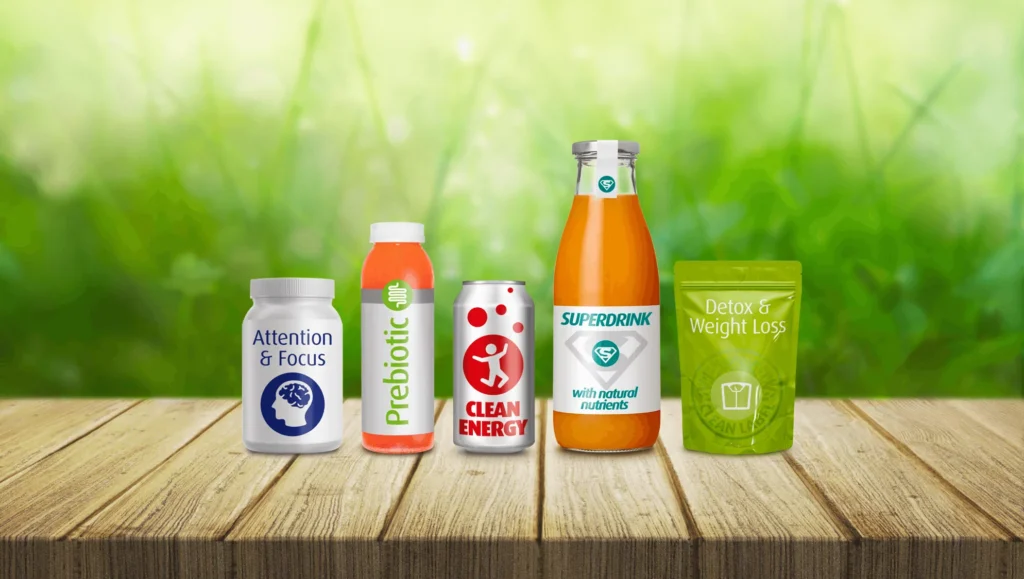
Soft drinks are getting a health makeover. Vitamin-fortified and naturally sweetened sodas, plus probiotic drinks like kombucha, are displacing traditional high-sugar options, according to Cozymeal’s 2026 trends report.
[Image: High-protein snack foods arranged on a table] Caption: Protein-forward snacking is the number one food trend tracked by industry forecasters for 2026.
8. Restaurant-Quality Frozen Food
The frozen aisle has quietly become one of the most exciting categories in grocery. Whole Foods Market reports a wave of chef-inspired frozen items — think arancini, pupusas, and gourmet pizza — aimed at budget-conscious shoppers who still want a restaurant-style meal at home.
9. Nose-to-Tail and Ancestral Eating
Alongside the tallow trend, there’s growing interest in whole-animal, low-waste cooking. This “ancestral ingredients” movement pairs with the protein trend and reflects consumer interest in provenance — where food comes from and how it’s raised.
10. Bold, Spice-Forward Global Flavors (in Moderation)
Global and fusion cuisine keeps growing — Korean BBQ, hot pot, and Middle Eastern flavors are all expanding on menus, per Cozymeal’s research. That said, the era of extreme “as-hot-as-possible” flavor stunts has cooled, with brands favoring balanced, approachable spice over shock-value heat.
Global Food Market Statistics Table
| Metric | Figure (2026) | Source |
| Global food and beverage market size | ~$9.79 trillion | KAIZEN Insights |
| Global fermented foods & beverages market | ~$318.2 billion | Mordor Intelligence |
| US consumers who prefer real meat over plant-based | 72% | Datassential 2026 Trends |
| K-Food+ export value (2025) | $13.62 billion | South Korea Ministry of Agriculture |
| Global consumers who have tried Korean food | ~66% (2 in 3) | Korea Food Promotion Institute |
| Clean-label share of new F&B launches | ~30% | Innova Market Insights |
| Asia-Pacific share of fermented foods market | ~40% | Persistence Market Research |
| Fermented beverages share of category | ~37% | Fortune Business Insights |
| Ramen export growth (South Korea, YoY) | +26.5% | Korea Times / Ministry of Food and Drug Safety |
| Fermented food market CAGR (2026–2031) | 6.4%–7.7% | Mordor Intelligence, Business Research Company |
How Food Trends Are Tracked and Verified (Step-by-Step)
- Track new product launches. Firms like Innova Market Insights log thousands of new food and beverage launches worldwide to spot recurring ingredient and label patterns.
- Survey chefs and operators. The National Restaurant Association’s “What’s Hot” report polls professional chefs directly on what’s gaining menu space.
- Analyze retail sales data. Grocery and foodservice sales figures confirm whether a social-media trend is translating into actual purchases.
- Check export and trade data. Government trade bodies, like South Korea’s Ministry of Agriculture, publish hard export numbers that separate real growth from hype.
- Cross-reference consumer surveys. Independent research groups survey thousands of consumers across multiple countries to measure trial and repeat purchase rates.
- Confirm with market-size forecasts. Firms like Mordor Intelligence and Fortune Business Insights model category growth using CAGR projections built from historical sales.
Pros and Cons of Chasing the Latest Food Trend
| Pros | Cons |
| Trend-driven products often reflect genuine health research (protein, fiber, probiotics) | Some trends fade fast, leaving pantries full of unused specialty items |
| Global fusion trends expose people to new cuisines and cooking techniques | “Clean label” and “natural” claims aren’t always regulated consistently |
| Functional foods can offer real digestive or nutritional benefits | Premium trend products (tallow, fermented specialty items) often cost more |
| Frozen restaurant-quality meals save time and money over dining out | Marketing sometimes outpaces the actual scientific evidence behind a claim |
Comparison Table: Trend vs. Core Driver vs. Market Size
| Trend | Core Driver | Approx. Market Size (2026) |
| High-Protein Everything | Health & fitness demand | Part of $9.79T global F&B market |
| Fermented & Gut-Health Foods | Digestive wellness research | ~$318 billion |
| Tallow / Animal Fat Return | Ancestral eating, flavor | Niche but rapidly growing |
| Clean Label Products | Ingredient transparency demand | ~30% of new launches |
| K-Food & Global Fusion | Cultural media influence (Hallyu) | $13.62 billion (Korea exports alone) |
| Plant-Based Pullback | Taste and provenance concerns | Category shifting, not shrinking |
| Functional Beverages | Health-conscious hydration | Growing within $9.79T market |
2026 News and Developments
South Korea’s food export push made headlines again this year. In January 2026, the country’s Ministry of Agriculture confirmed K-Food+ exports crossed $13.6 billion in 2025, with instant ramen alone surpassing $1.5 billion — a milestone that analysts compared to Korea’s earlier semiconductor export boom.
On the domestic US front, Whole Foods Market’s Trends Council released its annual predictions in late 2025, spotlighting tallow, fiber-rich snacks, and chef-inspired frozen meals as the categories to watch through 2026.
Meanwhile, Innova Market Insights hosted its Top Ten Trends 2026 webinar in November, confirming that protein and digestive health remain the two most durable consumer priorities, even as indulgence and affordability pull in the opposite direction.
[Image: Grocery store shelves stocked with clean-label packaged food products] Caption: Clean-label products now make up nearly a third of new global food and beverage launches.
References
- KAIZEN — Global Food Industry Trends 2026 (kaizen.com)
- Innova Market Insights — Top Food and Beverage Trends 2026
- Whole Foods Market — 2026 Trends Predictions Report (Business Wire)
- Datassential — 2026 Food Trends Report
- Mordor Intelligence — Fermented Foods and Beverages Market Report
- Fortune Business Insights — Fermented Food Market Report
- Persistence Market Research — Fermented Foods Market Analysis
- South Korea Ministry of Agriculture, Food and Rural Affairs — K-Food+ Export Data 2025
- Korea Times — K-Food Export Statistics, May 2026
- Korea Food Promotion Institute — Global Korean Food Consumer Survey, 2025
- Cozymeal — Top Food Trends 2026 Insights Report
- Kilcoy Global Foods — The 8 Global Food Trends Defining 2026
- Institute of Food Technologists (IFT) — Top 10 Food Trends, Food Technology Magazine
Conclusion
The global food trends of 2026 all point in the same direction: people want food that’s functional, honest about its ingredients, and rooted in real culinary tradition, whether that’s Korean fermentation or old-school beef tallow. Keep an eye on protein and gut health in particular — the data says they’re not going anywhere anytime soon.
FAQs
High-protein food and drink is the leading trend, topping the National Restaurant Association’s 2026 “What’s Hot” forecast and expanding beyond dinner into snacks and breakfast items.
Not exactly — it’s shifting. Datassential’s 2026 research found 72% of US consumers prefer real meat’s taste, so plant-based brands are moving away from meat-mimicking products toward whole-food, nutrition-first formulas instead.
K-Food+ exports hit a record $13.62 billion in 2025, driven largely by instant ramen, frozen gimbap, and seaweed snacks, fueled by the global reach of Korean pop culture and streaming content.
It generally refers to products with simple, recognizable ingredient lists and no artificial colors, flavors, or sweeteners. About 30% of new global food launches now carry a clean-label claim, per Innova Market Insights.
Consumers are looking for traditional, minimally processed fats with a high smoke point, and tallow fits that “ancestral eating” mindset while also gaining traction on social media.
Fermented foods like kimchi, kefir, and kombucha contain probiotics that many nutrition researchers link to improved digestion, and the fermented foods market is growing at roughly 6–8% annually as demand rises.


GIPHY App Key not set. Please check settings