 kiruthika
Hook Introduction
Okinawa has one of the highest concentrations of centenarians on Earth, and researchers keep returning to the same question: what, and how, people there have eaten for generations.
We compared current longevity research, national health data, and traditional dietary patterns to rank the healthiest cuisines in the world—the ones with meaningful nutritional research behind them, not just a wellness-influencer reputation.
Key Highlights (Quick Facts)
- The Mediterranean diet is one of the most extensively studied dietary patterns in nutrition science. In major clinical research involving people at elevated cardiovascular risk, Mediterranean-style dietary interventions were associated with roughly a 30% reduction in major cardiovascular events.
- Japan consistently records one of the highest life expectancies in the world. Italy also ranked highly in Bloomberg’s widely cited Healthiest Country Index, although that ranking should be viewed as a historical health indicator rather than a current 2026 measure.
- The Okinawan diet is widely regarded as one of the healthiest traditional eating patterns in the world. Historically, it was built around sweet potatoes, tofu, seaweed, legumes, vegetables, and modest portions of fish, with red meat and highly processed foods eaten sparingly.
- “Hara Hachi Bu”—the Okinawan principle of stopping eating at roughly 80% fullness—is one of the most frequently discussed behavioral practices associated with the region’s traditional approach to healthy aging and moderate calorie intake.
- Clinical research on Nordic-style dietary patterns has found improvements in cardiovascular and metabolic markers, including LDL cholesterol and blood pressure. The diet is built around rye, oats, root vegetables, berries, and fatty fish such as salmon and herring.
- Spain, Japan, and Switzerland are among the OECD countries with the highest life expectancy. Spain’s obesity rate is higher than Japan’s and South Korea’s, highlighting how traditional cuisine and modern day-to-day eating habits can diverge.
- Korean cuisine’s structure around banchan (small shared side dishes), vegetables, fermented foods, and cooking methods such as grilling, steaming, boiling, and stir-frying contributes to its reputation as a nutritionally diverse food culture. However, some traditional dishes can also be high in sodium.
- No single country holds an undisputed title for “healthiest food in the world.” Researchers point to several distinct, well-studied dietary models rather than one universal winner.
A Note Before You Read Further
This article discusses traditional dietary patterns associated with population-level health outcomes in nutrition research. It is general educational content, not personalized medical or nutrition advice. Individual nutritional needs vary based on health conditions, allergies, medications, and life stage.
If you’re managing a chronic condition, are pregnant, or are considering a significant change to your diet, it’s worth talking to a doctor or registered dietitian first. It’s also important to recognize the gap researchers frequently note: a country’s traditional cuisine and what its population actually eats day to day can differ significantly in the modern era. In this article, “cuisine” refers to the traditional dietary pattern under discussion, not a guarantee of what appears on every plate in that country today.
How We Ranked These Cuisines
We weighed four things: the strength and volume of published nutrition research; associations with measurable population health outcomes such as life expectancy, chronic disease rates, and longevity data; nutritional composition, including whole foods, fiber, healthy fats, and fermented foods; and real-world sustainability—meaning dietary patterns people can realistically follow over the long term rather than restrictive short-term plans.
We prioritized traditional, whole-food-based cuisines with established or emerging research behind them. However, the strength of evidence is not equal across all 10 cuisines: the Mediterranean diet has the deepest overall clinical research base, while several other cuisines are supported more by population observations, research on individual foods, or emerging studies.
The Top 10 Healthiest Cuisines in the World
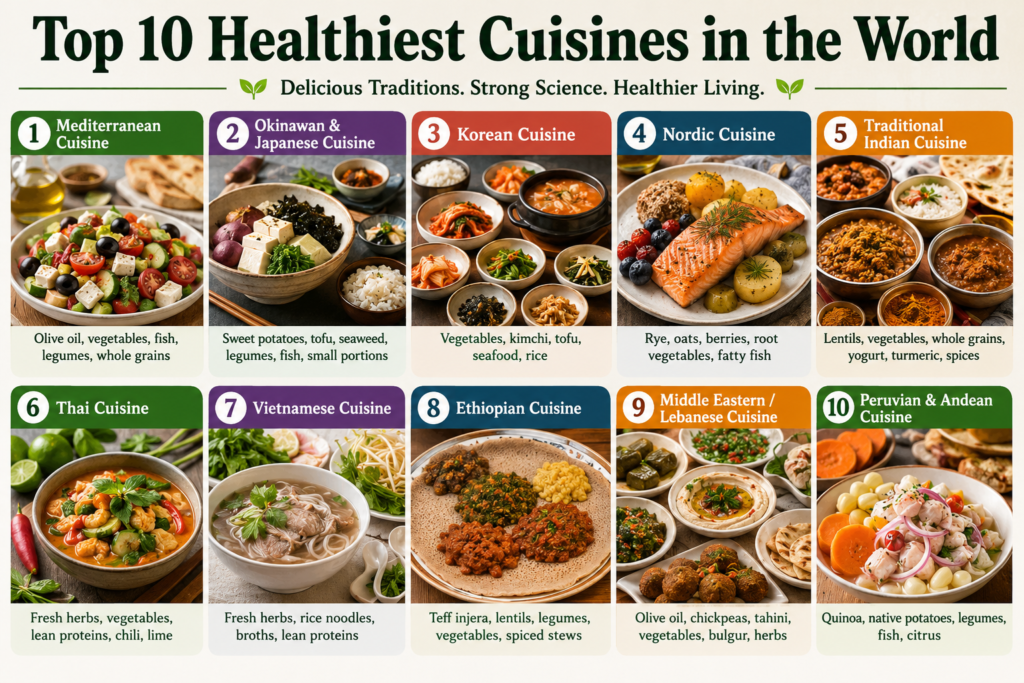
1. Mediterranean Cuisine (Greece, Italy, Spain, Cyprus)
The Mediterranean diet is widely considered one of the leading models of healthy eating and remains among the most extensively studied dietary patterns in nutrition science. Rooted in the traditional cooking of Greece, Italy, Spain, Cyprus, and other Mediterranean regions, it prioritizes whole foods, fresh vegetables, fruit, legumes, fish, nuts, whole grains, and olive oil—making it naturally rich in fiber, unsaturated fats, and plant-based nutrients.
The research backing it is substantial. In the PREDIMED clinical trial, Mediterranean-style dietary interventions supplemented with extra-virgin olive oil or nuts were associated with roughly a 30% reduction in major cardiovascular events among participants at elevated cardiovascular risk. Research has also linked Mediterranean-style eating with improved blood sugar management and potential benefits for healthy aging and cognitive health. Italy has performed strongly in widely cited international health rankings, although national health outcomes reflect many factors beyond cuisine, including healthcare access, physical activity, lifestyle, and social conditions.
Beyond the food itself, the Mediterranean lifestyle’s emphasis on regular physical activity and social, communal eating is increasingly recognized as part of the broader pattern associated with healthy aging.
Core foods: Olive oil, vegetables, legumes, fish, whole grains, nuts.
Research strength: Extensive, with decades of clinical and population research.
Best for: Heart health, long-term sustainability, healthy aging.
2. Okinawan and Traditional Japanese Cuisine
The Okinawan diet is frequently discussed as one of the world’s healthiest traditional eating patterns because of the Japanese island’s well-documented history of exceptional longevity and high numbers of centenarians. Traditional Okinawan meals center heavily on vegetables, particularly sweet potatoes, which historically formed a major part of daily nutrition, alongside tofu, seaweed, legumes, mushrooms, and modest portions of fish. Red meat and highly processed foods were traditionally eaten less often.
What distinguishes Okinawan eating culture from nutritional composition alone is a specific behavioral practice: “Hara Hachi Bu,” the habit of stopping eating when roughly 80% full. This approach is commonly associated with moderate calorie intake and mindful portion control, although longevity is influenced by many factors beyond diet, including physical activity, social connection, genetics, healthcare, and lifestyle.
More broadly, Japan continues to record one of the highest life expectancies in the world. Its traditional dietary patterns, relatively low obesity levels compared with many high-income countries, and extensive longevity research make Japanese and Okinawan food cultures strong candidates in discussions about healthy eating.
Core foods: Sweet potatoes, tofu, seaweed, legumes, fish, small portion sizes.
Research strength: Strong population and longevity research, particularly around Okinawa.
Best for: Healthy aging, portion awareness, low-calorie-density eating.
3. Korean Cuisine
Korean cuisine is frequently highlighted as a nutritionally diverse food culture because of its abundance of vegetables, fermented foods, and varied cooking methods. Meals are structured around banchan, multiple small shared side dishes that can encourage dietary variety and provide a mix of vegetables, legumes, grains, and protein sources at a single meal.
Korean cooking commonly uses grilling, steaming, boiling, and stir-frying, although preparation methods vary by dish. Tofu, seafood, and poultry are widely used alongside meat, while fermented staples such as kimchi are being studied for their potential effects on the gut microbiome and other aspects of health. Research into fermented foods is growing, but the effects depend on the food, preparation method, serving size, individual health, and overall dietary pattern.
Korean cuisine also has a potential nutritional drawback: some traditional foods, including kimchi, soups, sauces, and preserved dishes, can be high in sodium. Preparation and portion size therefore matter.
Core foods: Vegetables, fermented foods such as kimchi, tofu, seafood, rice.
Research strength: Growing, particularly around fermented foods and dietary diversity.
Best for: Meal variety, vegetable intake, and fermented-food options.
4. Nordic Cuisine (Sweden, Denmark, Finland, Norway)
The Nordic diet has emerged as a well-researched northern European alternative to the Mediterranean pattern. It is built around whole grains, especially rye and oats; root vegetables; berries; fatty fish such as salmon and herring; legumes; and canola oil in place of olive oil. It shares the Mediterranean diet’s focus on minimally processed foods while adapting to ingredients traditionally available in colder climates.
Clinical studies of healthy Nordic dietary patterns have reported improvements in several cardiovascular and metabolic markers, including LDL cholesterol, blood pressure, insulin sensitivity, and body weight. Results vary between studies, but the evidence has earned the Nordic diet increasing attention as a distinct, research-supported dietary model rather than simply a regional version of Mediterranean eating.
Core foods: Rye, oats, root vegetables, berries, fatty fish, canola oil.
Research strength: Growing, supported by dedicated clinical trials.
Best for: Cardiovascular markers and cold-climate whole-food eating.
5. Traditional Indian Cuisine
Traditional Indian cuisine, particularly its more plant-forward regional forms, is built around legumes such as dal, vegetables, whole grains, yogurt, and a wide range of herbs and spices. The diversity of lentil- and vegetable-based dishes across Indian regional cooking can provide substantial amounts of dietary fiber and plant-based protein.
Spices such as turmeric, ginger, garlic, cumin, and coriander contain bioactive compounds that are being studied for potential health effects. However, research on individual spice compounds does not automatically mean that every Indian dish or the entire cuisine produces the same outcome. The overall nutritional quality depends on ingredients, cooking methods, portion sizes, and the balance of the meal.
India’s regional culinary diversity means the health profile varies meaningfully by region and household. South Indian cooking often includes more rice, legumes, vegetables, and fermented foods, while northern regional cuisine may include more wheat and dairy. Across many traditional preparations, however, legumes, vegetables, whole foods, and spices remain important dietary foundations.
Core foods: Lentils, vegetables, whole grains, yogurt, turmeric, and other spices.
Research strength: Strong research on individual foods and ingredients; significant regional variation in the overall dietary pattern.
Best for: Plant-based protein variety and diverse herb-and-spice use.
6. Thai Cuisine
Thai cuisine balances fresh herbs, vegetables, lean proteins, and aromatic ingredients such as lemongrass, galangal, chili, and lime. Many traditional dishes use herbs, citrus, spices, and savory ingredients to build flavor without relying heavily on cream or large amounts of added fat.
The cuisine’s use of vegetables and lean proteins, combined with cooking methods such as steaming, grilling, and moderate-oil stir-frying, can support a balanced dietary pattern. However, Thai cuisine varies widely, and restaurant or modern commercial versions may contain more added sugar, sodium, coconut milk, or oil than traditional home-cooked meals.
Research on the overall traditional Thai dietary pattern is less extensive than research on the Mediterranean or Nordic diets. Much of the available evidence focuses on individual herbs, spices, and food components rather than long-term outcomes from the cuisine as a whole.
Core foods: Fresh herbs, vegetables, lean proteins, chili, lime, fish sauce.
Research strength: Moderate, with much of the evidence focused on individual ingredients.
Best for: Herb-forward flavor and vegetable-rich meals.
7. Vietnamese Cuisine
Vietnamese cuisine is frequently highlighted for its fresh-ingredient-driven approach. Many dishes feature fresh herbs, vegetables, rice noodles, broths, and lean proteins, with comparatively limited use of dairy and heavy cream-based sauces. Pho, one of Vietnam’s most iconic dishes, is built around a slow-simmered broth served with herbs, vegetables, noodles, and protein.
The cuisine often combines cooked foods with fresh herbs and raw vegetables, creating meals with a broad range of flavors and ingredients. Broth-based dishes can feel lighter than meals built around rich sauces, although the nutritional value varies depending on portion size, sodium content, protein choice, and preparation method.
Vietnamese cuisine has received growing interest for its use of fresh produce, herbs, and broth-based meals, but research on the complete traditional dietary pattern remains less extensive than research on Mediterranean or Japanese eating patterns.
Core foods: Fresh herbs, rice noodles, broths, lean proteins, vegetables.
Research strength: Moderate, with growing interest in fresh-herb and broth-based eating.
Best for: Light meals, fresh herbs, and vegetable-rich dishes.
8. Ethiopian Cuisine
Ethiopian cuisine centers on injera, a fermented flatbread traditionally made primarily from teff, a naturally gluten-free grain that provides fiber, iron, and other nutrients. Injera is served alongside an array of lentil, vegetable, and legume-based stews known as wat. The communal style of eating, in which multiple stews are shared on a single injera base, can provide a diverse mix of plant foods in one meal.
Fermentation may influence the digestibility and nutritional characteristics of grains, although the effects depend on the ingredients and preparation process. Injera recipes also vary, and some versions use blends of teff and other grains rather than teff alone.
Traditional Ethiopian cooking often includes legumes, vegetables, and plant-based stews, although the nutritional profile varies by dish and preparation. Research on teff and Ethiopian dietary patterns is growing but remains less extensive than the evidence supporting Mediterranean or Japanese dietary models.
Core foods: Teff-based injera, lentils, legumes, vegetables, spiced stews.
Research strength: Emerging, particularly around teff and traditional plant-based foods.
Best for: Gluten-free whole-grain options and plant-based protein variety.
9. Middle Eastern / Lebanese Cuisine
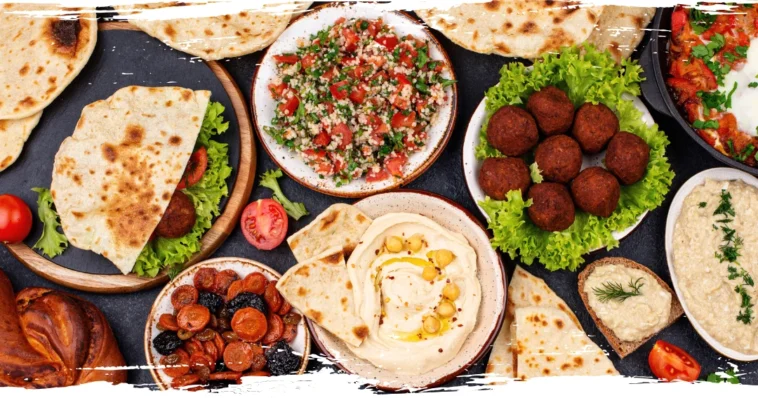
Lebanese and broader Levantine cuisine shares significant overlap with the Mediterranean dietary pattern. It makes extensive use of olive oil, legumes such as chickpeas and lentils, fresh vegetables, whole grains, herbs, and grilled proteins while adding distinct staples such as tahini, bulgur, hummus, and herb-forward dishes including tabbouleh.
Mezze-style eating—many small shared plates rather than one large entrée—can encourage a varied mix of vegetables, legumes, grains, and healthy fats within a single meal. However, the nutritional value depends on which dishes are chosen and how they are prepared. Fried foods, rich meat dishes, and high-sodium foods can also be part of the cuisine.
Much of the health evidence supporting this dietary pattern comes from its overlap with Mediterranean-style eating rather than from large clinical studies of Lebanese cuisine alone.
Core foods: Olive oil, chickpeas and lentils, fresh vegetables, tahini, bulgur, grilled protein.
Research strength: Strong through overlap with Mediterranean dietary research.
Best for: Mezze-style variety and legume-rich meals.
10. Peruvian and Andean Cuisine
Peruvian cuisine, particularly its traditional Andean roots, includes quinoa, a wide range of native potato varieties, legumes, maize, and fresh fish along the coast. Ceviche, one of Peru’s best-known dishes, commonly combines fish with citrus, chili, onions, and herbs, although preparation methods and nutritional content vary.
Quinoa contains all nine essential amino acids and provides more protein than many commonly eaten grains. However, the amount and quality of protein in a meal still depend on serving size and the overall dietary pattern. Traditional Andean crops have attracted increasing nutrition research as global diets diversify beyond a relatively small number of widely consumed grains.
Peruvian cuisine is highly diverse, and not every traditional or modern dish follows the same nutritional profile. The strongest health-related evidence in this category concerns individual foods such as quinoa, legumes, native potatoes, and fish rather than the complete Peruvian cuisine as a single dietary pattern.
Core foods: Quinoa, native potatoes, legumes, fresh fish, citrus.
Research strength: Emerging, particularly around quinoa and traditional Andean crops.
Best for: Plant-protein variety and traditional whole-food ingredients.
Important Statistics Table
| Cuisine | Signature Health Feature | Key Research Finding | Core Staple Ingredients |
| Mediterranean | Olive oil + whole foods | Strong cardiovascular research; major trials found lower cardiovascular-event risk in high-risk groups | Olive oil, vegetables, legumes, fish |
| Okinawan/Japanese | Portion awareness + plant-rich meals | Long-standing association with exceptional longevity and centenarian populations | Sweet potato, tofu, seaweed, fish |
| Korean | Fermented foods + banchan variety | Growing research into fermented foods and dietary diversity | Kimchi, vegetables, tofu, seafood |
| Nordic | Rye, oats, fatty fish | Clinical studies report improvements in LDL cholesterol and blood pressure | Rye, oats, berries, salmon, herring |
| Indian (traditional) | Legumes + diverse spices | Strong research on individual foods, legumes, and spice compounds | Lentils, vegetables, turmeric |
| Thai | Herb-forward cooking | Moderate evidence focused mainly on individual herbs and food components | Herbs, chili, lime, lean protein |
| Vietnamese | Fresh herbs + light broths | Growing interest in fresh produce and broth-based meal patterns | Herbs, rice noodles, broth |
| Ethiopian | Teff-based fermented bread | Emerging research into teff and traditional plant-based foods | Teff, lentils, legumes |
| Middle Eastern/Lebanese | Mezze-style variety | Strongest evidence comes through Mediterranean dietary overlap | Olive oil, chickpeas, tahini |
| Peruvian/Andean | Quinoa and traditional crops | Emerging research into quinoa and Andean food systems | Quinoa, native potatoes, fish |
Sources: Published nutrition research, clinical studies, OECD health data, and current health-culture analyses. Health associations reflect population-level research on dietary patterns and do not guarantee outcomes for any individual.
Step-by-Step: How to Borrow From These Cuisines Without a Full Diet Overhaul
- Start with one structural habit, not a full cuisine swap. Try Okinawa’s “Hara Hachi Bu” approach to mindful portion awareness or Korea’s banchan-style small-plate variety before changing every meal.
- Swap your primary cooking fat where appropriate. Replacing butter or heavily refined fats with olive oil, or using canola oil as part of a balanced diet, can help increase unsaturated-fat intake. The best choice depends on your overall diet and cooking needs.
- Add fermented foods gradually. Kimchi, miso, yogurt, or naturally fermented injera can add variety to your diet. Fermented foods are being studied for their effects on the gut microbiome, but benefits vary by food and individual.
- Increase legume intake gradually. Lentils, chickpeas, and beans appear across many cuisines on this list. They are affordable, versatile, and rich in fiber and plant-based protein.
- Prioritize whole grains over refined grains where practical. Teff, quinoa, rye, and oats provide fiber and other nutrients, although their nutritional profiles differ.
- Treat this as additive, not restrictive. The healthiest dietary pattern is one you can enjoy and sustain over time. Focus on adding vegetables, legumes, whole grains, and minimally processed foods rather than trying to copy an entire cuisine perfectly.
Pros and Cons Table
| Cuisine | Pros | Cons |
| Mediterranean | Most researched, broadly accessible ingredients | Modern versions can drift from the traditional pattern |
| Okinawan/Japanese | Strong longevity associations, emphasis on moderate portions | Some traditional ingredients may be less accessible globally |
| Korean | Dietary variety and fermented-food options | Can be sodium-heavy depending on preparation |
| Nordic | Clinically studied and practical in colder climates | Fresh produce availability can vary seasonally |
| Indian (traditional) | Excellent plant-protein variety and diverse spices | Health profile varies significantly by region and household |
| Thai | Herb-forward flavor and many vegetable-rich dishes | Restaurant versions may contain more sugar, sodium, or oil |
| Vietnamese | Fresh, light, broth-based options | Less research on the complete dietary pattern |
| Ethiopian | Teff-based whole-grain options and strong legume base | Teff may be less accessible outside major cities |
| Middle Eastern/Lebanese | Mezze variety and strong Mediterranean overlap | Health profile varies widely by dish and preparation |
| Peruvian/Andean | Nutrient-rich traditional crops and fish-based dishes | Less overall research on the complete cuisine |
Comparison Table: Best Cuisine by Health Goal
These are practical editorial matches based on common ingredients and research themes, not clinical rankings or guarantees of health outcomes.
| Your Goal | Best Pick | Runner-Up | Why |
| Heart health | Mediterranean | Nordic | The Mediterranean diet has the deepest cardiovascular research base |
| Longevity/healthy aging | Okinawan/Japanese | Mediterranean | Strong associations with exceptional longevity and healthy-aging research |
| Gut-health-focused foods | Korean | Ethiopian | Both include traditional fermented foods being studied for microbiome effects |
| Plant-protein variety | Peruvian/Andean | Indian | Quinoa, legumes, lentils, and traditional plant foods provide diverse protein sources |
| Herb- and spice-rich eating | Indian | Thai | Both cuisines use a broad range of herbs and spices |
| Low-oil, herb-forward cooking | Thai | Vietnamese | Fresh herbs, citrus, vegetables, and lean proteins can reduce reliance on rich sauces |
| Cardiovascular markers | Nordic | Mediterranean | Both have clinical research involving cholesterol and blood-pressure outcomes |
| Meal variety in a single sitting | Korean | Middle Eastern/Lebanese | Banchan and mezze encourage a mix of different foods and flavors |
2026 News and Trends
A notable 2026 trend is the growing interest in comparing longevity traditions across cultures. The MeDiet Japan conference, scheduled for October 16–17, 2026, in Tokyo, is expected to bring together discussions of Mediterranean and Japanese approaches to healthy aging. Planned sessions include themes connecting “ikigai” and “la dolce vita,” as well as discussions of fermentation, healthy fats, and longevity.
Researchers are also increasingly emphasizing the gap between traditional cuisine and modern daily eating habits within the same country. Spain remains among the OECD countries with the highest life expectancy, yet its obesity rate is higher than Japan’s or South Korea’s. This highlights the fact that a country’s celebrated traditional dietary pattern does not necessarily reflect what the entire population eats day to day.
Fermented foods are also receiving increased scientific attention across multiple cuisines on this list. Kimchi, miso, and fermented grain foods such as injera are being studied for possible effects on the gut microbiome and metabolic health. However, this research is still developing, and the health effects of fermented foods vary according to the product, preparation, serving size, and overall diet.
Conclusion
No single country holds an undisputed title for the world’s healthiest cuisine. The Mediterranean diet has the deepest overall clinical research base, while traditional Okinawan and Japanese eating patterns have strong associations with exceptional longevity and healthy aging. Korean fermented foods and meal structure are also receiving growing scientific attention, while cuisines such as Ethiopian and Peruvian/Andean are drawing increasing interest for their traditional whole-food ingredients.
The common thread across every entry on this list is consistency: minimally processed foods, vegetables, legumes, whole grains, healthy fats, moderate portions, and meals that can be sustained over a lifetime rather than followed for only a few weeks.
Borrow one habit at a time from whichever cuisine resonates most, and remember that population-level research describes broad patterns, not guaranteed outcomes for any individual.
References
- Aviation A2Z – Top 10 Cuisines with Healthiest Diets in the World in 2026: https://aviationa2z.com/index.php/2026/06/22/10-cuisines-with-healthiest-diets-in-the-world-2026/
- ScienceInsights – What Country Has the Healthiest Food in the World?: https://scienceinsights.org/what-country-has-the-healthiest-food-in-the-world/
- WION – Eating Right, Living Long: 10 Countries with the World’s Healthiest Food Cultures: https://www.wionews.com/photos/eating-right-living-long-10-countries-with-the-world-s-healthiest-food-cultures-1762455586509
- William Russell – Healthiest Diets In The World (And How They Help You Live Longer): https://www.william-russell.com/blog/worlds-healthiest-diets/
- WellKR – What Country Eats the Healthiest Food? A Global Diet Analysis: https://wellkr.com/what-country-eats-the-healthiest-food-in-the-world
- Longevity Live – MeDiet Japan 2026: Where the Mediterranean Table Meets the World’s Longest-Lived Nation: https://longevitylive.com/anti-aging/mediet-japan-2026-where-the-mediterranean-table-meets-the-worlds-longest-lived-nation
- Genesis Health Clubs – Top 10 Healthiest Cuisines Around The World: https://blog.genesishealthclubs.com/test-blog/top-10-healthiest-cuisines-around-the-world
FAQs
There is no single, universally agreed answer. The Mediterranean diet has the deepest overall clinical research base, while Okinawan and traditional Japanese eating patterns have strong associations with exceptional longevity and healthy aging.
Japan is frequently cited as a strong candidate because of its high life expectancy, traditional dietary patterns, and extensive longevity research. However, national health outcomes are influenced by many factors beyond cuisine, including healthcare, lifestyle, physical activity, and social conditions.
Yes. The Mediterranean diet remains one of the most extensively researched dietary patterns. Evidence continues to support its role in cardiovascular health and long-term dietary quality, particularly when it emphasizes vegetables, legumes, whole grains, nuts, fish, and unsaturated fats such as olive oil.
Across many cuisines on this list, common features include minimally processed foods, vegetables, legumes, whole grains, healthy fats, moderate portions, and meals built around a variety of ingredients. Fermented foods appear in several traditions, although they are not necessary for every healthy dietary pattern.
No. No dietary pattern guarantees individual health outcomes. These are population-level associations and research findings, not personal guarantees. Genetics, physical activity, sleep, healthcare access, socioeconomic conditions, and overall lifestyle also play important roles.



GIPHY App Key not set. Please check settings