 Balakumar L
Introduction
Tamil Nadu is home to some of India’s finest legal minds — and the law colleges that shaped them. From the 1835-founded Dr. Ambedkar Government Law College (formerly Madras Law College) near the Madras High Court to the state’s only National Law University at Tiruchirappalli, the choice of best law college in Tamil Nadu can define your entire legal career. This guide covers all 10 top law colleges in Tamil Nadu with verified NIRF 2025 rankings, real CLAT 2025 cutoffs, official fee structures, placement data, and the complete 2026 admission process — so you can make a decision backed by facts, not guesswork.
Table of Contents
- Key Highlights & Quick Facts
- Tamil Nadu Law Education Landscape 2025-26
- Top 10 Law Colleges in Tamil Nadu (Detailed)
- NIRF Rankings Comparison Table
- Fee Structure Comparison Table
- CLAT & Admission Cutoffs Table
- Placement & Salary Data
- Career Pathways: Litigation, Corporate, Judiciary
- Bar Council of Tamil Nadu & Puducherry Enrolment Guide
- Tamil Nadu State Judicial Service (TNPSC Civil Judge) Overview
- Pros & Cons: Government vs. Private Law Colleges
- 2026 Trends in Tamil Nadu Legal Education
- Step-by-Step Admission Process
- Frequently Asked Questions
- References & Resources
Key Highlights & Quick Facts
- Total BCI-recognised law colleges in Tamil Nadu: ~71 (48 private/deemed + 23 government/government-aided)
- Only National Law University in Tamil Nadu: TNNLU Tiruchirappalli
- Apex law university & regulator: Tamil Nadu Dr. Ambedkar Law University (TNDALU), Chennai
- Highest NIRF 2025 law rank (TN college): SASTRA School of Law — #11 in India (score 65.29)
- Cheapest LLB in Tamil Nadu: Government Law College, Coimbatore — ₹2,930 total for LLM; ₹5,835 for BA LLB full course
- CLAT 2025 closing rank at TNNLU: General AI rank 1763 (BA LLB); 1947 (B.Com LLB)
- State entrance exam: No active “TANLAWCET” — TNDALU admissions are purely merit-based (Class 12/UG marks); CLAT required only for NLU/private deemed universities
- Top LLB fees (private deemed): VIT School of Law — ₹10 lakhs (BA LLB total); Sathyabama — ₹7.95 lakhs
- Top placement package (private TN law): VIT School of Law — ₹45 LPA highest; ₹7 LPA average
- Average lawyer salary in Chennai: ₹5.10 LPA (PayScale 2025); corporate lawyers earn ₹7 LPA+ (PayScale 2025)
- Madras High Court junior advocate stipend mandate: Minimum ₹20,000/month in Chennai, Coimbatore, Madurai; ₹15,000/month elsewhere (MHC Order, June 2024)
- CLAT 2026 re-exam update: Conducted 7 December 2025; 5th merit list scheduled 20 May 2026
Tamil Nadu Law Education Landscape 2025-26
Tamil Nadu’s legal education ecosystem sits under one regulatory umbrella — Tamil Nadu Dr. Ambedkar Law University (TNDALU), established under Act 43 of 1997. With 9 private colleges and 15 government colleges affiliated to it, plus 24 additional colleges under the Bar Council of India (BCI) approval framework, the state has approximately 71 BCI-recognised law colleges in total.
The NIRF Law 2025 rankings (published 4 September 2025) place three Tamil Nadu institutions in the national top 25: SASTRA School of Law at #11, Saveetha Institute (SIMATS) at #19, and SRM IST at #25. No other South Indian state matches this private law school concentration in national rankings.
The critical point for aspirants: Tamil Nadu has two completely different admission systems. NLUs and private deemed universities (TNNLU, SASTRA, VIT, SRM, Sathyabama) require CLAT or institutional entrance tests. TNDALU’s constituent colleges and all 24 government/aided affiliated colleges admit purely on Class 12 or UG aggregate marks through centralised counselling — zero entrance exam.
The state is also historically unique. The Dr. Ambedkar Government Law College, Chennai (originally Madras Law College, 1891) is the second-oldest law college in India and the oldest in South India. Its alumni include 5 Union Finance Ministers, Chief Justice K. Subba Rao, and several Judges of the Supreme Court and High Courts. In October 2025, the original heritage building was inaugurated as a Madras High Court annex — a fitting legacy for India’s most storied law college.
Top 10 Law Colleges in Tamil Nadu 2026
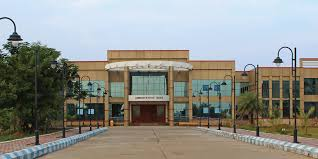
1. Tamil Nadu National Law University (TNNLU), Tiruchirappalli
Official Website: www.tnnlu.ac.in
Type: National Law University (Statutory — TN Legislature Act 2012) | BCI Status: BCI & UGC Approved
NIRF 2025 Law Rank: Participated (outside published top 40)
TNNLU is Tamil Nadu’s only NLU — and that tag matters enormously for legal careers. Established in 2012 on a residential campus at Navalurkuttappattu, Tiruchirappalli, the university offers two 5-year integrated programmes and a strong LLM suite. Being part of the NLU consortium means TNNLU graduates compete directly with peers from NLU Jodhpur, HNLU Raipur, and RGNUL Patiala for Tier-1 law firm roles.
The fees are meaningfully lower than most older NLUs. Total tuition for the 5-year integrated programme is approximately ₹6.83 lakhs, with total outgo around ₹7.72 lakhs. The LLM (1-year) costs ₹1.22 lakhs total. Hostel adds approximately ₹1.09 lakhs per year.
Key Strengths: NLU tag in Tamil Nadu; mandatory internships; active moot court society; air-conditioned residential campus; legal aid clinic; significantly lower fees than older NLUs.
Courses: BA LLB (Hons), B.Com LLB (Hons), LLM (Corporate & Securities Law, IPR, Natural Resources Law), PhD
Seats: 60 BA LLB (Hons) + 60 B.Com LLB (Hons) + 61 LLM (across 3 specialisations)
Total Fees: ₹7.72 lakhs (5-year integrated) | ₹1.22 lakhs (LLM 1-year)
CLAT 2025 Cutoff:
- BA LLB — General AI Rank: 1763 | TN Home State Rank: 3864
- B.Com LLB — General AI Rank: 1947 | TN Home State Rank: 5505
Placement (Batch 2025, per Collegedunia):
- Highest Package: ₹5 LPA
- Average Package: ~₹4.2 LPA
- Placement Rate: 90%
Top Recruiters: Trilegal, Shardul Amarchand Mangaldas, Cyril Amarchand Mangaldas, AZB & Partners, Khaitan & Co., JSA, Lakshmikumaran & Sridharan, L&L Partners, ALG India, Samvad Partners, M2K Advisors, P. Wilson Associates, Iyer and Thomas, Swamy Associates, Zoho
LLM Specialisations: Corporate & Securities Law, Intellectual Property Rights, Environment & Natural Resources Law
Infrastructure: Residential campus, library, moot court hall, legal aid clinic, hostels (men/women)
Admission: CLAT UG (BA LLB / B.Com LLB) | CLAT PG (LLM)
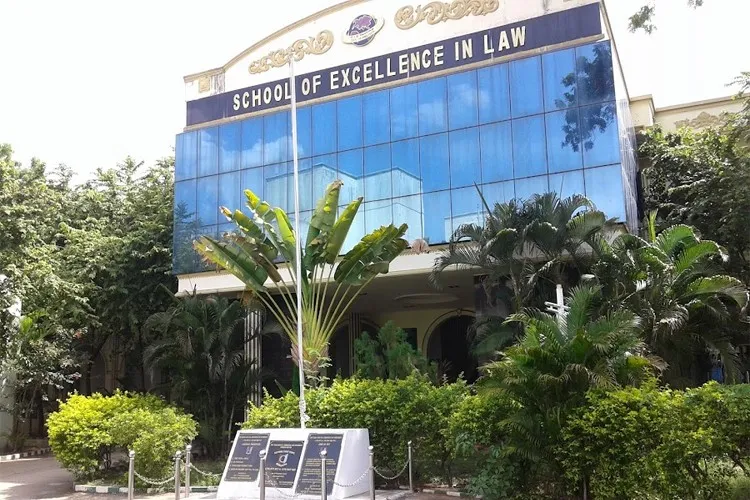
2. School of Excellence in Law (SOEL), Chennai
Official Website: www.tndalu.ac.in
Type: Constituent School of TNDALU (Public/State) | BCI Status: BCI & UGC Approved | NAAC: Accredited
NIRF 2025 Law Rank: Ranked under parent TNDALU
SOEL is the flagship constituent college of TNDALU and the most competitive government-affiliated law school in Chennai. Located in Taramani — minutes from the Madras High Court ecosystem — it attracts Tamil Nadu’s top-performing merit students who don’t want to take CLAT but want serious legal education.
The fee is the clearest differentiator. Total fees for BA LLB (Hons) run to approximately ₹3.80 lakhs — less than 5% of what private deemed universities charge. The LLM across 11 specialisations costs just ₹70,200 for the full 2-year programme.
Admission is purely merit-based — Class 12 aggregate for UG, LLB marks for LLM. The general category cutoff sits around 93.5–94.5% at Class 12, making it more competitive by marks than CLAT rank (comparatively).
Courses: BA LLB (Hons) 5-year, LLM (2-year, 11 specialisations), PhD
Seats: 156 BA LLB (Hons) | ~20 seats per LLM specialisation
Total Fees: ₹3.80 lakhs (BA LLB) | ₹70,200 (LLM full 2-year)
Cutoff 2025: Merit-based — General ~93.5–94.5% | OBC ~91–92% | SC ~87–88% | ST ~82–83%
Placement (~2024):
- Placement Rate: ~75% campus placement
- Average: ₹6–8 LPA | Highest: ~₹10–12 LPA
Top Recruiters: AZB & Partners, Cyril Amarchand Mangaldas, L&L Partners, HDFC Bank, UNDP, Tech Mahindra, Mindtree, Capgemini, HCL
LLM Specialisations (11 fields): Business Law, Constitutional Law, IPR, International Law & Organisations, Environmental Law, Criminal Law & Criminal Justice, Human Rights, Labour & Administrative Law, Taxation, Cyber Space Law & Justice, Maritime Law, Property Law, Crime & Forensic Law
Infrastructure: Library, moot court halls, legal aid clinic, computer labs, hostels (boys/girls)
Admission: TNDALU centralised merit counselling — no CLAT required
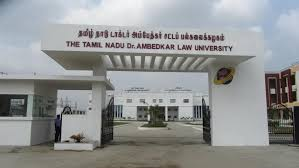
3. Tamil Nadu Dr. Ambedkar Law University (TNDALU), Chennai
Official Website: www.tndalu.ac.in
Type: State Public University (Act 43 of 1997) | BCI Status: BCI & UGC Recognised | NAAC: Accredited
NIRF 2024 Law Rank: Rank 36 (reported by CollegeDekho; not corroborated in official NIRF 2025 top 40 published list)
TNDALU is the apex authority for legal education in Tamil Nadu — regulating 24 affiliated colleges, administering centralised counselling, and awarding degrees to thousands of law students annually. Think of it as Anna University, but for law. Its reach is statewide and its alumni are in every district court, High Court, and tribunal in Tamil Nadu.
The university directly affiliates 9 private + 15 government law colleges, with approximately 4,000 total seats across SOEL and all affiliated institutions. Admissions are fully online now through centralised merit-based counselling — no entrance exam, full transparency.
Courses: LLB (3-year), BA LLB (5-year), BBA LLB, BCA LLB, B.Com LLB (integrated), LLM (2-year, 11 specialisations), PhD
Seats: ~120 direct UG seats | ~548 integrated | ~4,000 across all affiliated colleges
Total Fees: ₹2.33 lakhs (3-year LLB) | ₹3.80 lakhs (5-year integrated) | ₹70,200 (LLM 2-year) | ₹1.1 lakhs (PhD)
Cutoff 2025: Merit-based only (no entrance exam)
Placements (2023–24): ~75% placement rate | Average ₹6.50 LPA (UG) | ₹8.50 LPA (PG) | 615 students placed in 2023
LLM Specialisations: Constitutional Law, Business Law, Human Rights, International Law & Organisations, Cyber Space Law & Justice, IPR, Criminal Justice Administration, Maritime Law, Property Law, Forensic Law, Taxation, Environmental Law, Labour Law
Additional Programmes: Distance Education — LLB (3-year), BBA LLB, LLM, Ph.D available via TNDALU distance mode
Infrastructure: Library, moot court rooms, seminar halls, hostels, sports, medical centre, IT labs
Admission: Online merit-based via TNDALU centralised counselling; PhD via TNDALU Entrance Test + interview
Memberships: Member of AIU (Association of Indian Universities) and IIPA (Indian Institute of Public Administration)
4. Dr. Ambedkar Government Law College (DAGLC), Chennai (formerly Madras Law College)
Official Website: www.tndalu.ac.in
Type: State Government College, affiliated to TNDALU | BCI Status: BCI Approved

NIRF 2025: Outside top 40 | IIRF 2025: Rank #12 (national law)
No law college in Tamil Nadu carries more historical weight. Founded in 1855 and formally established as Madras Law College in 1891, renamed Dr. Ambedkar Government Law College in 1990, this institution has produced 5 Union Finance Ministers of India: R.K. Shanmukham Chetty, C. Subramaniam, R. Venkataraman (who also became President of India), P. Chidambaram, and more. Chief Justice K. Subba Rao and multiple Judges of the Supreme Court and High Courts are alumni.
In October 2025, the iconic Indo-Saracenic heritage building near the Madras High Court — designed by architect Henry Irwin — was inaugurated as a Madras High Court annex with six new courtrooms, after a renovation funded under Chennai Metro Rail with IIT Madras civil engineering supervision. Current academic operations have split between two campuses: Pudupakkam (Chengalpattu) for the 5-year BA LLB with approximately 1,205 students, and Pattaraiperumbudur (Tiruvallur) for the 3-year LLB with approximately 1,123 students.
The fees are among the lowest LLB fees anywhere in India — the entire 3-year LLB costs just ₹4,870, the 5-year BA LLB (Hons) costs ₹7,020, and the LLM costs ₹4,960 total.
Courses: LLB (3-year), BA LLB (Hons) (5-year), LLM (Family Law; Environmental Law/Energy & Climate Change)
Seats: ~60 BA LLB (Hons) per year; additional LLB seats at Pattaraiperumbudur campus
Total Fees: ₹4,870 (LLB 3-year) | ₹7,020 (BA LLB 5-year) | ₹4,960 (LLM)
Cutoff 2025: Merit-based — Class 12 aggregate (very high competition given ultra-low fees)
Placements: ~40% direct campus placement | Average ₹2–3.5 LPA | Highest ₹8.5–10 LPA | Strong litigation, judiciary, and government legal service outcomes
LLM Specialisations: Family Law, Environmental Law & Energy and Climate Change Law
Infrastructure: Two campuses (Pudupakkam and Pattaraiperumbudur); library, moot courts, hostels (Kilpauk for men, Chepauk for women), legal aid clinic
Admission: TNDALU centralised merit counselling — no entrance exam
5. Madras Law College — Historical Note
Searching for “Madras Law College” in Tamil Nadu? There is no separately functioning institution under that name today. The institution founded in 1855 and formally named Madras Law College in 1891 was renamed Dr. Ambedkar Government Law College, Chennai in 1990 to honour Dr. B.R. Ambedkar on his birth centenary.

The iconic red Indo-Saracenic building near the Madras High Court — which many associate with the name “Madras Law College” — was inaugurated in October 2025 as a Madras High Court annex housing six additional courtrooms, following a heritage renovation project. All current academic operations continue under the name Dr. Ambedkar Government Law College, Chennai (see Section 4 above), operating from the Pudupakkam and Pattaraiperumbudur campuses since 2018.
If you are searching for admissions, refer to www.draglc.ac.in or www.tndalu.ac.in.
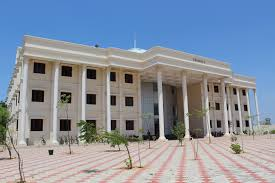
6. School of Law, SASTRA Deemed University, Thanjavur
Official Website: www.law.sastra.edu
Type: Private Deemed-to-be University (Section 3 of UGC Act) | BCI Status: BCI Approved (Notification No. BCI:D:74/2021) | NAAC: A++
NIRF 2025 Law Rank: #11 in India (Score: 65.29) — Highest-ranked law school in Tamil Nadu
SASTRA School of Law holds a distinction that no other Tamil Nadu law college can claim: the highest NIRF 2025 Law ranking in the state at #11 nationally. For private law education in Tamil Nadu, this is the benchmark. The university’s 232-acre campus in Thanjavur houses a library with over 100,000 books and 500+ journals — one of the strongest law library collections among Tamil Nadu private institutions.
SASTRA accepts CLAT exclusively (it does not accept LSAT India), using CLAT score + Class 12 aggregate in a 25:75 ratio. Minimum 50% in English at Class 12 and an age cap of 19 years (as of 1 August of admission year) apply.
Fees are approximately ₹1.37 lakhs in Year 1, growing at 5% annually to reach roughly ₹7 lakhs total for the 5-year integrated programme.
Courses: BA LLB (Hons), BBA LLB (Hons), B.Com LLB (Hons) (5-year each), LLM
Seats: ~60 seats each for BA LLB / BBA LLB / B.Com LLB (Hons)
Total Fees: ~₹7 lakhs (5-year) with 5% annual escalation | Year 1: ~₹1.37 lakhs
Cutoff 2025: CLAT score + Class 12 marks (25:75); minimum 80%+ Class 12 with strong CLAT score (recommended CLAT score: 110+)
Placement (NIRF 2025 data):
- UG Median Package: ₹4.6–5.6 LPA
- Placement Rate: ~79% (institute-wide)
Top Recruiters: Trilegal, Argus Partners, AZB, Tier-1 corporate firms; campus visits from Chennai-based law firms
LLM Specialisations: Corporate Law, International/International Trade Law, Constitutional Law
Infrastructure: 232-acre campus, 100,000+ book library, 500+ journals, moot court, hostels (boys/girls), post office, bank, ATM, medical facility, canteens
Admission: CLAT only — GD-PI at SASTRA campus follows CLAT score shortlisting
7. VIT School of Law (VITSOL), Chennai
Official Website: Chennai.vit.ac.in
Type: Private Deemed University (constituent of VIT University, Vellore) | BCI Status: BCI Approved

NIRF 2025 Law Rank: Outside top 40 | IIRF 2025: Private Law #1 (institutional claim)
Founded in 2014 on the Vandalur–Kelambakkam Road campus in South Chennai — the same technology corridor as SRM, Saveetha, and Chettinad — VIT School of Law is the fastest-growing private law school in Tamil Nadu. Its biggest headline numbers: highest package of ₹45 LPA and average package of ₹7 LPA, the strongest placement benchmarks among Tamil Nadu’s private law schools.
The focus on AI Law, Cyber Security Law, and emerging regulatory frameworks is a deliberate USP — law students here share campus and faculty interaction with engineers and technologists, which creates unusual cross-disciplinary exposure that pure law schools can’t offer.
VIT accepts CLAT, VITLEE, CLAT-PG, AILET, and AIAT, followed by a mandatory GD-PI round on campus.
Courses: BA LLB (Hons) (5-year), BBA LLB (Hons) (5-year), LLM (1-year, Corporate Law / IPR / International Law)
Seats: 180 BBA LLB + 120 BA LLB
Total Fees: ~₹10 lakhs (BA LLB) | ~₹10.02 lakhs (BBA LLB) | ₹1.04 lakhs (LLM 1-year)
Eligibility: Minimum 60% in Class 12 (75% claimed by some sources); CLAT/VITLEE score required
Placement:
- Highest Package: ~₹45 LPA
- Average Package: ~₹7 LPA
- Placement support through VIT’s large corporate network
Top Specialisations: Corporate Law, Intellectual Property Law, International Law & Development, Cyber Security Law, AI & Law (unique offering in Tamil Nadu)
Infrastructure: Vandalur–Kelambakkam Road campus; hostels (boys/girls), moot court, library, gymnasium, auditorium, medical facility, transport, high-speed Wi-Fi
Admission: CLAT / VITLEE / AILET / AIAT → GD-PI mandatory
8. SRM School of Law, Kattankulathur, Chennai
Official Website: www.srmist.edu.in
Type: Private Deemed University (SRMIST) | BCI Status: BCI Approved | NAAC: A++
NIRF 2025 Law Rank: #25 in India (Score: 58.00) — 3rd highest among Tamil Nadu law schools in NIRF 2025
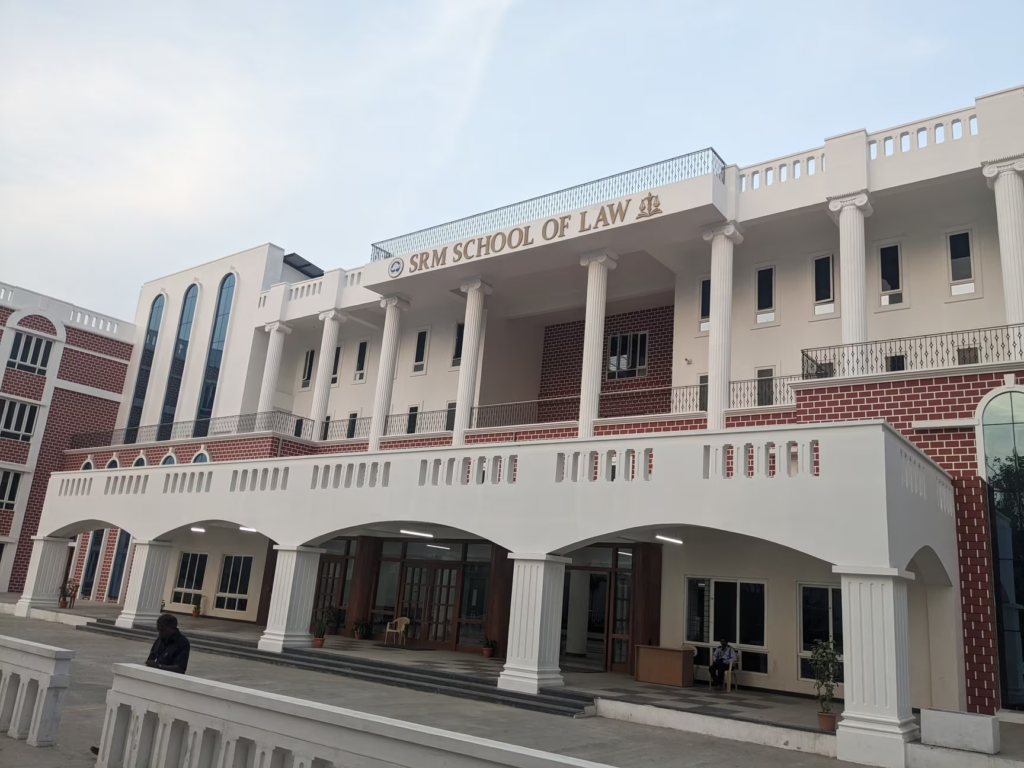
SRM School of Law is the only Tamil Nadu law school other than SASTRA that appears in the NIRF 2025 Law top 25. With approximately 10 MoUs with international law schools and a campus housing medicine, engineering, and management alongside law, the cross-disciplinary corporate exposure is a genuine differentiator.
Fees are higher than comparable colleges: total LLB runs ₹7.5–12.5 lakhs, and the BA LLB programme reaches ₹12.5 lakhs total. But for students seeking a nationally ranked private law school in Tamil Nadu with international linkages, SRM remains one of the strongest options.
Courses: BA LLB (Hons), B.Com LLB (Hons), BBA LLB (Hons) (5-year each), LLB 3-year, LLM (1-year)
Seats: 60 each for BA LLB / B.Com LLB / BBA LLB | 50 LLM
Total Fees: ₹7.5–12.5 lakhs (LLB) | ₹12.5 lakhs (BA LLB) | ₹1.25–2 lakhs (LLM 1-year) | Hostel: ₹93K–1.14 lakhs/year | Application fee: ₹1,100
Cutoff 2025: Minimum 60% Class 12; CLAT / LSAT / SRMJEE-L for integrated programmes; merit for LLB 3-year and LLM
Placement (NIRF 2025 reported):
- UG Median Package: ₹5 LPA (3-year and 5-year both)
- PG Median Package: ₹6 LPA
- Placement Rate: 70%+ (institute-wide)
LLM Specialisations: Corporate Law, Criminal Law & Criminal Justice, International Trade Law
International MoUs: ~10 international law schools (specific institutions not publicly disclosed on official website)
Infrastructure: Library, moot court, conference halls, hostels, sports facilities, qualified faculty
Admission: CLAT / LSAT / SRMJEE-L → merit for 3-year LLB and LLM
9. School of Law, Sathyabama Institute of Science and Technology, Chennai
Official Website: www.sathyabama.ac.in
Type: Private Deemed-to-be University | BCI Status: BCI Approved | NAAC: A++
NIRF 2025 Law Rank: Outside top 40
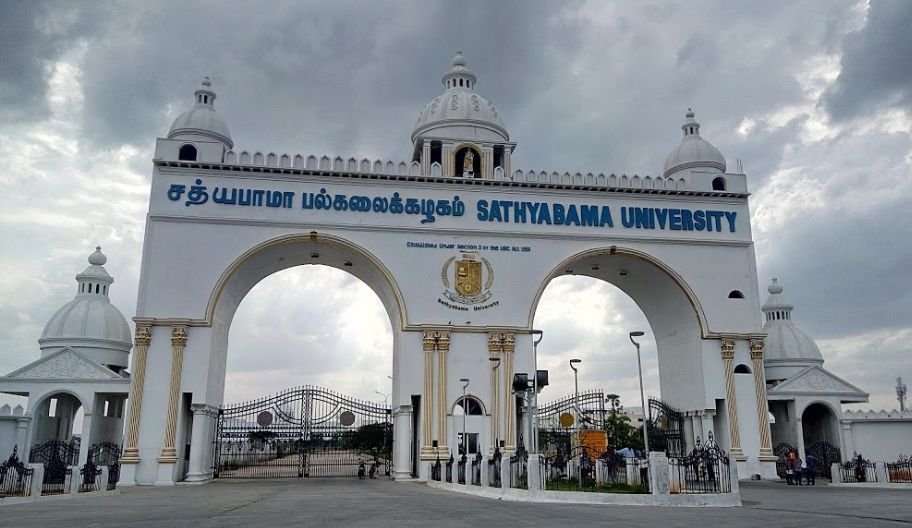
Sathyabama School of Law is the newest major law school in this list — established 2018 — but it punches considerably above its age. With 480 total seats across 4 programmes (BA LLB, BBA LLB, B.Com LLB, LLB 3-year), it’s one of the largest-intake law schools in Tamil Nadu’s private sector. The Centre for Intellectual Property Rights (inaugurated 2023) and the Anti-Human Trafficking Club are genuinely distinctive offerings not found in other Tamil Nadu law schools.
Placement numbers are encouraging for a young school: 85% placement assurance, internship stipends of ₹15,000–25,000/month, and a recruiter list that spans Amazon, Deloitte, EY, JP Morgan, ICICI Bank, and Hyundai Mobis — reflecting the tech-company recruitment channel unique to Sathyabama’s dual science/law identity.
Courses: BA LLB (Hons), BBA LLB (Hons), B.Com LLB (Hons) (5-year each), LLB (3-year)
Seats: 120 each for BA LLB / BBA LLB / B.Com LLB (Hons) + LLB = 480 total seats
Total Fees: ₹7.95 lakhs (BA/BBA/B.Com LLB 5-year) | ₹4.83 lakhs (LLB 3-year) | Hostel: ₹39,000/year
Cutoff 2025: Minimum 50% Class 12 (45% for reserved); university entrance test + merit
Placement:
- Placement Assurance: ~85%
- Internship Stipend: ₹15,000–25,000/month
Top Recruiters: Amazon, Accenture, ADP, Capgemini, Cognizant, Deloitte, EY, HCL, IBM, JP Morgan, ICICI Bank, Hyundai Mobis, Juspay
Specialisations: Cyber Law, IPR, Criminal Law, Constitutional Law, International Law, Anti-Human Trafficking
Distinctive Facilities: Centre for IPR (2023), Anti-Human Trafficking Club, Moot Court Society, 17-faculty intimate learning environment
Infrastructure: Library (313,760+ books), smart classrooms with projectors, moot court halls, hostels, sports complex
Admission: University entrance test + Class 12 merit — no CLAT mandatory
10. Government Law College, Coimbatore
Official Website: www.glccbe.ac.in
Type: State Government College, affiliated to TNDALU | BCI Status: BCI Approved | UGC: 2(f) & 12(B) Recognised
NIRF 2025 Law Rank: Outside top 40
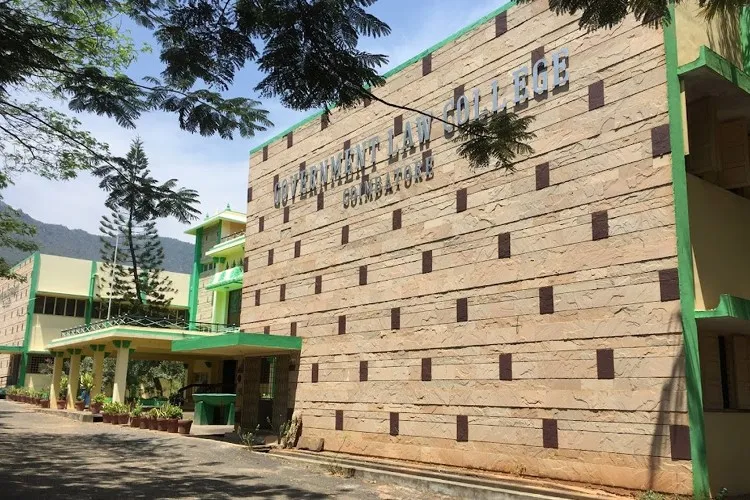
Government Law College Coimbatore is the premier law institution in western Tamil Nadu, established in 1979 on a 20.12-acre campus at the foothills of the Western Ghats. For students from Coimbatore, Erode, Salem, Tiruppur, and the surrounding districts, it is both the most affordable and most accessible quality law college.
The fees are extraordinary by any Indian standard: the entire 5-year BA LLB programme costs ₹5,835 and the LLM (2-year) costs just ₹2,930 — the lowest among all law programmes in Tamil Nadu. The LLM specialises in Business Law and Taxation Law, which are directly relevant to the commercial hub of western Tamil Nadu.
Infrastructure is modern for a government institution: hi-tech library, model court, air-conditioned auditorium, CCTV surveillance, and campus-wide Wi-Fi. Scholarships for SC/ST students and first-generation graduates reduce actual cost further.
Courses: BA LLB (5-year), LLB (3-year), LLM (2-year — Business Law, Taxation Law)
Seats: ~240 combined (BA LLB + LLB) | LLM intake per specialisation
Total Fees: ₹5,835 (BA LLB 5-year) | ₹3,495–5,835 (LLB 3-year) | ₹2,930 (LLM 2-year full)
Cutoff 2025: Purely merit-based (Class 12 / UG marks); TNDALU centralised counselling; no entrance exam
Placements: Select campus interviews; stipend ₹4,000–5,000/month for internships; strong judiciary and government legal services outcomes
LLM Specialisations: Business Law, Taxation Law
Infrastructure: 20.12-acre campus, hi-tech library, model court hall, AC auditorium, CCTV, Wi-Fi, playground, computer lab, hostels
Scholarships: Available for SC/ST students and first-generation graduates
Admission: TNDALU centralised counselling — no entrance exam
NIRF 2025 Law Rankings — Tamil Nadu Institutions
| College | NIRF 2025 Law Rank | NIRF Score | Type |
|---|---|---|---|
| SASTRA School of Law, Thanjavur | #11 | 65.29 | Private Deemed |
| Saveetha / SIMATS, Chennai | #19 | 60.90 | Private Deemed |
| SRM IST, Kattankulathur | #25 | 58.00 | Private Deemed |
| TNNLU, Tiruchirappalli | Outside top 40 | Participated | National Law University |
| TNDALU, Chennai | Outside top 40 (Rank 36 per NIRF 2024 — single source) | — | State University |
| SOEL, Chennai | Not ranked separately | Under TNDALU | Constituent (Public) |
| Dr. Ambedkar GLC, Chennai | Outside top 40 | IIRF #12 (2025) | Government |
| VIT School of Law, Chennai | Outside top 40 | — | Private Deemed |
| Sathyabama School of Law | Outside top 40 | — | Private Deemed |
| Govt Law College, Coimbatore | Outside top 40 | — | Government |
NIRF Law Rankings 2025 published by Ministry of Education on 4 September 2025.
Fee Structure Comparison Table
| College | LLB 3-Year (Total) | BA LLB 5-Year (Total) | LLM (Total) | Type |
|---|---|---|---|---|
| Govt Law College, Coimbatore | ₹3,495–5,835 | ₹5,835 | ₹2,930 | Government |
| Dr. Ambedkar GLC, Chennai | ₹4,870 | ₹7,020 | ₹4,960 | Government |
| TNDALU / SOEL, Chennai | ~₹2.33 lakhs | ~₹3.80 lakhs | ₹70,200 | Public |
| TNNLU, Tiruchirappalli | — | ₹7.72 lakhs | ₹1.22 lakhs | National Law University |
| SASTRA, Thanjavur | — | ~₹7 lakhs | — | Private Deemed |
| Sathyabama, Chennai | ₹4.83 lakhs | ₹7.95 lakhs | — | Private Deemed |
| SRM, Kattankulathur | ₹7.5–12.5 lakhs | ₹12.5 lakhs | ₹1.25–2 lakhs | Private Deemed |
| VIT, Chennai | — | ₹10 lakhs | ₹1.04 lakhs | Private Deemed |
CLAT 2025 & Admission Cutoffs
| College | Admission Route | CLAT 2025 Cutoff (General AI) | Class 12 Cutoff (General) |
|---|---|---|---|
| TNNLU (BA LLB) | CLAT only | AIR 1763 | — |
| TNNLU (B.Com LLB) | CLAT only | AIR 1947 | — |
| TNNLU (TN Home State BA LLB) | CLAT only | AIR 3864 | — |
| SASTRA School of Law | CLAT only (25:75 with Class 12) | CLAT 110+ recommended | 80%+ English mandatory |
| SRM School of Law | CLAT / LSAT / SRMJEE-L | — | 60% minimum |
| VIT School of Law | CLAT / VITLEE / AILET / AIAT | — | 60–75% |
| Sathyabama | University entrance + merit | — | 50% (45% reserved) |
| SOEL / TNDALU / Govt Colleges | No entrance exam | — | ~93.5–94.5% General |
| Dr. Ambedkar GLC, Chennai | TNDALU merit counselling | — | High — no declared % |
| Govt Law College, Coimbatore | TNDALU merit counselling | — | No official cutoff declared |
Note: No active “TANLAWCET” entrance exam exists in Tamil Nadu. TNDALU and government colleges use purely merit-based admission.
Placement & Salary Data
Campus Placement Comparison
| College | Average Package | Highest Package | Placement Rate |
|---|---|---|---|
| VIT School of Law | ₹7 LPA | ₹45 LPA | High |
| SOEL, Chennai | ₹6–8 LPA | ₹10–12 LPA | ~75% |
| TNDALU | ₹6.50 LPA (UG) / ₹8.50 LPA (PG) | — | ~75% |
| SASTRA School of Law | ₹4.6–5.6 LPA | — | ~79% |
| TNNLU, Tiruchirappalli | ₹4.2 LPA | ₹5 LPA | ~90% |
| SRM School of Law | ₹5 LPA (UG) / ₹6 LPA (PG) | — | 70%+ |
| Sathyabama | — | — | ~85% assurance |
| Dr. Ambedkar GLC | ₹2–3.5 LPA | ₹8.5–10 LPA | ~40% campus |
| Govt Law College, Coimbatore | — | — | Judiciary/Government focus |
Lawyer Salary Benchmarks in Tamil Nadu (2024–25 Data)
General Practice / Litigation:
- Indeed.com average: ₹71,151/month (Tamil Nadu lawyers, 2024 — small sample)
- Glassdoor median: ₹29,136/month (entry-level practising lawyer, Tamil Nadu, 2024)
- Junior lawyer in Chennai (Indeed): ₹20,603/month
Corporate Law:
- Attorney/Lawyer Chennai (PayScale 2025): ₹5.10 lakhs/year median
- Corporate Lawyer Chennai (PayScale 2025): ₹7 lakhs/year median
- Experienced corporate lawyers, Tier-1 Chennai firms: ₹15–74 lakhs/year
Government / Judiciary:
- TNPSC Civil Judge (Pay Level 10, 7th CPC): ₹27,700–₹44,770/month basic + allowances
- Junior Advocate minimum (Madras HC Order, June 2024): ₹20,000/month in Chennai, Coimbatore, Madurai; ₹15,000/month elsewhere in Tamil Nadu and Puducherry
Career Pathways for Tamil Nadu Law Graduates
Pathway 1: Litigation at the Madras High Court
Government law college graduates — especially from Dr. Ambedkar GLC Chennai — enter litigation practice through enrollment at the Bar Council of Tamil Nadu & Puducherry. Proximity to the Madras High Court, affordable education, and a strong alumni litigation network make government colleges the preferred route for courtroom practitioners. Entry earnings are ₹20,000–30,000/month; senior litigators in High Courts and Supreme Court earn ₹5–50 lakhs/year.
Pathway 2: Corporate Law at Top Law Firms
NLU graduates (TNNLU) and SASTRA/SRM/VIT graduates access Tier-1 law firm placements through campus drives. Recruiters include Cyril Amarchand Mangaldas, AZB & Partners, Khaitan & Co., Trilegal, Shardul Amarchand Mangaldas, Lakshmikumaran & Sridharan, and JSA. Fresher packages range ₹4–10 LPA; associates with 3–5 years’ experience earn ₹12–30 LPA.
Pathway 3: Judiciary — TNPSC Civil Judge
Tamil Nadu’s judicial services examination is conducted by TNPSC. Civil Judges earn ₹27,700–₹44,770/month basic (Pay Level 10, 7th CPC) plus DA, HRA, and judicial perquisites. Government law college students — particularly those who clear the judiciary exam — represent the largest single career channel of Tamil Nadu legal education. Coaching centres like Toprankers, LawXperts MV, and PrepP run dedicated TNPSC Civil Judge coaching in Chennai.
Pathway 4: LLM and Academic/Research
TNNLU (LLM in Corporate & Securities Law, IPR, Natural Resources Law), SOEL (11 LLM specialisations), and SASTRA/SRM offer the best LLM pathways. TNNLU’s LLM at ₹1.22 lakhs total is the best value-for-money LLM in the state for CLAT-PG qualifiers. For non-CLAT routes, SOEL’s ₹70,200 LLM across 11 specialisations is unmatched in depth and affordability.
Bar Council of Tamil Nadu & Puducherry — Enrolment Process
Every law graduate who wishes to practise in Tamil Nadu must enrol with the Bar Council of Tamil Nadu and Puducherry (BCTNPY), headquartered at the Madras High Court campus, Chennai 600 104.
Statutory Enrolment Fee (Section 24(1)(f), Advocates Act 1961):
- General Category: ₹750
- SC/ST Category: ₹125
- Advocates Welfare Fund (mandatory): ₹3,000 life subscription (separate from the BCI fee)
Step-by-Step Enrolment Process:
- Register online at bctnpy.org
- Upload documents — LLB degree certificate, Class 10/12 marks, two character references from advocates with 10+ years of practice
- Publish a newspaper advertisement declaring intention to enrol — minimum 10 days before registration — in an English national daily (The Hindu or New Indian Express) and a Tamil language daily
- Visit BCTNPY office with completed Form 6 (application for enrolment) and Form 7 (declaration)
- Complete enrollment process and receive provisional Certificate of Practice
- Clear the All India Bar Examination (AIBE) within 2 years of enrolment for a permanent Certificate of Practice
Important 2025-26 Development: In November 2025, the BCTNPY formally requested the Ministry of Law & Justice to amend Section 24(1)(f) of the Advocates Act to revise the statutory enrolment fee upward, citing insufficient revenue for operating State Bar Council functions. Any fee revision for 2026-27 enrolments should be verified directly on bctnpy.org.
Tamil Nadu State Judicial Service (TNPSC Civil Judge) — Complete Overview
Conducting Body: Tamil Nadu Public Service Commission (TNPSC)
Post: Civil Judge (Grade I) — Entry point for the Tamil Nadu State Judicial Service
Pay Scale: ₹27,700–₹44,770/month (Pay Level 10, 7th Pay Commission) + DA 53% + HRA + other judicial perquisites
Eligibility — Age:
- Fresh law graduates: 22–27 years (General) | up to 32 years (Reserved)
- Practising advocates: 25–35 years (General) | up to 40 years (Reserved)
Eligibility — Qualification:
- LLB degree from a BCI-recognised college
- Tamil Nadu / All India Bar Council enrolment (for advocate candidates)
- Minimum 50% aggregate (45% for reserved categories)
- Tamil language reading and writing ability (mandatory for Tamil Nadu judicial service)
Exam Pattern:
Preliminary Examination (Screening):
- 100 MCQs in 3 hours
- Negative marking: 0.10 per wrong answer
- Subjects: General Tamil, General English, General Knowledge, Law
- Minimum cutoff: General 40 marks | MBC/BC 35 marks | SC/ST 30 marks
Main Examination (Descriptive):
- Paper I: Translation (Tamil to English and English to Tamil) — 100 marks
- Paper II: Civil Law including Civil Procedure Code — 150 marks
- Paper III: Criminal Law including Criminal Procedure Code — 150 marks
- Paper IV: General Law (Constitution, Contracts, Torts, Evidence) — 150 marks
Viva-Voce:
- Total: 60 marks | Minimum: 18 marks (30% mandatory)
Vacancies: 176 Civil Judge posts were notified in 2019; subsequent notification sizes vary by TNPSC announcement
Pros & Cons: Government vs. Private Law Colleges in Tamil Nadu
| Factor | Government Colleges | Private/NLU Law Colleges |
|---|---|---|
| Total LLB Fees | ₹2,930–₹7,020 | ₹4.83 lakhs–₹12.5 lakhs |
| NIRF Ranking (TN) | Govt not in top 40 | SASTRA #11, SRM #25 |
| Admission Basis | Class 12/UG merit only | CLAT/LSAT/entrance test |
| Campus Placement % | 40–75% | 70–90% |
| Average Package | ₹2–6.5 LPA | ₹4.2–7 LPA |
| Highest Package | ₹8.5–10 LPA | ₹45 LPA (VIT) |
| Judiciary Preparation | Strong culture, MHC proximity | Moderate |
| Litigation Network | Strongest — Madras HC alumni | Limited |
| Corporate Law Access | Moderate | Strong (Tier-1 firms) |
| International LLM Linkages | Very limited | Moderate–Strong (VIT, SRM) |
| Infrastructure | Basic–Modern | Modern–Premium |
| Hostel Availability | Available (basic) | Available (better facilities) |
| Government Job Advantage | Strong (TNPSC preference) | Moderate |
| Overall ROI | Highest (near-zero cost) | Moderate (high fee vs. package) |
| Best For | Litigation, Judiciary, Government posts | Corporate law, Research, LLM, International careers |
2026 Trends in Tamil Nadu Legal Education
Trend 1: CLAT Dominates — TANLAWCET Does Not Exist
Many aspirants search for “TANLAWCET 2025” or “TANLAWCET 2026” — there is no such functioning examination. Tamil Nadu conducts purely merit-based centralised admissions for TNDALU and government colleges. For NLUs and private deemed universities, CLAT is the single most important examination. LSAT India was discontinued for LLB admissions from 2025, making CLAT even more central to Tamil Nadu law admissions.
Trend 2: NIRF Rankings Driving Private Law School Investment
With SASTRA holding NIRF Law #11 and SRM at NIRF Law #25, Tamil Nadu private law schools are investing heavily in research output, graduate employment outcomes, and faculty publications to climb rankings. Expect improved placement infrastructure and international MoU signings through 2026-27.
Trend 3: AI Law and Cyber Law Going Mainstream
VIT School of Law’s dedicated AI & Law specialisation and Sathyabama’s Centre for IPR (2023) reflect an industrywide shift. Tamil Nadu’s technology corridor (OMR) houses hundreds of IT companies that need in-house legal teams conversant in data protection, AI regulation, and cyber law. Law schools on this corridor — VIT, SRM, Sathyabama, Chettinad — are deliberately building this adjacency.
Trend 4: Mandatory Minimum Stipend for Junior Advocates
The Madras High Court Division Bench’s June 2024 order mandating ₹20,000/month minimum stipend for junior advocates in Chennai, Coimbatore, and Madurai (₹15,000/month elsewhere) has changed the entry economics of litigation practice. The BCTNPY has been enforcing this through Bar Associations since July 2024. For fresh graduates choosing litigation, this floor significantly improves the economic starting point compared to the pre-2024 norm of ₹5,000–10,000/month stipends.
Trend 5: Heritage Building Becomes Madras High Court Annex
The October 2025 inauguration of the original Madras Law College (Dr. Ambedkar GLC) Indo-Saracenic building as a Madras High Court annex with six new courtrooms has increased judicial capacity in Chennai significantly. This is relevant for litigation practitioners: more courtrooms mean more hearings, more briefs, and faster early-career growth for junior advocates appearing before the Madras High Court.
Step-by-Step Admission Process — Tamil Nadu Law Colleges 2026
Route A: CLAT 2026 → TNNLU / SASTRA / SRM / VIT
Step 1: Appear for CLAT 2026 (conducted 7 December 2025; 5th merit list scheduled 20 May 2026).
Step 2: Register on the CLAT Consortium portal (consortiumofnlus.ac.in) during the designated window. Enter preferences in order of priority.
Step 3: CLAT merit list allotment — 5 rounds typically. Check your allotment and accept/upgrade.
Step 4: For VIT, add VITLEE as backup. For SASTRA, note 25:75 CLAT/Class 12 ratio; minimum 50% English mandatory. For SRM, SRMJEE-L is an alternative.
Step 5: Pay seat acceptance fee within the deadline. Attend in-person document verification + GD-PI at VIT, SRM, or SASTRA campus (institution-specific).
Step 6: Pay first-year tuition and hostel fees to confirm enrolment.
Route B: Merit-Based → TNDALU / SOEL / Government Colleges
Step 1: Ensure you have a valid Class 12 certificate (for BA LLB) or a UG degree (for 3-year LLB) with required percentage (General: aim for 93%+ for SOEL; lower for district government colleges).
Step 2: Apply online at tndalu.ac.in during the TNDALU centralised application window (typically opens in June/July each year).
Step 3: Specify preference order: SOEL (constituent school), Dr. Ambedkar GLC Chennai, Government Law College Coimbatore, and any other affiliated college.
Step 4: Counselling rounds are conducted online. Accept allotment and pay fees (typically ₹500–1,000 registration + nominal tuition).
Step 5: Attend document verification — nativity certificate, community certificate, Class 12 marksheet, TC, character certificate.
Step 6: Report to the allotted college on the joining date.
After Admission — Bar Council Enrolment
Once you complete LLB (3-year) or BA LLB (5-year), enrol at the Bar Council of Tamil Nadu & Puducherry (bctnpy.org) with ₹750 (General) or ₹125 (SC/ST) plus ₹3,000 Advocates Welfare Fund. Publish newspaper notice 10 days before application, complete Form 6 & 7, and clear AIBE within 2 years for permanent practice rights.
Important Statistics & Data Table
| Metric | Data | Source |
|---|---|---|
| Total BCI-recognised law colleges in TN | ~71 | Bar Council of India 2025 |
| Government/Aided law colleges | ~23 | TNDALU Database |
| Private/Deemed law colleges | ~48 | TNDALU / BCI |
| National Law Universities in TN | 1 (TNNLU Tiruchirappalli) | NLU Consortium |
| NIRF 2025 Tamil Nadu law top-ranker | SASTRA #11 (score 65.29) | NIRF 2025 |
| TNNLU CLAT 2025 cutoff (General AI) | AIR 1763 (BA LLB) | Careers360 CLAT tracker |
| TNNLU CLAT 2025 TN Home State cutoff | AIR 3864 (BA LLB) | Careers360 |
| Cheapest LLM in Tamil Nadu | ₹2,930 (Govt Law College, Coimbatore) | Collegedunia 2025-26 |
| Cheapest BA LLB in Tamil Nadu | ₹5,835 (Govt Law College, Coimbatore) | Collegedunia 2025-26 |
| Most expensive BA LLB | ₹12.5 lakhs (SRM) | Collegedunia 2025-26 |
| Highest campus placement | ₹45 LPA (VIT School of Law) | VIT official / Shiksha |
| TNNLU average placement 2025 | ₹4.2 LPA | Collegedunia |
| SOEL average placement 2024 | ₹6–8 LPA | UniversityKart |
| TNPSC Civil Judge pay (7th CPC) | ₹27,700–₹44,770/month | TNPSC official |
| BCTNPY enrolment fee (General) | ₹750 | Careers360 / BCTNPY |
| BCTNPY enrolment fee (SC/ST) | ₹125 | Careers360 / BCTNPY |
| Advocates Welfare Fund | ₹3,000 | Careers360 / BCTNPY |
| MHC junior advocate minimum stipend | ₹20,000/month (Chennai) | MHC Order June 2024 |
| Average lawyer salary, TN (Indeed) | ₹71,151/month | Indeed 2024 |
| Junior lawyer salary, Chennai | ₹20,603/month | Indeed 2024 |
| Corporate lawyer salary, Chennai | ₹7 LPA median | PayScale 2025 |
| Attorney/Lawyer salary, Chennai | ₹5.10 LPA median | PayScale 2025 |
| Dr. Ambedkar GLC Heritage Building | Inaugurated as MHC Annex (6 courtrooms) | Bar and Bench, Oct 2025 |
Frequently Asked Questions
Q1: Which is the best law college in Tamil Nadu 2026?
A: It depends on your goal. For the NLU tag and corporate law career: TNNLU Tiruchirappalli is the clear #1 — Tamil Nadu’s only National Law University, with top-tier law firm placements at ₹4–5 LPA fresher and CLAT 2025 closing rank of AIR 1763 (General AI). For highest NIRF ranking: SASTRA School of Law, Thanjavur ranks #11 nationally (NIRF 2025). For highest placement package: VIT School of Law, Chennai reports ₹45 LPA highest and ₹7 LPA average. For lowest fee + litigation career: Dr. Ambedkar Government Law College, Chennai (₹4,870 total for 3-year LLB) or Government Law College Coimbatore (₹5,835 total for 5-year BA LLB).
Q2: Is there a TANLAWCET 2026 entrance exam for law colleges in Tamil Nadu?
A: No. There is no functioning “TANLAWCET” entrance examination in Tamil Nadu for 2025 or 2026. Admissions to TNDALU, SOEL, and all 24 government and government-aided affiliated law colleges are purely merit-based using Class 12 (for 5-year BA LLB) or UG degree marks (for 3-year LLB), administered through TNDALU’s centralised online counselling at tndalu.ac.in. CLAT is required only for TNNLU (National Law University) and some private deemed universities like SASTRA and SRM.
Q3: What is the CLAT 2025 cutoff for TNNLU Tiruchirappalli?
A: CLAT 2025 final closing ranks for TNNLU: BA LLB (Hons) — General All India rank 1763 | Tamil Nadu Home State rank 3864. B.Com LLB (Hons) — General AI rank 1947 | TN Home State rank 5505. Tamil Nadu domicile students benefit significantly from the Home State quota — the same NLU seat is accessible at AIR 3864 vs. AIR 1763 for non-TN candidates. CLAT 2026 was conducted on 7 December 2025; the 5th merit list is scheduled for 20 May 2026.
Q4: What is the total fee for BA LLB at government law colleges in Tamil Nadu?
A: Government law college fees in Tamil Nadu are among the lowest in India. The entire 5-year BA LLB at Government Law College Coimbatore costs ₹5,835 total. Dr. Ambedkar Government Law College Chennai charges ₹7,020 total for BA LLB. SOEL (Chennai, TNDALU) charges approximately ₹3.80 lakhs total — still vastly below private colleges. The 3-year LLB at Dr. Ambedkar GLC costs only ₹4,870 total. Compare this to private deemed universities charging ₹7.95–12.5 lakhs total.
Q5: What is the difference between TNDALU and SOEL?
A: TNDALU (Tamil Nadu Dr. Ambedkar Law University) is the apex law university — it regulates and affiliates 24 law colleges across Tamil Nadu, administers centralised admissions, and awards degrees. SOEL (School of Excellence in Law) is TNDALU’s own flagship constituent school — the best-performing direct campus of the university, located in Taramani, Chennai. Think of TNDALU as Anna University and SOEL as the College of Engineering Guindy. Getting into SOEL directly (through TNDALU counselling) is highly competitive because the Class 12 cutoff for General category runs approximately 93.5–94.5%.
Q6: What is the Bar Council of Tamil Nadu enrolment fee and process in 2026?
A: The Bar Council of Tamil Nadu and Puducherry (BCTNPY) charges ₹750 (General) and ₹125 (SC/ST) as statutory enrolment fee under Section 24(1)(f) of the Advocates Act 1961. A mandatory Advocates Welfare Fund subscription of ₹3,000 is also payable. The process: register at bctnpy.org → upload documents → publish a newspaper notice (at least 10 days before application in The Hindu or New Indian Express plus a Tamil daily) → submit Form 6 & 7 in person → receive provisional Certificate of Practice → clear the All India Bar Examination (AIBE) within 2 years for permanent practice rights. In November 2025, BCTNPY requested the Ministry of Law to revise enrolment fees upward — verify current fees at bctnpy.org before applying.
Q7: What is the TNPSC Civil Judge salary and eligibility in 2026?
A: TNPSC Civil Judges are paid on Pay Level 10 (7th Pay Commission): basic ₹27,700–₹44,770/month plus DA, HRA, and judicial perquisites. Eligibility: LLB degree from a BCI-recognised college + Bar Council enrolment; minimum 50% aggregate (45% for reserved); Tamil language proficiency mandatory; age 22–27 (fresh graduates) or 25–35 (practising advocates) for General category, higher limits for reserved categories. The exam has three stages: Prelims (100 MCQs, 3 hours, 0.10 negative marking), Mains (4 descriptive papers including translation and law subjects), and Viva-Voce (60 marks, 18 minimum).
References & Resources
- NIRF Law Rankings 2025. Ministry of Education, Government of India. Published 4 September 2025. Retrieved from: www.nirfindia.org/Rankings/2025/LawRanking.html
- TNNLU Official Website. Tamil Nadu National Law University, Tiruchirappalli. Courses, fees, and admission details. Retrieved from: www.tnnlu.ac.in
- TNDALU Official Website. Tamil Nadu Dr. Ambedkar Law University, Chennai. Admissions, SOEL, and affiliate colleges. Retrieved from: www.tndalu.ac.in
- CLAT 2025 Cutoff Tracker — TNNLU. Careers360. Closing ranks by category and state. Retrieved from: law.careers360.com/articles/tnnlu-tiruchirappalli-merit-list
- TNNLU Placements 2025. KollegeApply + Collegedunia. Average, highest packages and recruiter data. Retrieved from: www.kollegeapply.com/college/tamil-nadu-national-law-university-tiruchirappalli-placement
- SOEL Fee Structure 2026. Collegedunia. BA LLB and LLM fees. Retrieved from: collegedunia.com/college/9024-the-tamil-nadu-dr-ambedkar-law-university-school-of-excellence-in-law-soel-chennai/courses-fees
- Dr. Ambedkar Government Law College, Chennai. Wikipedia & Bar and Bench. Heritage building history and institutional background. Retrieved from: en.wikipedia.org/wiki/Dr._Ambedkar_Government_Law_College,_Chennai and www.barandbench.com/columns/from-academics-to-adjudications
- Government Law College Coimbatore Fees 2026. Collegedunia. Official fee structure. Retrieved from: collegedunia.com/college/8748-government-law-college-coimbatore/courses-fees
- Bar Council of Tamil Nadu and Puducherry — Enrolment Process 2026. Careers360 + BCTNPY official. Retrieved from: law.careers360.com/articles/bar-council-of-tamilnadu-and-puducherry
- Tamil Nadu Judicial Services Examination Guide. Lawctopus + LawMint. Civil Judge eligibility, exam pattern, and salary. Retrieved from: www.lawctopus.com/tamil-nadu-judicial-services-examination-everything-need-know and lawmint.com/judicial-services/tamil-nadu-judicial-service-examination-syllabus-overview
- Lawyer Salary in Tamil Nadu — 2024 Data. Indeed + Glassdoor + PayScale. Average, median, and corporate lawyer salaries. Retrieved from: in.indeed.com/career/lawyer/salaries/Tamil-Nadu | www.glassdoor.co.in | www.payscale.com/research/IN/Job=Attorney_%2F_Lawyer/Salary/348fc6b5/Chennai
- SASTRA School of Law — NIRF 2025 & Admissions. CollegeDekho + Shiksha. Rankings, fees, and CLAT cutoffs. Retrieved from: www.collegedekho.com/colleges/sastra-university-school-of-law
- VIT Law School Chennai Courses & Fees 2026. Careers360 + Shiksha. Fee structure and admission details. Retrieved from: www.careers360.com/colleges/vit-law-school-chennai/courses
- SRM School of Law, Kattankulathur 2026. Collegedunia. Courses, fees, and NIRF data. Retrieved from: collegedunia.com/college/57163-school-of-law-srm-ist-kanchipuram/courses-fees
- Sathyabama School of Law Courses & Fees. Collegedunia. BA LLB, BBA LLB, and LLB fees. Retrieved from: collegedunia.com/university/25897-sathyabama-institute-of-science-and-technology-chennai
Conclusion
Tamil Nadu’s law college landscape in 2026 is one of India’s most diverse — from ₹2,930 government programmes at Coimbatore to ₹12.5 lakh private deemed degrees at SRM. TNNLU Tiruchirappalli is the safest institutional bet for corporate law careers at an NLU. SASTRA School of Law is the strongest private option by NIRF ranking. Dr. Ambedkar Government Law College and SOEL are unmatched in value for litigation and judiciary careers. Your choice should be driven by your CLAT rank, budget, and career destination — not by rankings alone. Every college in this list, from government to private, has produced lawyers who have argued before the Madras High Court, the Supreme Court, and international tribunals. The foundation is what you make of it.



GIPHY App Key not set. Please check settings