 kiruthika
Hook Introduction
Losing fat isn’t about punishing yourself in the gym for two hours a day. The truth is, a handful of workouts do most of the heavy lifting, literally and scientifically.
We dug through WHO guidelines, Harvard Health’s calorie data, and the latest 2026 ACSM fitness trends report to find out which workouts actually move the needle. Here’s what the research really says.
Key Highlights (Quick Facts)
- The World Health Organization recommends 150–300 minutes of moderate aerobic activity, or 75–150 minutes of vigorous activity, weekly for adults, plus strength training twice a week, as confirmed in its 2020 guidelines still in effect as of 2026 (WHO, 2026).
- HIIT can trigger meaningful visceral fat loss at roughly 400 METs-minutes per week, a lower volume than steady-state cardio typically needs, according to a 2026 meta-analysis.
- A 185-pound (84 kg) person burns around 440 calories in 30 minutes of vigorous stationary cycling, based on Harvard Health’s activity chart.
- Combining structured exercise with nutrition guidance improves weight-loss outcomes by roughly 49% more than diet changes alone, per ACSM’s 2026 trends report.
- Exercise for Weight Management rose to its highest-ever ranking in the ACSM 2026 Worldwide Fitness Trends survey of 2,000 exercise professionals.
- Only 43% of the world’s adult population meets recommended activity levels, while 43% of adults were classified as overweight globally as of 2022 data cited in 2025 research.
- Resistance training preserves lean muscle during a calorie deficit — something diet-only weight loss usually fails to do, according to NIDDK-backed research.
- Wearable technology ranked the #1 global fitness trend for 2026, with nearly half of U.S. adults now owning a fitness tracker or smartwatch.
What Makes a Workout “Effective” for Fat Loss
Not every sweaty session burns fat equally. The best fat-loss workouts share three things: they burn a lot of calories per minute, they keep your metabolism elevated after you stop, and you can actually stick with them.
Here’s why that last point matters more than people think. A “perfect” workout you quit after two weeks does nothing. A decent workout you do consistently for six months changes your body.
So this list isn’t just ranked by calories burned. It factors in accessibility, injury risk, and how well each workout holds up to real research, not gym folklore.
High-Intensity Interval Training remains one of the most time-efficient fat loss workouts worldwide.
The Top 10 Most Effective Workouts for Fat Loss
1. High-Intensity Interval Training (HIIT)
HIIT alternates short bursts of all-out effort with brief recovery periods, think 30 seconds of sprinting followed by 90 seconds of walking. A 2026 meta-analysis found HIIT can reduce visceral fat at a lower total exercise volume than steady-state cardio needs.
It burns around 533 calories per hour according to standard MET-based calculators, and the “afterburn effect” (excess post-exercise oxygen consumption) keeps your metabolism slightly elevated for hours afterward. It dropped to #12 in ACSM’s 2026 trends list, down from #6 in 2025, but it’s still been a top-10 fixture most years since it was introduced.
2. Strength Training (Resistance Training)
Lifting weights doesn’t just build muscle — it’s one of the few workouts that helps you keep muscle while losing fat. A 2025 study found that participants who did resistance training alone gained muscle and lost fat at the same time, something aerobic exercise rarely achieves on its own.
More muscle means a higher resting metabolic rate, so you burn more calories even sitting still. ACSM’s 2026 report lists Traditional Strength Training among its top 10 global trends.
3. Running and Jogging
Running remains one of the most accessible, equipment-free ways to burn calories fast. It’s not gentle on the joints, but for people without injury concerns, it’s hard to beat for pure calorie expenditure per minute.
Harvard Health’s chart shows a 155-pound runner at a 6 mph pace burns roughly 298 calories in just 30 minutes — no gym membership required.
4. Cycling (Outdoor or Stationary)
Cycling at a moderate pace burns between 480 and 710 calories per hour depending on intensity and terrain, per exercise-science calculators referencing Harvard’s compendium data. It’s low-impact, so it’s easier on the knees than running.
Stationary cycling at a vigorous pace burns around 441 calories in 30 minutes for a 185-pound person, based on Harvard Health data — making spin classes genuinely worth the sweat.
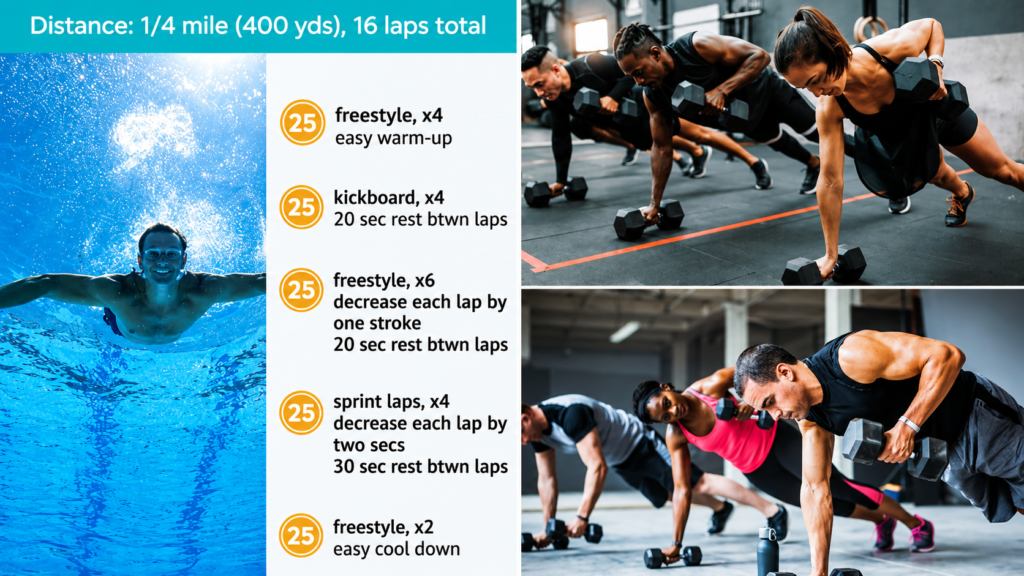
5. Swimming
Swimming works nearly every major muscle group while being one of the gentlest options on joints. Moderate-intensity lap swimming burns roughly 420 to 622 calories per hour.
It’s a favorite for people recovering from injury or carrying extra weight, since water supports body mass and reduces impact stress.
Swimming burns hundreds of calories per hour while staying easy on the joints.
6. Rowing
Rowing machines combine cardio and strength in a single motion, engaging your legs, back, arms, and core together. A 160-pound person burns around 610 calories per hour at a strenuous pace, according to MET-based fitness data.
Because it works so many muscles at once, rowing tends to spike heart rate quickly — useful for people short on workout time.
7. Brisk Walking
Walking gets overlooked, but it’s one of the most sustainable fat-loss tools out there — precisely because almost anyone can do it, anywhere, for free. A brisk 4 mph walk burns roughly 135 to 175 calories in 30 minutes depending on body weight, per Harvard Health.
It’s also the activity most consistently backed by public health bodies like the NHS and WHO for long-term weight maintenance, not just quick loss.
8. Circuit Training
Circuit training strings together several strength and cardio exercises with minimal rest between them. It burns around 240 calories in 30 minutes for a 125-pound person, climbing higher for heavier individuals, based on Harvard’s activity tables.
The appeal is efficiency — you get strength and cardio benefits in one session, which is why gyms worldwide build classes around this format.
9. Stair Climbing
Stair climbing is a MET 7.0 activity, putting it in the same intensity bracket as HIIT and kickboxing, according to fitness compendium data. It’s brutally simple and needs zero equipment beyond, well, stairs.
It’s particularly effective for building lower-body strength alongside fat loss, which is why stair-climbing machines remain gym staples.
10. Functional Fitness Training (Kettlebells, CrossFit-Style Workouts)
Functional training uses compound, multi-joint movements — kettlebell swings, sled pushes, battle ropes — that mimic real-world motion patterns. ACSM’s 2026 trends report ranks Functional Fitness Training among its top 10 global trends for a reason: it builds strength, burns calories, and improves everyday mobility simultaneously.
These workouts tend to be high-intensity by nature, so they blend some of HIIT’s calorie-burning benefits with strength training’s muscle-preserving effects.
Important Statistics Table
| Workout | Calories Burned (30 min, ~155 lb / 70 kg person) | Best For |
| HIIT | ~266 | Time-efficient fat burning |
| Strength Training (vigorous) | ~216 | Muscle preservation |
| Running (6 mph) | ~298 | Pure calorie burn |
| Cycling (vigorous, stationary) | ~278–369 | Joint-friendly cardio |
| Swimming (moderate) | ~210–311 | Full-body, low-impact |
| Rowing (vigorous) | ~305 | Full-body efficiency |
| Brisk Walking (4 mph) | ~150–175 | Long-term sustainability |
| Circuit Training | ~240–300 | Balanced strength + cardio |
| Stair Climbing | ~300+ | Lower-body focus |
| Functional Training | ~250–300 | Real-world strength |
Figures are estimates drawn from Harvard Health’s 30-minute activity chart and MET-based calculators; actual calorie burn varies by body weight, fitness level, and intensity.
Step-by-Step: How to Build a Fat-Loss Workout Week
- Start with your baseline. If you’re new to exercise, begin with brisk walking or light circuit training 3–4 days a week before adding intensity.
- Add 2 strength sessions weekly. WHO guidelines recommend muscle-strengthening activity at least twice a week for all adults.
- Include 1–2 HIIT or vigorous cardio sessions. Keep these to 20–30 minutes; intensity matters more than duration here.
- Fill in with steady-state cardio. Walking, cycling, or swimming on remaining days keeps total weekly minutes between 150 and 300, per WHO recommendations.
- Rest at least one full day. Recovery lets muscles rebuild and reduces injury risk, especially important when combining strength and HIIT.
- Track progress monthly, not daily. Weight fluctuates day to day; monthly trends tell you what’s actually working.
Pros and Cons Table
| Workout Type | Pros | Cons |
| HIIT | Fast, high calorie burn, minimal time needed | High injury risk if form breaks down; not beginner-friendly |
| Strength Training | Preserves muscle, boosts resting metabolism | Slower visible fat loss on the scale alone |
| Running | Free, accessible, high calorie burn | Hard on knees and joints over time |
| Cycling | Low-impact, scalable intensity | Needs equipment or safe outdoor routes |
| Swimming | Gentle on joints, full-body workout | Requires pool access, skill barrier for beginners |
| Rowing | Full-body, efficient calorie burn | Technique-heavy, can strain lower back if done wrong |
| Walking | Sustainable, zero equipment, low injury risk | Slower calorie burn per minute |
| Circuit Training | Combines strength and cardio | Can get repetitive; needs varied programming |
| Stair Climbing | High intensity, builds leg strength | Hard on knees, needs stairs or a machine |
| Functional Training | Builds real-world strength and mobility | Requires coaching to learn proper form |
Comparison Table: Best Workout for Your Goal
| Your Goal | Best Workout Choice | Why |
| Fastest calorie burn | HIIT or Stair Climbing | Highest calories burned per minute |
| Joint-friendly option | Swimming or Cycling | Low-impact on knees and hips |
| Muscle preservation | Strength Training | Maintains lean mass during a deficit |
| Long-term consistency | Brisk Walking | Easiest to sustain for years, not weeks |
| Beginner-friendly | Circuit Training | Structured, moderate intensity |
| Time-crunched schedule | HIIT or Rowing | Maximum results in minimal minutes |
2026 Fitness Trends and News
The fitness world looks a little different this year. Wearable technology took the #1 spot in ACSM’s 2026 Worldwide Fitness Trends survey of 2,000 exercise professionals, with nearly half of U.S. adults now owning a fitness tracker or smartwatch.
Exercise for Weight Management climbed to its highest-ever ranking in the same 2026 report, a shift experts link partly to the rise of GLP-1 weight-loss medications. Structured exercise, researchers note, supports outcomes medication alone doesn’t, particularly preserving lean muscle and metabolic function.
Interestingly, adult recreation and sport clubs cracked the ACSM top 20 for the first time in the survey’s 20-year history in 2026, driven largely by pickleball’s global surge and demand for social, group-based fitness. HIIT, meanwhile, slipped to #12 in 2026 from #6 in 2025 — still relevant, just no longer the industry’s darling.
Strength training helps preserve lean muscle mass while the body loses fat.
Conclusion
The best workout for fat loss isn’t a secret formula — it’s a mix of HIIT for efficiency, strength training for muscle, and steady cardio like walking or cycling for sustainability. According to WHO and ACSM’s 2026 data, consistency across these workout types, not chasing one “perfect” routine, is what actually drives lasting fat loss.
Pick two or three from this list that fit your body and your schedule, then stay consistent for months, not days. That’s genuinely how the research says fat loss works.
References
- World Health Organization – Physical Activity Fact Sheet, 2026 update: https://www.who.int/news-room/fact-sheets/detail/physical-activity
- WHO 2020 Guidelines on Physical Activity and Sedentary Behaviour (NCBI): https://www.ncbi.nlm.nih.gov/pmc/articles/PMC7719906/
- Harvard Health Publishing – Calories Burned in 30 Minutes: https://www.health.harvard.edu/exercise-and-fitness/calories-burned-in-30-minutes-for-people-of-three-different-weights
- ACSM’s Health & Fitness Journal – 2026 ACSM Worldwide Fitness Trends: https://journals.lww.com/acsm-healthfitness/fulltext/2025/11000/2026_acsm_worldwide_fitness_trends__future.8.aspx
- Newswise – The Future of Fitness: ACSM Announces Top Trends for 2026: https://www.newswise.com/articles/the-future-of-fitness-acsm-announces-top-trends-for-2026
- NCBI/NIDDK-referenced Systematic Review – Guideline-Based Digital Exercise Interventions: https://www.ncbi.nlm.nih.gov/pmc/articles/PMC12371298/
- StatPearls – Physical Activity and Weight Loss Maintenance: https://www.ncbi.nlm.nih.gov/books/NBK572051/
- Puripharmacy – The Role of Exercise in Weight Loss: 2026 Guide: https://puripharmacy.co.uk/resources/the-role-of-exercise-in-weight-loss-2026-guide/
- FatSecret – Rowing MET and Calorie Data: https://foods.fatsecret.com/fitness/rowing
- ATHLEAN-X – Calories Burned Calculator (citing Harvard Health & 2011 Compendium of Physical Activities): https://learn.athleanx.com/calculators/calories-burned-calculator-exercise-calculator
- ACSM – 2026 ACSM Worldwide Fitness Trends (ResearchGate PDF): https://www.researchgate.net/publication/396772391_2026_ACSM_Worldwide_Fitness_Trends_Future_Directions_of_the_Health_and_Fitness_Industry
- Health & Fitness Business – 2026 Trends Feature: https://www.healthandfitnessbusiness.org/jan2026/feature-trends
FAQs
HIIT is one of the most effective workouts for fat loss because it burns a high number of calories in a short time. Combining HIIT with strength training and regular cardio delivers the best long-term results.
No exercise targets belly fat alone, but HIIT, running, cycling, and strength training are highly effective at reducing overall body fat, including visceral belly fat, when paired with a healthy diet.
Both are important. Cardio burns more calories during exercise, while strength training helps preserve muscle and boosts metabolism, making it essential for sustainable fat loss.
The World Health Organization recommends at least 150–300 minutes of moderate exercise or 75–150 minutes of vigorous exercise each week, along with strength training on at least two days.
Yes. Brisk walking is one of the best low-impact workouts for fat loss. When combined with a calorie-controlled diet, it can help reduce body fat and improve overall fitness.
HIIT is generally more time-efficient and may reduce visceral fat faster, while running burns a high number of calories and is easier for many people to perform consistently. Both are effective.
The fastest approach combines HIIT, strength training, and a balanced diet with a calorie deficit. Consistency and proper nutrition are more important than any single workout.



GIPHY App Key not set. Please check settings